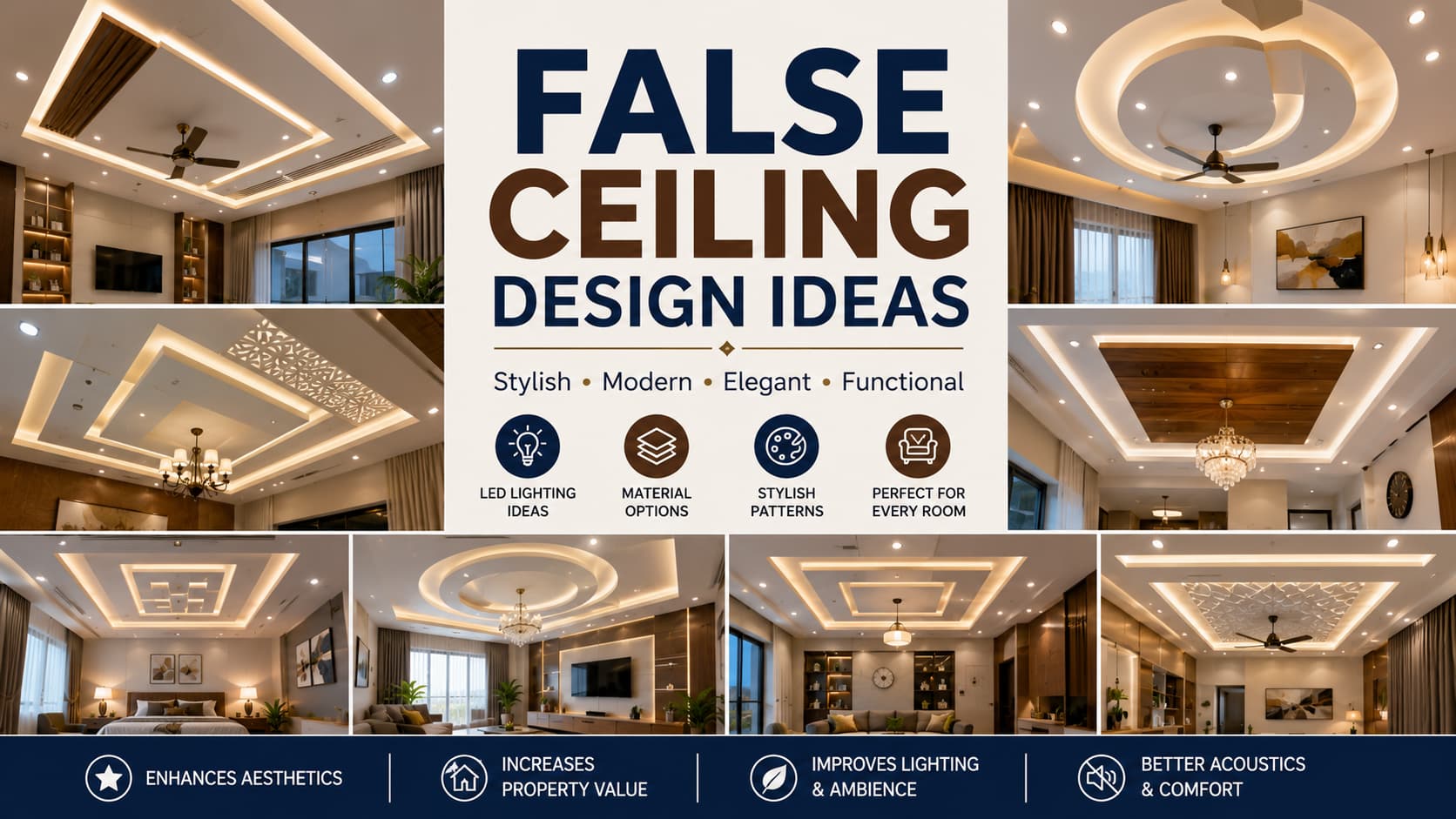
False Ceiling Design Ideas for Every Room in Your Home
The false ceiling is likely to become one of the quickest and most efficient ways to turn the plain room into a stylishly decorated one. Ceilings allow hiding installations, irregularities of the ceiling surface and provide a lot of opportunities for lighting and dividing the space into several zones. Whatever you decide to do - to completely renovate your house or to simply refurbish one room – the proper selection of ceilings will impress more than any other design solutions applied to the room.
What Is a False Ceiling and Why Consider One
False Ceilings or Suspended Ceilings or Dropped Ceilings are those ceilings that are installed just a few inches beneath the main structural ceiling. Ceiling can be made from materials like POP (Plaster of Paris), gypsum boards, plastic (PVC), wood, and metal.
Key Benefits
Includes wire coverings, duct covers, and piping
Offers proper sound proofing in bedroom environments and home theatre set ups
Recessed lighting can be installed
Helps regulate room temperature with extra insulation
Brings style to an unassuming room
A well-designed ceiling can also complement the overall character of a bedroom by working with its lighting, furniture, colors, and layout. If you are planning a complete bedroom makeover, explore 30 Bedroom Design Ideas for inspiration on creating a comfortable, functional, and visually balanced space.
Popular Types of Ceiling Designs
Materials vary depending on the room, cost, and maintenance requirements. The following is a brief overview of the most popular types that are used in thconstruction currently.
1. POP (Plaster of Paris)
Very flexible – curved, layered and complicated designs can be created
Completed with a smooth, flawless finish suitable for painting
More complex and time-consuming installation process than the one involving panels
2. Gypsum Board
They are light in weight, very fast to install, and simpler to fix than POP
Can be made of simple panels or designed in different shapes
One option that is common in designing a modern gypsum false ceiling
3. PVC
Waterproof in nature, thus very suitable for bathrooms, kitchens, and balconies
Less maintenance and easy to clean
Not as sophisticated in design as POP or gypsum
4. Wooden
Increases warmth and adds texture, usually installed in living spaces and dining rooms
Good choice when combined with exposed wooden beams and panel systems
More expensive and high maintenance in humid environments
5. Metal and Grid False Ceiling
Popular for office spaces, but now widely used in homes for an industrial feel
Simple to maintain because panels can be easily removed
Ideal for modern settings
False Ceiling Design Ideas by Room
The right design changes depending on the room's function, ceiling height, and lighting needs.
Living Room False Ceiling Design
The ceiling design can be stepped or tray ceiling design which will make the room seem deeper
Use cove lighting along the wall which will add ambient lighting without creating harsh lights from the ceiling
Add a wooden panel in the center which can serve as a focal point to the living space
The use of two materials such as gypsum and wooden inlays will create visual appeal without making the room too crowded
Bedroom False Ceiling Design
Simple and single layer design with cove/LED strip lighting will keep the room soothing and relaxing.
Ceiling design above the bed alone instead of the whole room is an affordable choice for small rooms.
Warm color tones are better than cold white lights for sleeping zones.
Complex and elaborate designs should be avoided as they may seem chaotic.
Kitchen False Ceiling Design
Use either PVC board or moisture resistant gypsum board for the kitchen due to its humidity and heat conditions
Recessed lighting above the counter and cooking area enhances visibility
Have a smooth and simple design to prevent grease and dust accumulation in patterns
Hall and Dining Area Ceiling Design
Design of the false ceiling for the hall usually includes a border or frame design on the periphery of the room, while the center part remains high
Pendant lights go best with the ceiling over the dining table
Symmetrical designs fit the halls which are used for entertaining
Bathroom Ceiling Design
PVC panels are the best choice considering the moisture factor
Make sure that the design is very minimalistic – usually, a simple panel with one recessed light will be enough
Ensure that there is enough ventilation above the ceiling to avoid mold formation
POP vs Gypsum Design: Which One to Choose
Both options can deliver an excellent modern ceiling design — the right choice usually comes down to budget, timeline, and how intricate you want the pattern to be.
Lighting Ideas to Pair with a Ceiling Design
Lighting is often what makes or breaks a false design. A well-planned lighting layout highlights the ceiling's shape and adds mood to the room.
Cove Lighting: Involves installation of LED strips at the edges of the ceiling which create a glow without showing the lighting fixtures.
Recessed Spotlights: Involve the installation of small lights that can be used for task lighting in hallways and kitchen.
Chandelier or Pendant Cutouts: This involves the provision of an opening in the middle where the light fixture will hang from the original ceiling.
LED Strips with Changing Color: They are common in living rooms and bedrooms as they are mood adjusters.
Layered Lighting: Includes ambient lighting with coves and some recessed spotlights.
Cost Factors to Consider
The cost of a ceiling design depends on several factors, and it's worth budgeting for each one.
Material costs - POP is more costly compared to the use of PVC and gypsum boards.
Ceiling design - ceilings that involve several levels, curves or many patterns are more expensive due to the materials used and labor charges.
Ceiling Size and height - bigger ceilings and those that are high require more materials and labor to erect the scaffold.
Lighting - the quantity of lighting fixtures influences the total cost of the ceiling.
Finishing - this is typically done separately from the basic construction process.
Common Ceiling Design Mistakes to Avoid
Reducing ceiling height too much in an already low room, making the space feel cramped
Choosing an overly ornate design that clashes with the rest of the interior style
Skipping proper ventilation, especially above bathroom and kitchen ceilings
Using the same design across every room without considering each room's function
Underestimating the number of light points needed before installation begins
Ignoring maintenance access for future repairs to wiring or ducting
Mixing too many materials or colours within a single ceiling design
Tips for a Long-Lasting Ceiling Design
Get an accurate ceiling height measurement before finalising the design, especially in rooms under 9 feet.
Choose moisture-resistant materials for kitchens, bathrooms, and balconies.
Plan the electrical layout and light points before installation, not after.
Work with an experienced contractor for curved or multi-level POP designs.
Repaint or clean the ceiling periodically to keep it looking fresh, especially in kitchens.
A false ceiling can become even more effective when coordinated with the room’s furniture, wall treatments, lighting, and decorative elements. Thoughtful planning helps create a consistent interior theme without making the space feel overcrowded. For more inspiration, explore Home Decor Ideas for practical ways to combine colors, textures, lighting, and accessories throughout your home.
Frequently Asked Questions
1. What is the difference between POP and gypsum false ceiling design?
POP allows for more intricate, curved, and custom patterns but takes longer to install, while gypsum board is faster to install, easier to repair, and generally more budget-friendly.
2. Is a ceiling design suitable for a low-height room?
Yes, but it's best to use a minimal, single-level design that reduces the ceiling height by only a few inches, keeping the room from feeling cramped.
3. Which design is best for a living room?
Stepped or tray designs with cove lighting are popular for living rooms, as they add depth and allow for a defined seating zone.
4. Can a ceiling be installed in a bathroom or kitchen?
Yes, but PVC or moisture-resistant gypsum boards are recommended over standard POP due to constant exposure to humidity.
5. How long does it take to install a ceiling?
Simple gypsum designs can be completed in a few days, while detailed POP work with multiple levels and curves can take one to two weeks depending on room size.
6. Does a ceiling design increase the cost of home renovation significantly?
Costs vary widely based on material and design complexity, but simple designs in one or two rooms can be done affordably compared to a full-home false ceiling.
7. Is false ceiling maintenance difficult?
Gypsum panels are relatively easy to maintain and replace individually, while POP designs may require more careful patching if damaged.
Conclusion
False ceilings can serve much more than hiding wires and ducts; they influence the atmosphere, lighting, and character of the room as well. The type of ceiling that needs to be installed in your room will depend on the purpose of the room, your budget, and willingness to maintain the installation. First of all, select the room where the ceiling is needed most of all; then, find a material for it which suits humidity and height of the selected room and think about lighting before designing, these three aspects determine success of the majority of false.