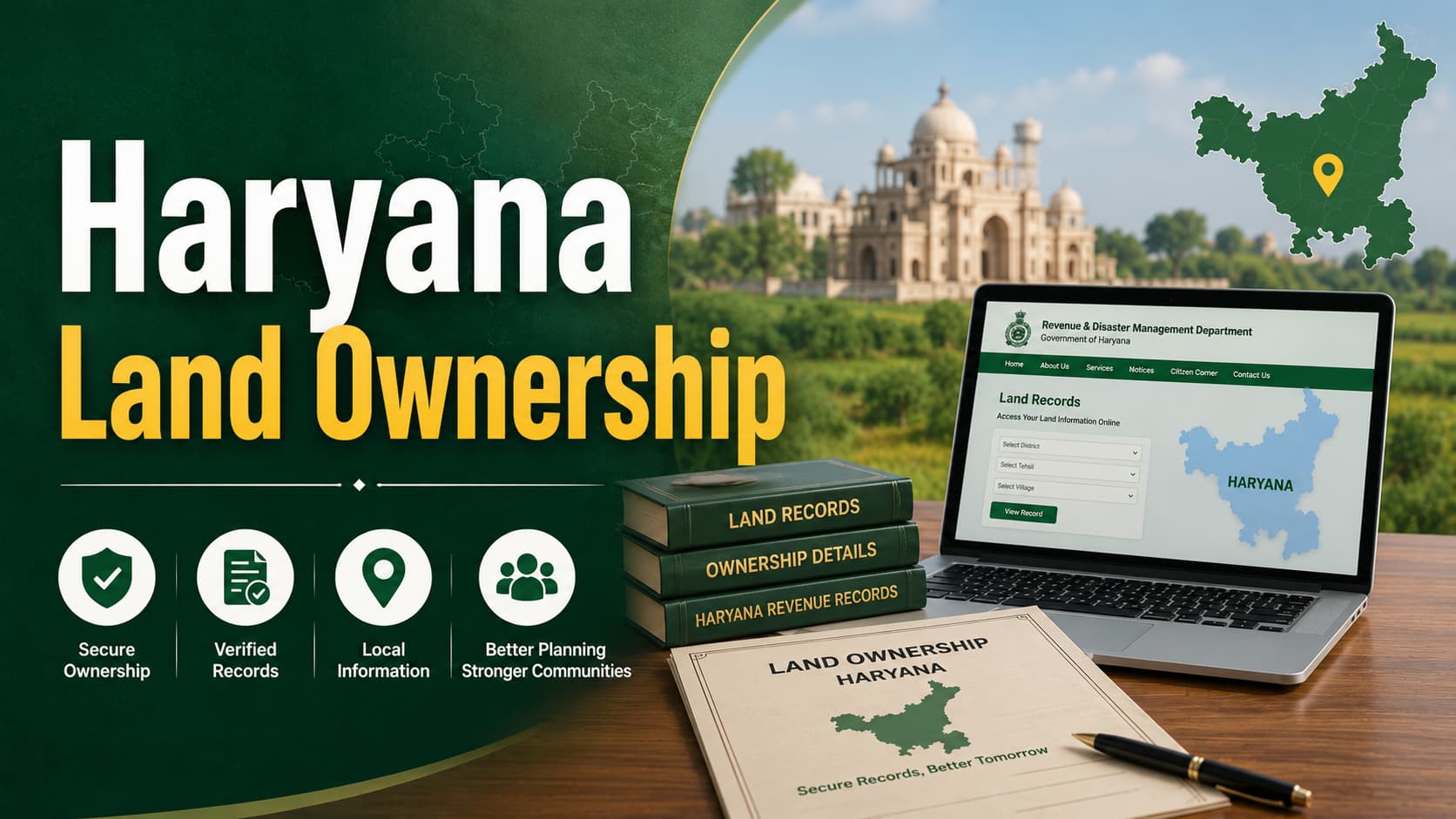
Haryana Land Ownership Documents: Complete Guide to Jamabandi
Introduction - One of the most significant land ownership documents in Haryana is the Jamabandi. If you have property in Haryana or you are planning to invest in properties there, then you must be aware of the significance of this revenue document. Here, we will provide you all the information regarding this ownership document.
This word Jamabandi originates from the Persian language, where it means “Settlement of Accounts.” The jamabandi document is used as an official record that recognizes ownership of the land and contains information related to agricultural land. If you have any property in Haryana, it is important for you to have the correct ownership documents.
Understanding Land Ownership Documentation in Haryana
This basic document holds all the necessary information about the ownership and possession of agricultural lands in Haryana. It provides complete information regarding the owner of a particular land, possessor, and all other essential details regarding the land. This document is prepared by the Revenue Department of the Government of Haryana, which acts as an authority document proving the ownership of land in Haryana.
The document consists of several details, like the name of the owner, land area, nature of land, whether it is agricultural or non-agricultural land, information regarding tenant, mutation details, etc. You can consider it a document linking you to the land of Haryana.
Importance of Haryana Land Records in Real Estate
Legal Proof of Ownership
The most significant value of this deed of ownership is that it acts as a legal document of proof of ownership of the property. This document is valid in all courts of law and government and banking authorities in India. When you buy agriculture land in Haryana, this official document is used to prove ownership.
Property Transactions
Be it about purchasing, selling, or mortgaging land in Haryana, the ownership document is absolutely crucial. It is necessary for buyers to be sure that the person selling them the land actually owns it and the same goes for the banks as well.
Resolving Property Disputes
Should any legal issue arise pertaining to ownership of property or any other dispute, this official record will come handy for use in court cases. Such a record would be useful in dealing with boundary disputes, ownership disputes, and succession questions.
RERA Compliance
For properties in Haryana, especially in projects like Sector 12 Gurugram, DDA Housing Scheme, the underlying land ownership must be verified through RERA compliant channels. The RERA framework requires developers to prove clear title through documents that ultimately trace back to government-recognized land records.
Key Components of the Ownership Record
Owner Information
The ownership document clearly mentions the name, father's name, and address of the landowner. This section establishes who has the legal right to the property and is crucial for verification purposes.
Land Details
This section provides comprehensive information about the land parcel, including:
Survey number
Area in acres or square meters
Nature of land (agricultural, non-agricultural)
Category of land (irrigated, non-irrigated, etc.)
Location with respect to village and taluka
Tenant Information
The document also lists any tenants who may be occupying the land. This is particularly important in agricultural areas where landowners may lease their property to farmers or other users.
Mutation Records
The ownership record includes a history of mutations, which are changes in ownership. Each time the land is transferred to a new owner, a mutation entry is made in the document. This helps establish a clear ownership chain.
Encumbrances
The record notes any legal liabilities or claims against the property. This might include mortgages, pledges, or other legal encumbrances that affect the property's free transferability.
How to Access the Land Ownership Record Online
Step-by-Step Process
Step 1: Visit the Official Portal Go to the official Haryana Revenue Department website or the Land Records Online portal of Haryana. The state has digitized most of its land records for easy access.
Step 2: Gather Required Information To search for your ownership record, you'll need:
Village name
Taluka/Block name
District name
Survey number or Khasra number
Owner's name (optional but helpful)
Step 3: Search & Download Search for your property using the search option. After finding it, download the document related to the land record in PDF form.
Step 4: Verify Make sure that all information provided in the document is according to your expectations. Also, verify if there are any inconsistencies in the ownership, area, etc..
Offline Methods
If you prefer obtaining the ownership document offline or if the online portal is unavailable, you can:
Visit your nearest Patwari office
Apply for the document at the Tehsil Office/Revenue Department
Submit the required documents and information regarding the property
Receive the document after the process (in 5-7 days)
Differences Between Land Records: Ownership, Field, and Revenue Documents
Understanding the distinction between these three important land records is essential:
The Ownership Record (Jamabandi)
This is the history of ownership. It indicates the owner of the property and acts as evidence of ownership for either the person or the organization. The document is updated whenever there is a transfer of ownership through mutation.
The Field Register (Khasra)
The Khasra is the field register which has all the particulars concerning each individual plot or field. This includes the size, type of land, and the crops cultivated there. Unlike the ownership document, this does not show who owns the piece of land.
The Revenue Record (Khewat)
Khewat is basically a revenue record which combines all the different holdings of land belonging to one person. Its main purpose is tax assessment and revenue collection and thus differs from the ownership record.
Ownership Verification and Land Ownership Documents
Role in Buying and Selling
When purchasing land in Haryana, always request and verify the ownership record from the seller. The document will confirm:
That the seller is the rightful owner
The exact boundaries and area of the land
Whether there are any pending mutations
Any legal claims or encumbrances on the property
Verification with RERA Compliance
For properties that fall under RERA regulations, like those in Sector 12 Gurugram, DDA Housing Scheme, developers must provide clear evidence of land ownership. The land record serves as a crucial supporting document in this verification process.
Financial Institution Requirements
Banks and lending institutions in Haryana require verified ownership documents before approving loans against agricultural property. Lenders use these records to assess the property's value and the legitimacy of the collateral.
Updating Ownership Records After Property Transfer
The Mutation Process
The mutation process is used for updating the name of the buyer in the revenue document when one buys property in Haryana. It is necessary so that your name can come down as an owner in the document.
Steps for Mutation
File Application: Submit a mutation application at the local Tehsil office along with the sale deed
Verification: Revenue officials will verify the transaction and the documents
Publication: The application is published in local notice boards for 30 days
Finalization: After the objection period, the mutation is finalized and the record is updated
Timeline
The mutation process typically takes 2-4 months, though it can vary based on the complexity of the case and any objections raised during the publication period.
Common Issues with Land Ownership Records
Outdated Records
At times, the papers of ownership are not updated after mutations or transactions of properties. This causes problems for both parties and even legal issues. Make sure that you always go back to the Revenue Department and verify the record of your ownership.
Disputed Ownership
In some situations, two people may own the same piece of land on the basis of different historical documents. While one person’s ownership may be reflected in the paper of ownership, the other party may show a previous document proving their ownership.
Illegible or Damaged Documents
Old records of ownership, particularly the ones that have not yet been digitized, can be hard to understand or might be partially destroyed. Digitizing by the government will help preserve these records and access them easily.
Errors in Recorded Information
Errors in data entry or mistakes in the historical records can happen in the ownership records. Some of the most common errors include having incorrect area measurements, spelling mistakes in names, or survey number mistakes.
Land Ownership Records for Different Property Types
Agricultural Land
For agricultural land, the ownership document is the primary record. It clearly shows the area of cultivatable land and is essential for government benefits, subsidies, and institutional credit.
Non-Agricultural Land
Besides agricultural lands, the same record is kept even for non-agricultural lands in rural areas of Haryana. The procedure and significance are basically the same in case of agricultural lands.
Converted Land
In the case of conversion of agricultural lands into non-agricultural lands (urbanization/commercialization), the record of ownership is modified accordingly. This modification of ownership is very important for development and getting different kinds of permissions.
Online Portals for Land Records in Haryana
Official Government Portals
The Haryana government provides online access to ownership documents through:
Haryana Revenue Department website
Land Records Online portal (jamabandi.nic.in equivalent)
E-District portal of Haryana
Third-Party Platforms
There are many convenient service providers who can help you get copies of your land records; however, it is always advisable that the original documents be obtained through government portals.
Land Records and Property Financing
Loan Approval Process
When applying for a loan against agricultural land in Haryana, lenders require:
Original/Certified Copy of Ownership Document
Clear evidence of ownership from the record
Encumbrance Certificate to confirm that there were no mortgages before
Proof of the type of land and its size
Mortgage and Pledge
Banks often take ownership documents as security when lending against land in Haryana. The document serves as proof of collateral value and helps in quick loan processing.
Digital Transformation of Land Records
Digitization Initiatives
The Haryana government has undertaken extensive digitization of land records. This initiative aims to:
Makes records easily available to the citizens
Prevents fraud and forgery
Faster transactions for properties
Allows easy verification online
Benefits of Digital Documentation
Digital versions of land ownership records offer:
Immediate access from any location
Minimal administrative delays
Enhanced data security
Simple sharing with approved individuals
Preservation of historical records
Tips for Effective Property Record Management
Before Purchasing Land
Get the latest certificate of ownership from the vendor
Compare the name of the owner with that of the sale deed
See whether there is any mutation pending or dispute involved
See whether there is any encumbrance on the land
After Purchasing Land
Make sure that the mutation is made within the specified period
Keep updated records of any further transactions
Make sure that you have multiple certified copies
Back up the documents digitally
For Property Disputes
Seek the advice of a property lawyer
Get certified copies of the historic records of your land
Filing of a caveat if you expect to go to court
Proof of ownership by means of documentary proof
Future of Land Ownership Documentation
The digitization of ownership records is ongoing, with plans to:
All historical records to be digitized completely
Integrate with other state databases for verification
Use blockchain technology for increased security
Develop mobile apps for ease of access
Integrate with other states for property verification
Frequently Asked Questions (FAQs)
1. What exactly is the Haryana land ownership document and who needs it?
The land ownership document is the official record kept by the Haryana Revenue Department. The Jamabandi registers the owner of the land and gives essential information about the land. Every individual who has ownership, desires to buy, or has any legal interests in land in Haryana should have this land ownership document.
2. How do I download the land ownership record online?
The link where you will be able to download your ownership document through an online platform is at the official Haryana land records website. You just have to provide details like your village name, taluka, district, and survey number for getting hold of your document. It’s a completely free process which does not take much time as well.
3. What is the difference between ownership, field, and revenue records?
Ownership Register contains information about the landowners. Khasra is a field register consisting of information regarding each plot of land in the village. Khewat is a category of plots of land belonging to one owner for assessment purposes. Although all these three registers are significant, ownership register is the principal record for ownership.
4. How long does the mutation process take for land transfers?
Mutation takes an average of 2 to 4 months after the date of filing. But this time frame may stretch in case of any objections during the period of 30 days following publication or even if further verification is needed. It is recommended to file mutations right away after buying property.
5. Can I use land ownership records as collateral for a bank loan?
Yes, banks do accept the document of ownership very easily as evidence of ownership of the land while applying for a loan on your agricultural land in Haryana. It aids in assessing the worthiness of the property by the banks. Make sure to provide them with certified copies of the document along with encumbrance certificates.
6. Is this ownership document valid for non-agricultural land as well?
Although the record is generally meant for agricultural land, it is kept for non-agricultural lands as well in rural Haryana. The record has the same function of determining the ownership of non-agricultural lands. In cases of agricultural land that has been converted into non-agricultural land, there is an amendment in the record.
7. What should I do if I find errors in my land ownership record?
In case of any mistakes found in your title paper, go to your nearby Tehsil or Revenue Department office with evidence of the right information. Submit an application for correction and supporting documents. This process takes some time, but it is important to correct mistakes to prevent future problems.
8. How often is the land ownership record updated?
Whenever there is any change in ownership through mutation or whenever there is a change in the purpose of land usage from agricultural to non-agricultural, then the records pertaining to ownership are updated. Besides, the encumbrances will also be updated whenever there are mortgages or pledges raised or discharged.
9. Can I get certified copies of land ownership records from government?
Yes, you can obtain certified copies of the ownership document from the Tehsil or Revenue Department office. Certified copies have legal validity and are accepted by banks, courts, and government agencies. You can also download digital copies from the official portal, though notarization by a lawyer may sometimes be required for official purposes.
10. What is the role of land ownership records in RERA compliance?
For properties in RERA regulated projects like Sector 12 Gurugram, DDA Housing Scheme, developers must prove clear land ownership. The ownership record serves as crucial supporting documentation in this verification process, helping establish that the developer has legitimate title to develop the property under RERA regulations.
Conclusion
Jamabandi still forms the backbone of the process of recording land ownership in Haryana. For farmers, investors, or individuals owning property in the state, being able to access accurate and updated ownership records is critical to safeguarding their rights. The digitalization of these records has never been easier.
As you navigate property transactions in Haryana, always prioritize obtaining and verifying the ownership document. Combine it with other verification methods, professional guidance from real estate experts, and RERA compliance checks to ensure your investment is sound and legally protected.