The purchase of an apartment constitutes one of the biggest financial decisions that you will make in your lifetime. Since real estate fraud cases have become more complex, verifying the compliance to regulations has never been so important. This guide explains the full procedure of RERA registration verification.
What Is RERA and Why Does It Matter?
The Real Estate Regulatory Authority is a statutorily recognized organization that comes from the Real Estate Regulation and Development Act, 2016. The Real Estate Act is a historic statute aimed at introducing transparency and accountability in India’s real estate industry.
RERA covers all states and union territories in the country although each operates an individual regulatory regime. The key aim of this act is the protection of home purchasers from being misled by developers or agents or suffering losses due to default on projects. Prior to the introduction of this law, there were very few options available for the purchasers if such defaults happened.
With projects registered through this scheme, you have protection of law, grievance handling facility and transparency assured. However, with unregistered projects, you become a potential target of fraudulent activities.
Why Verification Before Purchase Is Non-Negotiable
First-time investors tend to believe that if a project is well-advertised and marketed, then it is automatically legal. This belief is very misleading and dangerous for investors. The developers of fraudulent projects create professional websites, have their offices in expensive locations and conduct active marketing campaigns even though their projects are illegal.
The process of checking the registration status takes about 5-10 minutes but saves you from being cheated by:
Incomplete projects left incomplete
Developers that skip town with cash
False representation of units' features and facilities
Double sale of similar units
Hiding of financial responsibilities
Projects without occupancy permits
The onus of verification rests entirely on you. Regulatory authorities do not proactively reach out to buyers; you must independently confirm compliance before signing any agreements.
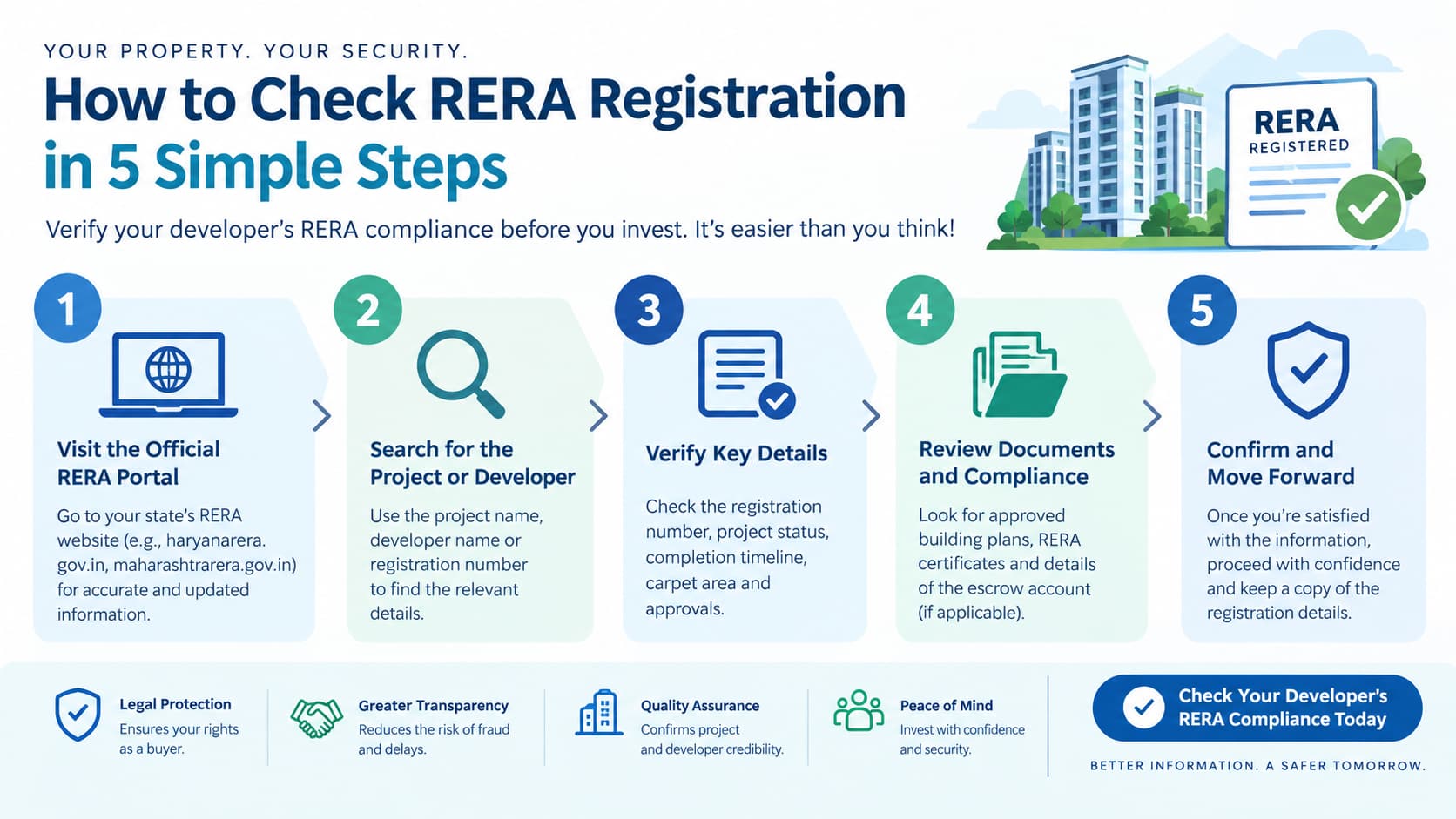
Step-by-Step Guide to Checking Registration Status
Step 1: Visit the Official State RERA Website
Each state operates its own RERA portal. Navigate to your specific state's official website. For example:
Haryana RERA: haryanarera.gov.in
Maharashtra RERA: maharashtrarera.gov.in
Delhi RERA: delhirera.gov.in
Uttar Pradesh RERA: uprera.in
Karnataka RERA: rera.karnataka.gov.in
Avoid third-party websites that claim to provide RERA data—these are unreliable and may contain outdated information. Always access the official government portal directly.
Step 2: Locate the Project Search Portal
Once you get to the official website, locate the “Search Project” or “Project Details” area. In most cases, there is an easy-to-find search option at the homepage. Sometimes, this section is known as “Database of Registered Projects.”
Step 3: Enter Required Information
You'll typically need one of the following to search:
Registration number (if you have it from promotional materials)
Project name (exact spelling is important)
Developer or builder name
Location or sector
Use precise information. If you search for "Green Park Residency" but the official registered name is "Green Park Residential Complex," your search may return no results.
Step 4: Review Displayed Information
The database will display:
Registration number and date of issue
Details of developer/promoter including contact
Location of the project and size
Number of units (flats/units, plots, commercial space)
Date of completion expected
Cost of the total project
Details of the escrow account (where buyers' money is kept)
Status of the project (in progress, completed, delayed, etc.)
Cross-reference every detail with the marketing materials and sale agreement provided by the developer.
Step 5: Verify Project Status and Compliance Certificates
A registered status doesn't automatically mean the project is progressing smoothly. Check:
Status indicator: Is it "Active," "Completed," or marked for violations?
Compliance report: Some portals indicate whether the developer has been penalized or taken to court
Updates on completion: Good portals keep you informed of the milestones achieved by the project
Occupancy certification: Has the project got its approval from civic authorities?
Step 6: Check Builder Credentials
Click on the developer or promoter name to access their profile. Verify:
How many projects has this developer registered?
What is their completion track record?
Are there ongoing complaints or legal cases?
How long has this developer been in operation?
A builder with a single project may be a new entrant; a developer with multiple completed projects demonstrates reliability (though completion history isn't guaranteed future performance).
Critical Details to Cross-Check with Your Agreement
After ensuring the registration, verify the data in the database by comparing it to the sale agreement and brochure:
Specifications of the unit: The registered project must specify the exact carpet area, built-up area, and total area of your unit. If your agreement states differently, then it raises a red flag.
Amenities mentioned: Make sure all amenities mentioned in the brochure are included in the registration paper. Any amenities added after registration cannot be made legal.
Time frame and completion date: Ensure the agreement mentions the RERA registered completion date. Any oral promise of completing construction before that is void.
Cost structure: The total cost mentioned in registration papers should match your cost structure. All costs other than the one mentioned in the official paper are legally uncertain.
Bank account for escrow: Remember the bank account through which your payments are routed. This will ensure safety of your payments in case the developer faces financial crisis.
Additional Verification Steps
Contact the RERA Authority Directly
Most state RERA offices provide contact details on their portals. You can call or email with specific queries about a project. They can confirm:
Whether a project is genuinely registered
If any complaints have been filed
Whether the developer is under investigation
If there are any financial or legal red flags
This step takes an additional 15-20 minutes but provides official confirmation directly from the regulatory body.
Request Project Approval Documents from the Developer
Legitimate developers willingly provide:
RERA registration certificate (digital or scanned copy)
Occupancy certificate or permission letter from civic authorities
Completion certificate for finished projects
Insurance certificates
Environmental clearance documentation
If the developer refuses or delays providing these documents, this indicates potential non-compliance.
Verify Authorized Bank Accounts
RERA regulations mandate that buyer funds be held in escrow accounts by third-party banks. Confirm:
The bank account details mentioned on the registration portal
That the account is managed by the specified bank branch
That your payment instructions match the official escrow account
Never transfer money to personal or company accounts even if a developer claims "temporary arrangement" pending official account setup.
Red Flags That Warrant Investigation
Discrepancies in registration information as compared to sale agreement
Developer's refusal to provide RERA registration information
Project declaring themselves “exempt” from being registered (only very rare cases)
Unusually low prices as compared to market prices
Pressure for prompt signing of agreements without time for verification
Verbal promises of benefits not included in any documentations
Several complaints regarding the developer found on RERA website
Final Checklist Before Signing
Before you commit financially, ensure:
✓ Project is registered with the state RERA authority ✓ All details in registration match your sale agreement ✓ Developer has satisfactory completion track record ✓ Escrow account details are confirmed ✓ Occupancy certificate status is verified ✓ You've reviewed all project-related certifications ✓ Timeline and cost structure align across all documents ✓ You understand dispute redressal procedures available under RERA
Conclusion
To verify the RERA registration is a simple task that does not consume much time but assures complete safety for your money. This organization was formed for the very reason of prevention of any frauds and guaranteeing the transparency of processes. It is enough to spend just half an hour on verification before purchasing anything.
Never forget that buyer beware is the motto of the real estate market. Even though the compliance with regulations may give you some safety, do not neglect your duty of checking all information.
There are many materials that can help you assess projects and learn about buying procedures.