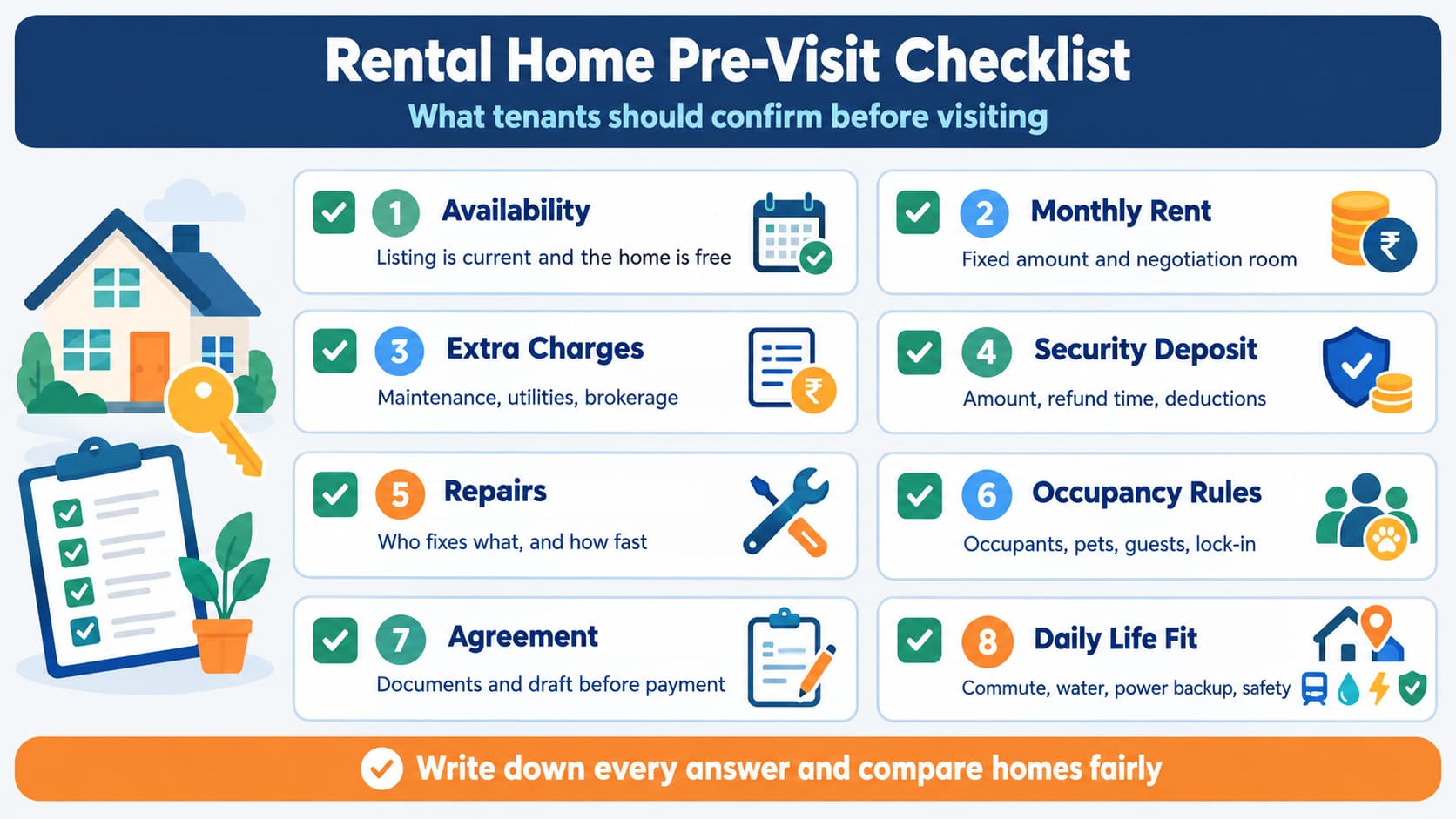
A tenant needs to ensure that they are checking on five aspects of a rental home before making a visit to view the property. These include whether the rental unit is available for rental, the monthly rent, the amount of deposit required, responsibility for maintenance, and restrictions regarding occupation. Five questions through a phone call will be able to address these aspects without requiring any physical visits. This will save you the trouble of making a physical visit to a rental home that is no longer available, or has a different price from what was advertised, or not accessible to your kind of family. The first, simplest query that you should make is whether the property is still on the market. Listings become stale very quickly – there could be no vacancy at all but the listing will be there. Questions to ask: Is the home available today, and when was the listing last updated? What is the earliest move-in date, and is the move-in date negotiable? Are the photos up to date, and do they depict the real apartment? Am I talking to the owner, a landlord’s representative, or an agent? Check if the responses match the listing. Should there be any differences in terms of flooring, size, furnishings, or even rental charges, inquire about it before you proceed with your travel plans. On a rental website, make sure that there is an evident update date on the listing and if contact information is easily accessible. The advertised rent is rarely the full monthly cost. Treat it as one line in a larger budget and ask for the total. Request those figures in written form, even if that means sending a message. Add them up to find out your actual figure for the month. Two houses having equal rent can be miles apart when you consider the costs. The clearer an advertisement is in terms of figures, the better it is. When an owner dodges the total, it is a cause for concern. The deposit is often the largest upfront payment, so it deserves clear answers before you commit any time to a visit. Ask: What months of rent does the deposit cover? Is it fully refundable, and when would you get your money back? Are there deductions such as for damages, outstanding bills, or painting? Would you be issued a written receipt, and how do you pay for it? Would the deposit terms be included in the rental agreement? The laws of tenancy in India vary from state to state, therefore you should know the regulations of your region before assuming anything. If something seems odd about the figure, double-check with the authorities or with a lawyer. The most frequent conflicts between tenants and landlords are maintenance issues. Sorting out the details upfront avoids such conflicts. Ask about: Repair services: Who is responsible for minor repair work such as leaks from taps, burnt out bulbs, and faulty switches? Major repair services: Who takes care of repairing appliances or structural issues, and how quick is the turnaround? Societal services: Do these services come with your rent, or will you be charged for them separately? Appliances and furniture: Which appliances are included with the house, and what state are they in? Contact process: To whom should you make contact if there is a problem? Ask for the inventory of furnished items before the visit so you can check them in person. A clear repair process is a good indicator of a responsive landlord. The occupancy guidelines determine whether the residence will work for you. This is where most renters fail to ask questions that they will eventually regret. Ask about: Who may rent: Does the landlord prefer families, working adults, or students? Maximum occupancy: Is there any limitation on the number of occupants? Are pets or guests allowed, and what are the conditions for it? What are the lifestyle restrictions: No cooking, visitors, or any specific time limits? What is the period of lock-in and notice period? Is there an increase in the rent per year, and by how much? If any rule is a dealbreaker for you, you will know before you travel. It also shows the landlord that you are a careful tenant, which helps the relationship from the start. Confirm what paperwork the landlord expects. Knowing it early lets you prepare. What documents do you need for your identity and address proof? Is there a written agreement for the rent, and how long is it for? Is police verification needed or any other local process? Who drafts the agreement, and who pays for it? Ask to see a draft agreement before you pay anything. Read it for the rent, deposit, notice period, and maintenance terms you discussed. If the house is in a new development or housing project, research the developers and the specifics of the project. In India, if the project is registered under RERA, then it will be found on the state-level RERA website, which means that you should use it to confirm the registration of the project, rather than depending on the listing. The need for checking is relevant mostly to new constructions. A good home on paper can still be a poor fit. Before you visit, check the practical details that shape your daily routine: Commute: What’s the distance from your place of work or learning or the nearest metro station? Connectivity: Are the transport facilities easily available? Amenities: Do you have any provision for grocery shopping, medicines, and hospitals? Utilities: What’s the availability of water and backup power? Safety: Is the property equipped with proper security measures and lights? Budget compatibility: Can you afford the total monthly rent expense? These points help you rule out homes without leaving your desk. An online platform for real estate would make things easy when used properly. The filters such as range of rent, locality, furnished or unfurnished, tenant type reduce the choices. Photos and location details would help eliminate those which do not match. The option to query directly would allow you to ask all your questions before visiting. While selecting an online portal, one should check how up-to-date its listings are, how clear is the contact information provided and what privacy policy it uses. For example, on Prooperty, you could compare the listing and send an enquiry asking all the questions prior to visiting. Copy these into your notes and fill them in for each listing: Availability and move-in dates established Rent, utilities, and maintenance recorded Deposit amounts and deductibles recorded Repairs outlined Occupancy requirements compared to your situation Discussion of agreement and paperwork Travel and amenities assessed Visit date, time, and person confirmed If the answers seem satisfactory, make use of the visit to confirm them. Inspect the walls, switches, windows, and ceiling for any traces of moisture. Also evaluate the strength of the mobile network, noise, and state of the furnishings and home appliances mentioned in your list. Make sure to take some pictures of the damage that already exists. Assuming that the advertised rent is the last price Avoiding asking about returning deposit money Not raising concerns about occupancy conditions until after the viewing Paying an insignificant sum before seeing the rental agreement Depend on pictures without considering their age Comparing advertisements in memory rather than by notes What should I ask before visiting a rental home? Should I ask about the security deposit before the visit? Is maintenance usually included in the rent? Can I ask about pets, guests, and family size before visiting? How do I know a rental listing is still available? Do I need to check RERA for a rental home? Some minutes spent on asking questions prior to the visit can make you many hours and prevent unpleasant surprises. Check whether it is available, the exact amount of the monthly rent, terms of deposit, maintenance requirements, and regulations of living there, and put everything into one place to compare different apartments. If necessary, I can prepare for you the Blogger, Medium, and Quora Spaces posts.What Information Should Tenants Confirm Before Visiting a Rental Home?
1. Confirm Availability and the Listing Itself
2. Ask for the Complete Monthly Cost
3. Understand the Security Deposit Terms
4. Clarify Who Handles Maintenance and Repairs
5. Check Occupancy Conditions
6. Ask About Documents and the Agreement
7. Check the Building and Project Background
8. Match the Home to Your Daily Life
How to Use Online Platforms Wisely
A Simple Pre-Visit Checklist
What to Look at During the Visit
Common Mistakes Tenants Make
Frequently Asked Questions
Ask whether the home is available, the total monthly cost, the deposit terms, who handles maintenance, and any occupancy rules.
Yes. Knowing the amount and refund terms early helps you decide if the home is worth visiting.
It depends on the home. Some owners include it, others charge it separately, so ask for a written breakdown.
Yes. These rules vary by owner and building, and asking early avoids a wasted trip.
Contact the owner or agent and ask for the current status and the listing's last update date.
RERA mainly applies to projects. If the home is in a newer project, you can verify its registration on the official state RERA website.Conclusion