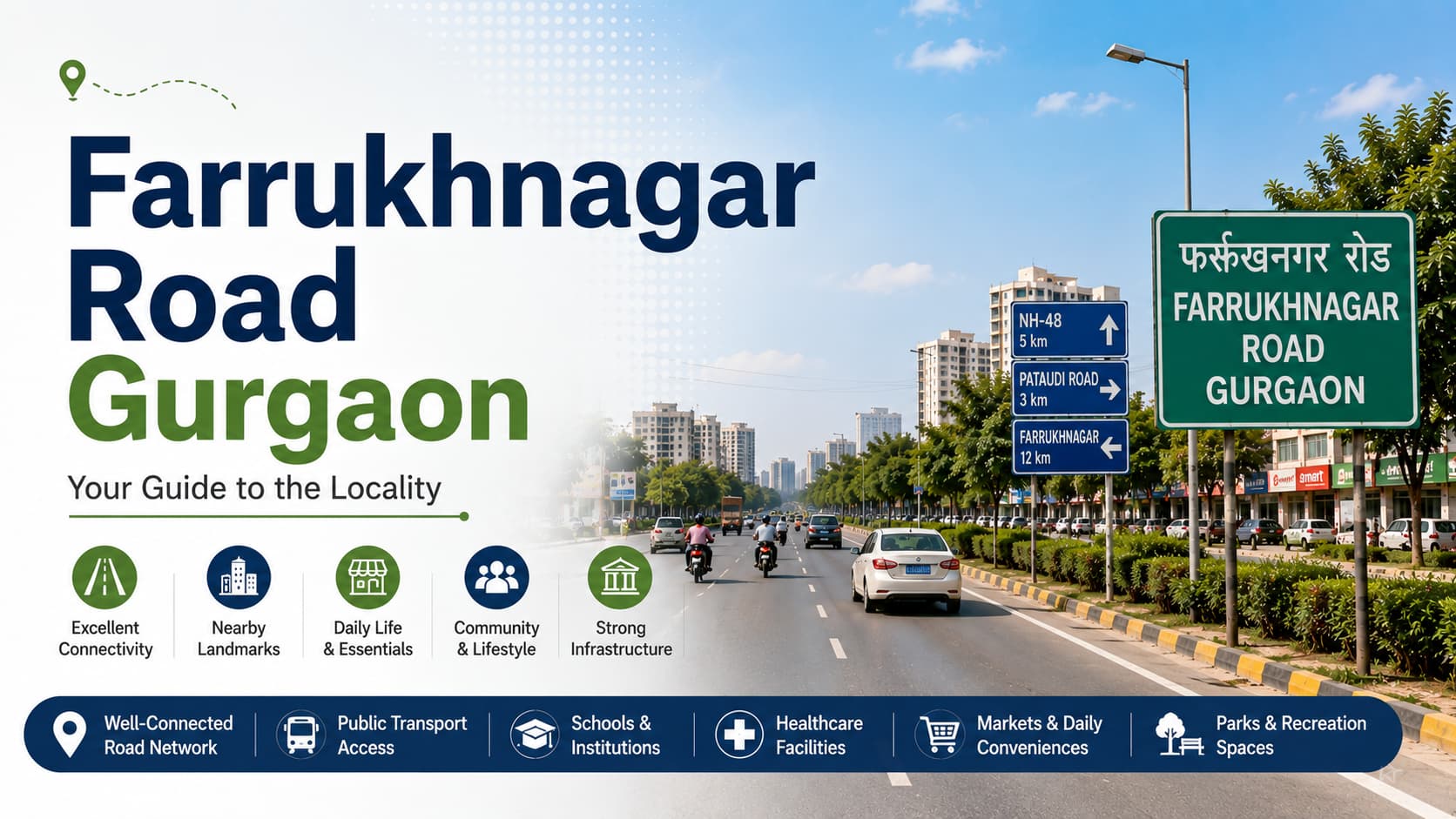
Farrukhnagar Road Gurgaon : Introduction
Farrukhnagar Road in Gurgaon is a quietly significant connection between organized city life in Gurugram and Haryana’s historically rich town of Farrukhnagar. This road heads west from Gurgaon city, through Garhi Harsaru, ending in Farrukhnagar. Farrukhnagar has a 300-year-old Nawabi history and is becoming a hub for real estate and industries on the outskirts of the national capital region.
This area is around 21 kilometers west of Gurgaon’s main hub and uses the 122506 postal code. Unlike other tech-driven areas with their shiny skyscrapers, Farrukhnagar Road has a different vibe. You've got spacious state roads, wide-open farmlands transitioning into residential plots, small-town markets, a working railway station, and old structures from the Mughal period.
It’s this blend of old and new that gives Farrukhnagar Road its charm. Small-town simplicity meets the buzz of fresh business ventures, making it an interesting place to look deeper into.
The Kundli-Manesar-Palwal (KMP) Expressway is close to Farrukhnagar, running about 2 kilometers from the town. Also, you can access the Dwarka Expressway through some connecting roads. These roadways have caught the attention of investors, industrial planners, and DDJAY plot buyers, making Farrukhnagar seem like the next hot spot for real estate. In early 2026, the HSIIDC said they'd develop 1,800 acres of industrial land near Pataudi and Farrukhnagar. This plan involves setting up land in three different spots and shows their commitment to developing the area for the long haul.
This guide takes a look at all aspects of Farrukhnagar Road Gurgaon. It goes over civic identity, nearby amenities, property tips, FAQs, and the government rules that govern the place. Plus, we cover everything from social infrastructure to the investment climate and how it's run by civic administration.
At a Glance | Key Local Facts
Why This Locality Stands Apart from the Rest
Farrukhnagar Road in Gurgaon is special because not many real estate areas in NCR can make the same claim. It blends actual history with big investment chances. Founded in 1732 by Faujdar Khan, the first Nawab of Farrukhnagar and a Mughal Emperor Farrukhsiyar's governor, the town has a rich past. Back then, the salt trade brought a ton of wealth here. This left cool architectural stuff like Sheesh Mahal, the Baoli, Jama Masjid, and Dilli Darwaza. These spots now draw history buffs, photographers, and folks who dig culture.
This heritage identity makes the area really stand out compared to new, planned zones. When someone buys a plot by this road, they aren't just getting land; they're getting into a spot with tons of history. Centuries of people living there generally mean a stable community, good services, and thriving local markets and industries.
The area also rocks modern amenities. Sitting where two of Gurgaon's main growth paths meet, it's got easy access to key spots. The KMP Expressway is about 2 km away, linking folks to the Manesar industrial zone, Rewari, Jhajjar, and even the Delhi-Mumbai Expressway. Plus, the Sultanpur National Park, known for its bird life, enhances the local vibe with green space and eco-charm.
For investors, the announcement of three new industrial clusters by the HSIIDC, totaling 1,800 acres in the Pataudi-Farrukhnagar belt and revealed in March 2026, stands out as the biggest near-term boost. With plans to create more than 50,000 jobs, these developments will seriously ramp up residential and rental demand along the road corridor. No single real estate project could match that impact.
What sets this area apart is its affordability too. Compared to Gurgaon’s pricey sectors where plots go for Rs. 1,00,000 per sq. yd. and up, here you find land in the Rs. 40,000–65,000 per sq. yd. range. So, it's one of the rare spots in the Gurugram district where middle-income folks can still think about buying land.
Nearby Connectivity and Infrastructure
Farrukhnagar mainly connects to Gurugram via the Garhi Harsaru-Farrukhnagar Road. This road leads to Garhi Harsaru and then onto the wider Gurgaon road network, linking up with NH-48, the Delhi-Jaipur Highway, and the Dwarka Expressway. This lets folks get to central Gurgaon and Delhi, though it involves going through Garhi Harsaru or using the KMP Expressway exit.
About 2 km from Farrukhnagar lies the KMP Expressway. This thing's huge for the area because it offers quick, direct access to places like Manesar's industrial zones, Palwal, Rewari, and the Delhi-Mumbai Expressway. For people working in Manesar's IMT or nearby logistics spots, the KMP Expressway makes Farrukhnagar a nice place to live without breaking the bank.
Rail connectivity is a real asset for Farrukhnagar. Since its opening in 1901, Farrukhnagar Railway Station has been an important part of the town, running on the Garhi Harsaru–Farrukhnagar branch line. Though it now provides limited services, the station holds historical significance and acts as a vital link to the Garhi Harsaru Junction — a key spot for both freight and passengers.
Buses also play a big role in getting around. Haryana Roadways runs services to Gurgaon, Jhajjar, and nearby towns. Once people get to Farrukhnagar, they usually finish their trip in auto rickshaws or shared vehicles. While app-based cabs are available, they're not as common as those found in more central areas of Gurgaon. Thankfully, the roads are kept in good shape, and there are plans for further improvements through MCG and GMDA projects. The real estate character of Farrukhnagar Road Gurgaon is very different from the high-rise apartments in central and New Gurgaon. Here, it's all about the plots—residential, DJAY-scheme, agricultural, and industrial. Buyers look for land first, which is way more affordable than what you find in central Gurgaon, making it possible for average middle-income families to own property here. Residential plot rates in and around Farrukhnagar go from Rs. 15,000 to Rs. 35,000 per sq. yd. in already developed areas. For newer places under the DDJAY scheme on Pataudi Road close to the KMP belt, prices start at Rs. 40,000 per sq. yd. But remember, these numbers are just estimates. It's best to double-check them with local brokers and RERA records. The big news is the HSIIDC's 2026 announcement of three new industrial clusters that will total 1,800 acres across the Pataudi-Farrukhnagar area. They expect this to drive demand for homes in the region over the next 5 to 10 years. Usually, when large employment centers open up, there's a rush for rental housing first, then people start buying homes as things settle down. This is how it played out near Manesar in 2010-2015, leading to pretty steady growth for investors. Right now, commercial real estate in Farrukhnagar is mainly about local spots — think marketplaces, tiny shops, and storage facilities along the roads. However, as those industrial zones expand, look out for more need for places that handle logistics, provide services, and offer retail space to the growing work force. The rental market in Farrukhnagar is pretty basic but gets the job done. Most renters here are working-class folks or factory workers who head to Manesar and the KMP belt. They pay around Rs. 4,000 to Rs. 8,000 a month for a one or two-room place. If you want something bigger, like an independent house or a builder floor, that'll set you back Rs. 8,000 to Rs. 15,000. This is way cheaper than what you'd pay in Gurgaon's main areas. So, Farrukhnagar draws in tenants looking to save on housing and can live with a bit of a longer commute. Buyers should keep an eye on the DDJAY scheme for the best deals in 2026. It offers affordable plotted townships backed by the government with RERA registration. Plus, developers like Yashvi Builders, Spiti Developers, and 3B Homes are building in Pataudi-Farrukhnagar. If you're buying for your main home, consider the fewer top-notch schools and less access to fancy hospitals and fun stuff in Farrukhnagar. People usually drive to private hospitals in Manesar or Gurgaon. But there's hope – AIIMS Jhajjar is getting popular and it's about 20 km away. For investors with a longer view, say 5 to 10 years, who believe in the area's industrial future, the plot prices here make sense given the risks. So, if you're in for the long haul and think big with the region's growth, it could pay off. 1. What is the pin code of Farrukhnagar Road Gurgaon? The pin code of Farrukhnagar is 122506. It falls under the Gurgaon district and Farrukhnagar tehsil of Haryana. 2. How far is Farrukhnagar from central Gurgaon? Farrukhnagar is approximately 21 km from central Gurgaon city. The journey via Garhi Harsaru road takes roughly 35-45 minutes depending on traffic and route taken (approx. — verify before publishing). 3. What is the KMP Expressway distance from Farrukhnagar? The KMP Expressway (Kundli-Manesar-Palwal Expressway) is approximately 2 km from Farrukhnagar, making it one of the most direct connectivity assets for residents of this corridor to reach Manesar, Rewari, and the Delhi-Mumbai Expressway. 4. Is there a railway station near Farrukhnagar Road? Yes. Farrukhnagar Railway Station, which has operated since 1901, is located within the town itself on the Garhi Harsaru–Farrukhnagar branch line. Garhi Harsaru Junction, a more significant railway hub, is approximately 9 km away and offers broader rail connectivity. 5. What are the heritage landmarks near Farrukhnagar? Farrukhnagar is home to several Mughal-era heritage sites built by Faujdar Khan, the first Nawab of Farrukhnagar. Key landmarks include Sheesh Mahal, Jama Masjid, the Baoli (step well), and Dilli Darwaza. Sultanpur National Park, a popular bird sanctuary, is also located within the Farrukhnagar tehsil. 6. What type of properties are available near Farrukhnagar Road Gurgaon? The dominant property types in this corridor include residential plots, DDJAY-scheme plotted townships, independent houses, agricultural land, and industrial plots. Group housing apartments are limited compared to central Gurgaon sectors. Buyers should explore RERA-registered DDJAY projects for organised, documented plot ownership. 7. What is the HSIIDC industrial development near Farrukhnagar? In March 2026, HSIIDC announced plans to develop three new industrial clusters totalling approximately 1,800 acres across 12 villages in the Pataudi-Farrukhnagar belt. The development includes a Pataudi Industrial Hub (750 acres), a Pataudi-Farrukhnagar industrial zone (500 acres), and a Farrukhnagar-Harsaru cluster (550 acres). Combined, these are expected to generate over 50,000 jobs and significantly boost housing demand along this corridor. 8. Are there good schools in the Farrukhnagar area? Within the town, SDS Senior Secondary School, Dhankhar Senior Secondary School, Royal Public Senior Secondary School, and a Government High School serve local education needs. For premium or international schooling, residents typically travel to institutions in Manesar or Gurgaon's main sectors, which are 12-20 km away. 9. What is the assembly constituency covering this locality? Farrukhnagar falls under the Badshahpur assembly constituency (approx. — verify before publishing) and the Gurgaon Lok Sabha constituency. 10. Is Farrukhnagar Road good for long-term investment? The corridor shows strong long-term investment potential driven by KMP Expressway proximity, the HSIIDC industrial development announcement, growing demand for DDJAY plots, and proximity to AIIMS Jhajjar. Investors with a 5-10 year horizon and a tolerance for early-stage infrastructure risk will find the land price entry point attractive relative to comparable Gurgaon periphery locations. Farrukhnagar is run by the Municipal Committee Farrukhnagar, which takes care of things like roads, water, street lights, and waste management. The Haryana Shehri Vikas Pradhikaran, formerly known as HUDA, does the planning and building for plotted sectors and infrastructures in the notified areas along Farrukhnagar Road. For industrial growth, look at HSIIDC; they're pushing land acquisition and development in the Pataudi-Farrukhnagar area, even setting aside 1,800 acres for new industrial clusters in 2026. DHBVN, or Dakshin Haryana Bijli Vitran Nigam, handles electricity for Gurgaon, including Farrukhnagar. For water, PHED Haryana manages supplies in town and tehsil areas, while HSVP takes care of it in the notified residential zones. Properties here come under the Gurgaon revenue district. To buy real estate, you need to check the Haryana RERA site and the Jamabandi system to make sure everything’s legit. The police? Well, the Gurugram Police under Haryana Police keeps order. There's even a station right in Farrukhnagar town. If you're into politics, the assembly constituency might be Badshahpur - though you should double-check that info. And the parliament seat is definitely Gurgaon Farrukhnagar Road in Gurgaon isn't aiming to be the next Golf Course Road. It's actually more genuine and possibly more sustainable – a historical town hit by big industrial growth. This place offers cheap land, real connections via the KMP Expressway, and its own unique culture that you can't create in planned towns. So for those buyers and investors wise enough to know that great property deals start before all the buildings go up, this area in 2026 gives them just such an early chance. The HSIIDC industrial cluster, AIIMS Jhajjar for healthcare, DDJAY's township plans, and the KMP Expressway all hint at a spot growing up fast. These elements suggest strong future demand. Yet, current drawbacks exist – just a few fancy schools and hospitals, boring and there’s more traffic when heading to central Gurgaon. This type of thing though, has shaped successful property plays in the NCR area before. Farrukhnagar, boasting a legacy spanning three centuries, a rail link still in use, and sitting next to the Sultanpur bird sanctuary, is seeing a revamp in its industry scene too. Dive into this area now and you get a head start on the hot new region around Gurgaon – before everyone else jumps in.Nearby Temples
Nearby Hospitals
Nearby Schools, Colleges and Institutes
Nearby Malls and Cinema Halls
Nearby Clubs
Nearby Hotels and Restaurants
Nearby Farm Houses
Nearby Sports Clubs and Parks
Nearby Residential Projects
Nearby Commercial Projects
Real Estate Profile | Residential and Commercial Outlook
Rental and Buyer Insights
Frequently Asked Questions
Government and Civic Administration Overview
Final Summary