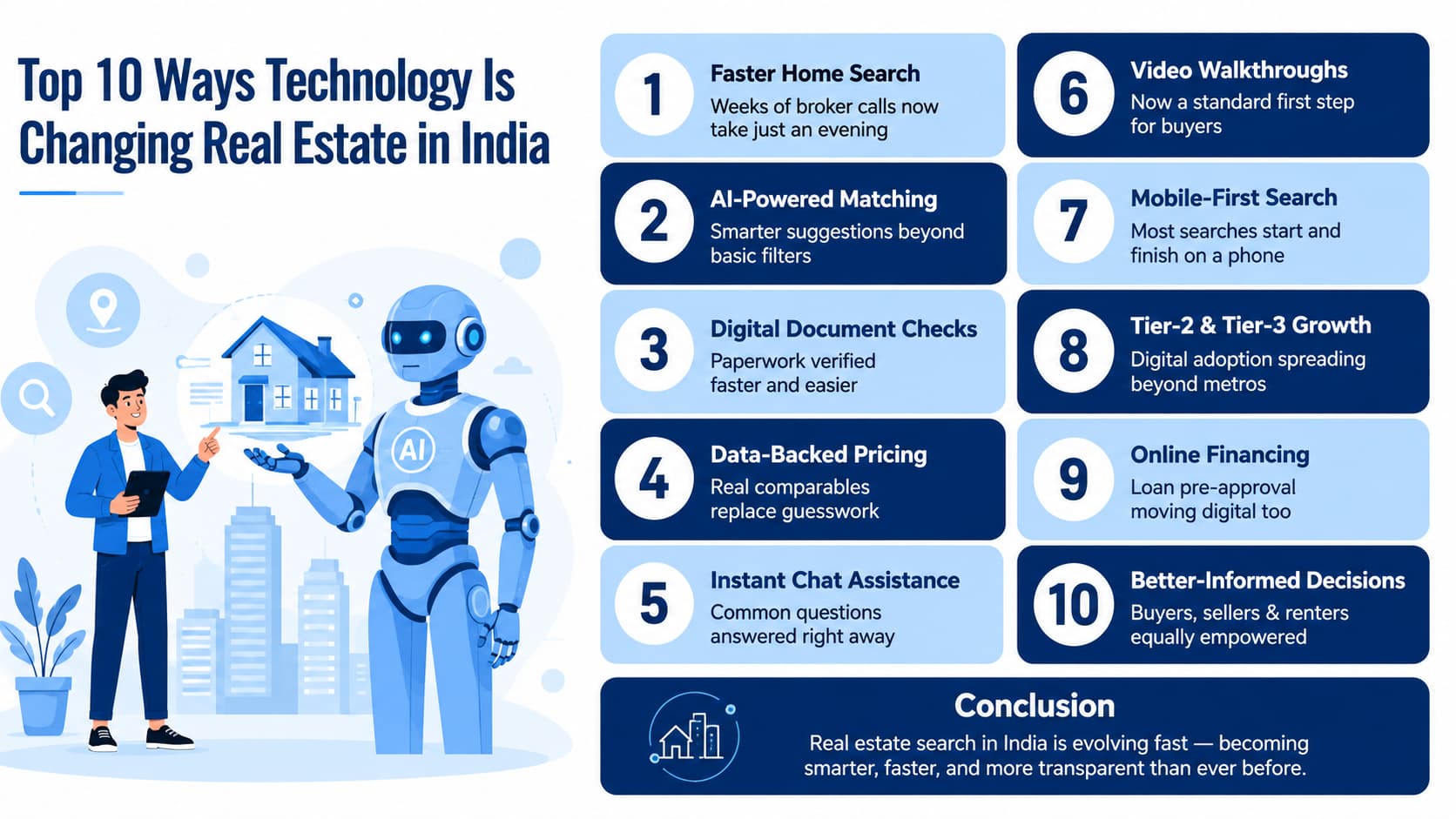
Finding accommodation in India used to involve looking around the neighbourhoods, discussing the options with a broker and hoping that after the third or fourth trip, he would present an apartment worthy of consideration. Today, the same process may begin with browsing through five offers at night while lying in bed on the phone. There has been something of a change in the process of searching for accommodation among Indians; it is not only about going digital but about making the process smarter, faster and more pleasant. And this is precisely what makes the platform Prooperty.com stand out in its niche. This essay takes the discussed topic from various perspectives by considering how the process of house hunting has changed in recent years, what can be expected regarding future technological advancements and AI, and what trends influence Indian real estate. The clearest way to see how much has changed is to put the old process and the new one side by side. And that’s where the last row comes into play. In addition to increased speed, the biggest change over the last decade has been in access. Information that would have been the domain of just a few select brokers has now become accessible to anyone who conducts a search. A homeowner can now look at how other comparable properties have actually sold rather than relying on the advice of one expert. A landlord can perform due diligence on potential tenants rather than taking whatever comes through the phone first. A tenant can search for confirmed properties rather than running wild on the trail of leads. None of this changes the human factor involved in any such transactions – negotiating, judging, and building relationships are just as important as ever. But it does take away from a lot of guesswork, making things less stressful for everyone. Many of these platforms speak about "disruption" in the real estate market, yet it is much more relevant to think about the extent to which the platform makes things easier for the user in question. This is how we see the Prooperty concept decreasing the friction between the potential tenant and the property that he wants to rent or purchase or the homeowner who offers his house for sale. The key is to understand where each particular user stands, for the first-time buyer and the landlord putting a flat up for rent need totally different approaches. As such, it is not about a search box, it is about addressing users' specific issues. It finds its way into small details: better document checklists to make sure no one is left out at the final stage, simpler comparisons instead of long lists of options that all look similar, and advice that varies depending on whether one is looking for a new home or renting, or trying to sell an old one. It may not be glamorous, but it is the foundation that makes the difference between success and frustration. AI in real estate is much talked about because of its popularity; therefore, it will be better to know what artificial intelligence can really do at the moment instead of what it could have done sometime in the future. And the reality lies somewhere between these two extremes that people usually perceive – it's not a gimmick, and it's not a substitute for people's intuition either. Better matching: rather than fixed filters, AI can use actual clicked items to match the right options that a user might not even think of searching for themselves Faster document verification: AI-assisted software can detect any missing documentation or discrepancies so that potential buyers or sellers do not face problems in the future Realistic pricing: using data of recent transactions, AI can estimate a realistic price of a property rather than having a pure guessing game when it comes to setting prices Better customer service: chat bots can answer standard questions immediately - document requirements, location facts, next actions - so that people do not have to wait for a real person’s response Prediction of future expenses: in order to prepare better, some services start detecting potential future maintenance expenses of the building depending on its age and materials All of this does not substitute a good lawyer, an expert visit to the location, and a reliable agent. All this helps eliminate a significant amount of initial tension between the parties, allowing them to focus on areas requiring decision making. It's important to take note of an aspect of technology that often seems to get overlooked: no matter how well filtered things may be, the emotional side of purchasing, renting, or selling property does not go away. For the vast majority of families, finding a place to live remains one of the largest decision-making processes in their lives. Technology that is done right never tries to take away the human factor; instead, it allows for all the surrounding distractions to fall away. Rather than wasting a day trying to chase down three worthless broker calls, the purchaser is free to use the same time to view the actual two or three houses that are worth considering. Rather than wasting the time screening twenty people over the phone, the landlord has a list of qualified candidates to choose from. The saved time in search and verification is then put to better use elsewhere. A few broader trends are worth watching, because they're already changing expectations for anyone buying, selling, or renting a home in India: Digital verification is here to stay. Documentation verification, ownership history and legal status can be done entirely online now, reducing the back and forth communication that used to extend transactions for weeks on end. Virtual tour and video walkthroughs are the norm. Particularly when the buyer comes from elsewhere in the country, the process now typically begins with a thorough video walkthrough of the property. Price discovery is data-based. It is no longer a secret tool known only to the brokers, but something anyone involved in the transaction can research independently. Searches begin and frequently finish on mobile devices. In addition to changing the way we look for properties, this trend also influenced the platforms and made them more streamlined. Tier-2 and tier-3 cities have started to catch up rapidly. Real estate in digital format used to be reserved for a few metropolitan areas, but things are changing fast. Finances are getting digitized. Pre-approvals for financing, loan eligibility checkups, and even some parts of the paperwork are digitized now, eliminating the need to visit branches multiple times. None of this progress means the process is frictionless yet. A few real obstacles are still worth naming honestly, because pretending they don't exist doesn't help anyone searching or listing today. The level of trust in online transactions still varies. The majority of buyers and sellers, especially those who live outside metropolitan areas, prefer to make important decisions face to face, and this process takes time to change. Regulations vary from state to state. Registration procedures, stamp duty, and other documentation are not the same across the country, and therefore complete digitalization is more complicated than it might seem. Digital literacy level is uneven. Not all the buyers, sellers, and even landlords have equal skills in using applications and conducting online paperwork, especially when it comes to older homeowners facing their first real estate transaction. Quality of data can still be improved. Outdated information, mismatched pictures, or lack of detail are not uncommon, and the gap requires continuous attention. These aren't reasons to be skeptical of where things are heading — they're simply the honest, unglamorous parts of the shift that tend to get skipped in more optimistic takes on the topic. A few trends that seem inevitable a few years from now include voice search, which entails giving a description of the desired property using natural language instead of going through various filters. It is something that has already been witnessed in the past and will continue to gain popularity in home searches. In addition, it seems inevitable that video walkthroughs will become the norm rather than the exception because potential buyers who are relocating from another city cannot see the property before selecting it. With increasing online transactions, it seems unavoidable that the process of verification and documentation will continue to become faster even if complete digitization of the process remains far off in most states. None of the above-mentioned changes occur immediately, and the real estate market in India is diverse and huge enough to ensure that there will be disparities in the speed at which the changes occur. Nonetheless, the trend is quite clear for everyone to see that the environment in which people are currently involved in buying, selling or negotiating about property is completely different from what it used to be a few years ago. As someone trying to decide whether to adopt an online-first strategy when it comes to something as major as their home, it’s important to recognize that the idea here wasn’t to take away any of the human elements of the process, such as verifying paperwork, viewing the home, or reaching a fair price. What it really means to do is ensure that these actions happen using much more information than was possible just five years ago. Q1: How has property search changed in India over the last decade? A: The process has evolved from broker-led and word of mouth searches to online searches where buyers can search for property, compare prices and even verify documents through the online medium in just a few days instead of weeks. Q2: How is AI being used in real estate portals today? AI enables intelligent listing matches, faster document screening, realistic pricing suggestions using sale data from the locality, and prompt chat-based responses to the queries of buyers/sellers. Q3: Are digital real estate platforms reliable for buying or renting a home? A: Yes, as long as the website screens the listings and the users and makes documentation services available, albeit buyers and tenants need to do due diligence on their part. Q4: Is India's real estate market fully digital yet? A: No. Trust issues in online transactions, varying regulations in different states, and digital literacy issues are some factors holding back full digitization, but digitization is happening very fast, particularly in tier-2 and tier-3 cities. Q5: What's next for real estate technology in India? A: Look forward to the greater use of voice-powered search, videos, virtual tours, speedier financing online, as well as paperless registrations over the next couple of years. How people in India find, purchase, sell, and lease homes has evolved in the past decade more than it did in the previous decades combined, and this pace does not seem to be stopping anytime soon. Technology cannot replace the human aspects of a real estate transaction, such as trust, negotiations, and the final "gut check" before signing the contract, but it can make the road towards that decision much easier than before. In light of this evolving market, the platforms that offer real problem-solving to buyers, sellers, landlords, and tenants, instead of offering technology "for the sake of technology," seem destined to win. Prooperty.com aims to do just that by helping people make sense of a complex process.The Future of Online Real Estate in India: How Technology Is Changing Property Search
How Home Search Has Transformed Over the Last Decade
How Prooperty Is Building the Future of Real Estate in India
Where Artificial Intelligence Is Taking Real Estate Portals Next
The Human Side of a Digital Deal
Real Estate Technology Trends Shaping India Right Now
Challenges That Still Slow Things Down
What's Next: The Road Ahead
Top FAQs
Final Thoughts