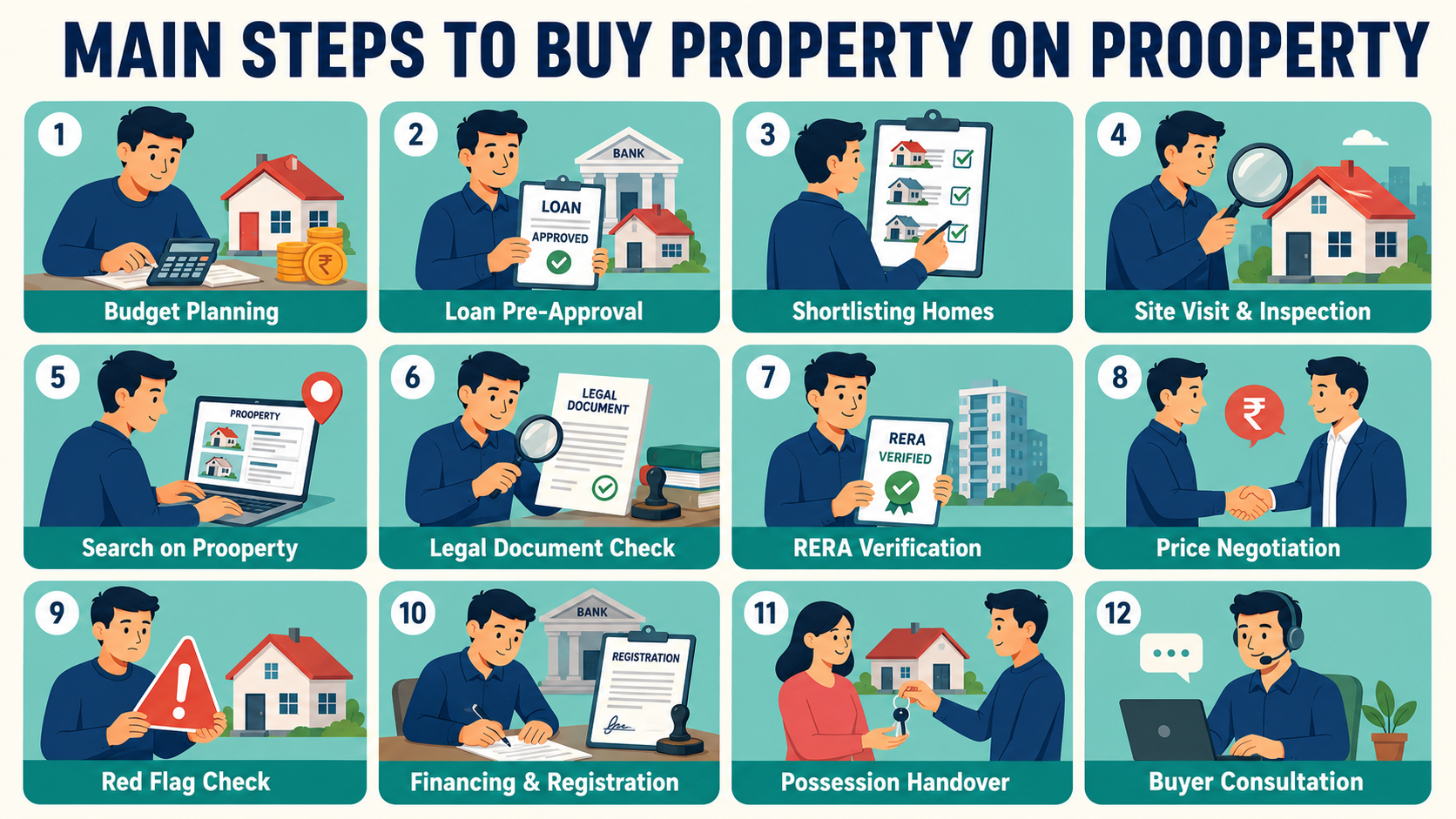
The purchase of the house, apartment, or plot of land is usually one of the biggest purchases that people make in their lifetime, and unlike the purchase of a smartphone or a car, making mistakes in the case of real estate can be very costly and difficult to undo. In fact, it is because of all these mistakes that Prooperty.com has developed its step-by-step approach to purchasing real estate in order to simplify the process and eliminate the risk of being confused and misled. With the help of this guide, one will finally get the answer to the question that any buyer of the real estate has at some point: how can you buy the property in the right way, starting from determining your budget and ending with receiving the keys to it? This guide is geared toward buyers, from first-time homebuyers who are working to save up for their down payment to families that wish to move into a larger home, and even to investors who are comparing choices before investing. This guide is for those of you that plan on buying and keeping, not listing. It is also useful to know where the local market is heading before beginning to shortlist properties since this will affect your negotiating tactics. In a buyer's market, which entails more property options than interested buyers, the ability to bargain is easier. In a seller's market, where the real estate options available are relatively limited yet there is high demand, prompt action becomes more important than bargaining for the best deal. In new areas, the asset value may be higher while amenities take longer to develop. In established areas, the upfront costs may be higher, yet they are safer. A good test is simply the amount of time the listings in your target area have been up for. If the property is taken off the market within days, there must be high demand, but if the listing takes months to sell, the buyers have the advantage. Buying a home involves far more decisions upfront than most people expect, so working through them in order avoids costly last-minute surprises. Before browsing a single listing, know exactly what you can afford. Include down payment, registration fees, and moving expenses in your budget, apart from the cost of purchase Take a loan approval in advance to know how much you can borrow before falling in love with the house Set aside 10-15% for unforeseen expenses such as repairs, furnishings, or society fees Consider the monthly EMI amount, and not only the sanctioned loan amount Start with your non-negotiables: location, number of rooms, commute distance, budget Define your “want’s” vs. “need’s” to avoid paying too much for everything View at least three or five different properties before making a decision — buyers who look at just one property usually overpay or negotiate poorly Photos never tell the whole story, so a physical or video walkthrough matters. Check water pressure, electricity connections, and any signs of moisture View at different times of day to assess noise, sunlight, and traffic Find out about maintenance fees, parking availability, and society regulations Meet with other residents if you can; they may disclose information that won’t be revealed elsewhere This is the point that determines how long it takes you and how well you fare. Doing searches on Prooperty brings to you real-time and genuine listings based on your preferences and budget rather than the obsolete or duplicate ones that are a waste of your time. This is the single most important step, and the one buyers most often rush. Never skip this stage, even if the seller seems trustworthy or the deal seems urgent. Consider the recent sales in the neighborhood as proof of your offer Inquire about the reason for sale since motivated sellers can be flexible on their price In addition to price negotiations, negotiate when possession will be handed over and which expenses are to be paid by whom Always have everything that you agree verbally put down in writing Once the terms have been set, it is quite common for the lender to carry out a valuation and legal check prior to releasing the loan amount. Once these are done, the next step is the registration process at the sub-registrar’s office and then comes the handing over of the possession money. Make sure to get your loan pre-approved early on so that you can act swiftly once you find the perfect home. Have a list of documents handy to be prepared with your documentation – income proof, identity proof, and bank statements will come handy at various points in time. Don’t forget the inspection, no matter how ideal the property may seem from the pictures you have seen. Factor in some unexpected costs such as stamp duty, registration charges, brokerage fee, and society transfer charges. Legal verification should not be rushed. A couple of extra days spent on the process is much more cost-effective than a legal dispute at a later stage. Do not feel pressured by time-limited offers from sellers or real estate agents as an ideal property does not vanish overnight. Rushing without legal verification to quickly complete the deal – this is the biggest mistake a buyer could make Going over the budget based on future earnings, not current ability to afford it Neglecting the total cost of the property, taking into account maintenance costs, taxes, and loan interest payments Making the final decision without visiting the property in person, using only pictures and virtual tours Saving money by not using a lawyer or documentation professional and losing more in the long run Getting emotionally attached at an early stage, thus making it harder to negotiate Some warning signs are easy to miss when you're excited about a home, but they deserve a second look before you commit. Low price that is far from the market value without any plausible reason — this usually suggests some problems of legal nature Pressure by the seller to buy quickly or provide an unusually large amount of money upfront despite incomplete documentation Inconsistent information in various talks with the seller or the agent Refusal to arrange an independent check-up or legal evaluation of the documents An unusually large number of former owners within a short period of time Walking away from a deal that shows two or more of these signs is almost always the safer choice, even if the home looks perfect otherwise. Down payment is usually between 10%-25% of the total value of the property paid upfront prior to loan release. The stamp duty and registration costs differ from state to state and can be a few percentage points in your total costs. Loan period and interest rate play a major role in determining your monthly EMI; hence consider getting quotes from multiple lenders. Processing fees and legal fees from the lender will need to be incorporated in your budget upfront. Home insurance is optional but very important as it protects your investment from damage. Budgeting complete, involving down payment, comfortable EMI, and additional expenses Loan pre-approved from at least one financial institution Narrowed down the list after visiting personally rather than through photographs Got all the legal documentation sorted out, preferably with a lawyer Agreed on points for negotiation such as price, time, and fittings Funding and registration procedures understood before making any commitments Q: How do you buy property without overpaying? A: Research recent comparable sales in the area, get multiple opinions on fair value, and always leave room to negotiate rather than accepting the first listed price. Q: What documents should I check before buying a home? A: At minimum, the sale deed, encumbrance certificate, tax receipts, and approved building plan. For new projects, also check RERA registration. Q: Is it better to buy a new construction or a resale home? A: New construction often allows customization but comes with possession delays, while resale homes are usually move-in ready but require a more thorough title history check. Q: How much should I budget beyond the purchase price? A: Plan for an additional 8–12% for stamp duty, registration, brokerage, and moving costs, on top of the agreed purchase price. Q: Should I buy through a broker or an online platform? A: An online platform typically offers wider, verified listings and transparent pricing tools, while a broker can help with local paperwork and negotiation. Many buyers use both together. Q: Can I buy property without a home loan? A: Yes, if you can pay the full amount upfront, though most buyers use a loan to preserve savings and spread the cost over time through manageable EMIs. Q: How long does the home buying process usually take? A: From shortlisting to possession, most purchases take 6 to 12 weeks, though this can extend further if financing or legal verification uncovers issues that need resolving. Q: What is the most common reason a home purchase falls through? A: Legal or documentation issues discovered late in the process are the most common cause, which is why thorough verification early on saves both time and money. Being a good buyer is all about being prepared, and this includes budgeting wisely, shortlisting prudently, legal verification and proper negotiations. People who neglect some of these stages tend to experience problems in the future as a result of disputes or additional expenses, or simply because the purchased property is not what they really need. Just follow the sequence of actions described above — budgeting, shortlisting, viewing, verifying, negotiating and buying — and you will be in the best possible position. If you feel like you have enough knowledge and are eager to start your search, you can do it directly by browsing through verified listings on Prooperty.com.How Do You Buy Property on Prooperty? A Complete Guide for First-Time and Repeat Buyers
Who This Guide Is For
Understanding Market Trends Before You Search
Step-by-Step Guide: How to Buy Your Home Successfully
1. Set a Realistic Budget
2. Shortlist Based on Real Priorities
3. Visit and Inspect in Person
4. Search on the Right Platform
5. Verify Legal Documents Before Committing
6. Negotiate the Price and Terms
7. Complete Financing, Registration, and Possession
New Construction vs Resale: Which Should You Buy
Practical Tips for a Smoother Home Buying Experience
Common Mistakes Buyers Should Avoid
Red Flags to Watch Out For
Home Loan and Cost Basics Every Buyer Should Know
Quick Checklist Before You Make an Offer
Frequently Asked Questions
Final Thoughts