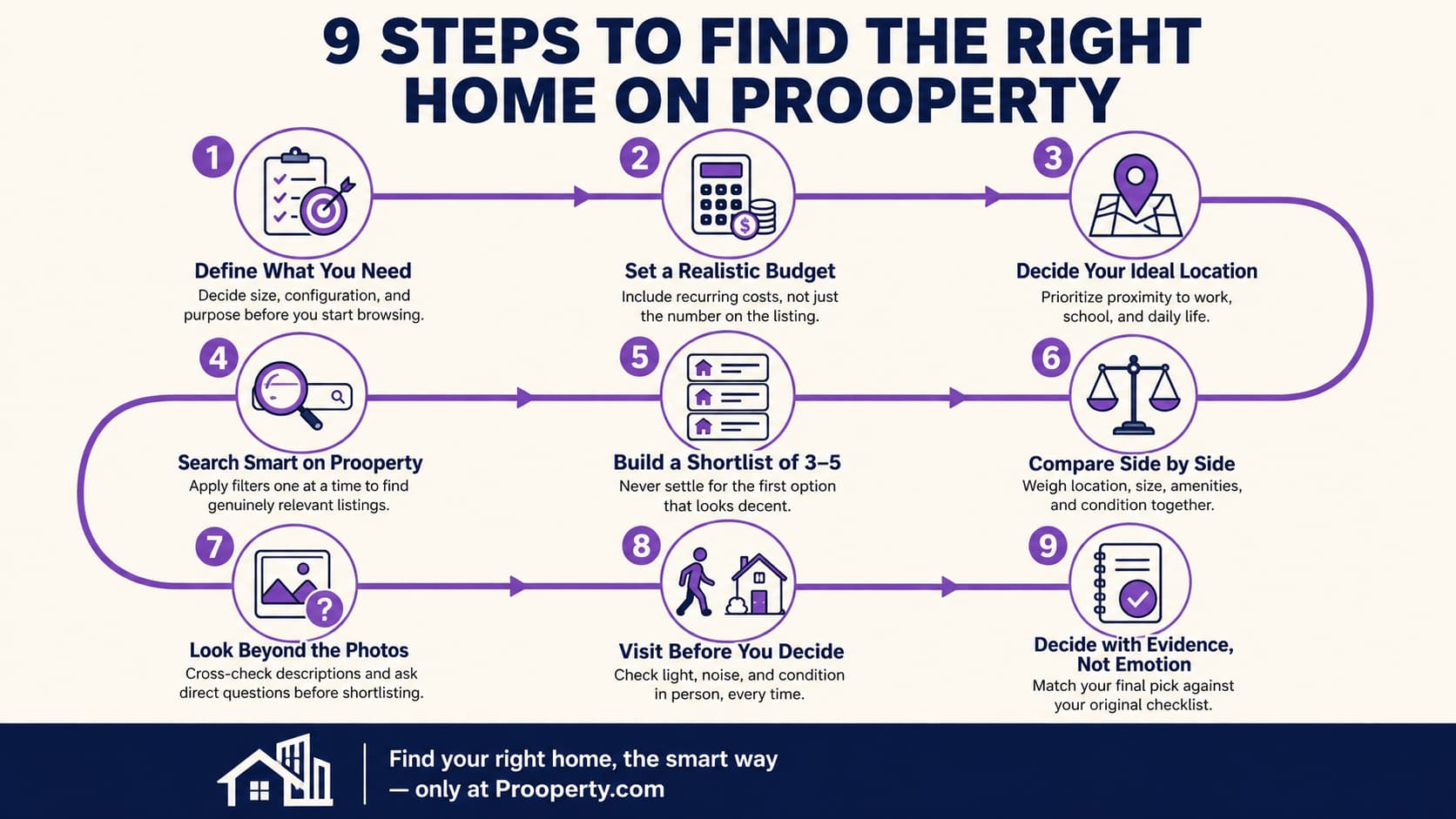
Most people don't have a problem finding homes on the Internet; they have a problem choosing the right one. Just go through any search results pages and you'll find yourself surrounded by literally dozens of listings that may seem to fit the bill but still have some aspect that makes you realize the place won't work when you take a closer look. The area is wrong, the floor plan is wrong or the pictures were deceiving, and the description conveniently omitted the information. Here are some easy steps to help you sort out the listing mess and figure out what's the difference between just a good looking home and your dream place.
One thing to keep in mind is the sheer quantity of possible options that can confuse a person. With literally dozens of listings that may seem to suit you in front of your eyes, it's only natural to get stuck trying to choose one or just accept the first one that seems good enough to put an end to your suffering. Not the best strategy ever.
What Does "The Right Home" Actually Mean?
But before analyzing a specific listing, it is important to determine what "right" means to you personally, as the word is very flexible in its application and it rarely has the same meaning for two separate buyers. In practice, a good combination of elements will generally consist of the following four criteria being met at once: it is suitable for your financial situation without requiring too much effort; it is located in an area that would suit your lifestyle; it satisfies your needs rather than being just fancy; and it makes sense to you even after several years pass.
Start With What You Actually Need
Before opening a search bar, get specific about what you're actually looking for. "A nice place" isn't a search criterion — size, configuration, intended use, and expected occupancy are.
Figure out the amount of rooms and the approximate space needed per person or activity
It’s important to understand the intended usage of the place: whether it is for daily living, occasional use, or for future leasing purposes
Consider the amount of people that would reside there on a daily basis, and also consider the frequent visitors
Specify what kind of area you want: a peaceful neighborhood, an area close to transportation, or close to certain facilities
Skipping this step is the single biggest reason buyers end up comparing options that don't actually belong on the same list.
Set a Realistic Search Budget
The number on a listing is rarely the full financial picture, and treating it as one is where a lot of buyers get caught off guard later.
Take into account registration fees, costs associated with moving, and any quick fixes or requirements of furnishing
Consider the periodic cost of living — maintenance fees, society fees, and the difference in utilities among choices
Create a buffer rather than stretching yourself to the limits of your budget by just the listed price
Set your limits before even looking at properties so that attractive but pricey options do not subtly alter your limits
Define Your Preferred Location
Location decisions are easy to get wrong when you're focused purely on the map rather than your actual daily life.
State the areas/sectors which you would actually consider; do not list those which appear prestigious only.
Think of the importance of being near your workplace, educational institution, or family since commuting is going to add on very quickly.
Draw up your daily travel map before being swayed by a listing which seems ideal, but in reality, is far away from everything you require.
Search Directly on Prooperty.com
Your needs, your budget, and your location preferences should be determined prior to starting the search process, because then you would have no trouble identifying results that suit your criteria. There will be no need to spend time on irrelevant options, as your search is based upon them.
Use Search Filters Effectively
Filters only help if you use them with a clear strategy rather than switching everything on out of curiosity.
First use your budget filter, which eliminates a majority of irrelevant listings with one click
Use filters individually, not simultaneously, in order to be able to clearly identify which filter is reducing your list too much
When you think your search is getting too narrow, eliminate the last filter used first, instead of starting a new search
Sorting features such as “newest” and “price” can be used in addition to filters, as the relevant listing might have a low rank among results
Build a Shortlist Instead of Picking the First Listing
The first option that looks good rarely turns out to be the best one available, simply because you haven't seen enough to know what "good" actually looks like yet in this market.
Make sure you have between three and five choices that really are comparable before making any choice.
Try to include at least one option that does not fully meet your requirements because this could help you see what you were willing to sacrifice.
Avoid the temptation to stop your search as soon as something starts looking good since a slightly better match could be just around the corner.
Compare Your Shortlisted Options Side by Side
Once you have a shortlist, comparing them on the same criteria matters more than judging each one in isolation.
Laying options out this way makes trade-offs obvious instead of relying on a vague gut feeling about which one "seemed nicer."
Look Beyond the Photos
Good photography sells a listing, but it doesn't tell you everything, and sometimes it's specifically designed not to.
A wide-angle shot makes the room appear bigger than it is.
Bright pictures that are well lit might not convey how the room looks like at other times.
If some pictures of particular rooms or angles are missing, it is usually a matter of design and not an accident.
Compare the photos to the description to check for any contradictions in terms of number or configuration of rooms.
Check Location and Everyday Connectivity
Your earlier location preferences were based on a map and a general sense of the area — this step is about confirming whether that impression actually holds up once you look closer at each shortlisted option.
Actually test your commuting by choosing a more realistic time of day rather than simply looking at the distance online
See how effectively the public transit system is connected to your destination rather than just whether there is transit available near by
Actually walk around the vicinity if you can, as the noise levels, traffic, and maintenance of the surrounding area can tell you a lot about a place that a map won’t
Test out the commute times between your chosen options, as two destinations that may be equal distances apart may feel quite different when you have actually travelled there
Understand Size and Layout Terms
Buyers often assume the number quoted is the space they'll actually use, and that assumption causes more disappointment than almost anything else on this list.
Learn about the distinction between carpet area, built-up area, and the bigger super area measurement commonly used in advertising.
Be sure to understand what the usable space is all about and not be fooled by the highest number cited.
Visualize the placement of your furniture and the way you would move around in the space, not just its total size.
In case of confusion, ask for precise room-wise dimensions.
Evaluate Amenities Based on Your Actual Needs
Not every amenity matters to every buyer, and paying extra for ones you'll never use is a quiet, easy way to overspend.
Include in your list only those amenities which you will use on a consistent basis, and consider the rest to be additional.
Consider how costly the maintenance of those amenities may become in relation to their actual frequency of use.
Concentrate on the basics such as an adequate water supply, parking facilities, and security.
Review Each Listing Carefully
A careful read of the listing itself often reveals more than the photos do.
Make sure that your description, specifications, and photos match up consistently
Pay attention to any vague or missing details, which will likely be filled in later with information that paints a different picture
Take note of the date posted – an old listing with no new changes might deserve some inquiry
Questions to Ask Before You Shortlist Anything
A short, direct set of questions upfront saves time later and filters out options that won't work before you invest more effort.
What is the real reason why it is now available?
Does anything need to be sorted out like payments or disputes?
What all is covered, and what will have to be made separate arrangements for?
Is the price quoted negotiable, and by how much?
When Should You Walk Away From a Listing?
Some warning signs are worth taking seriously the first time you notice them, rather than hoping they'll resolve themselves later.
Data that changes each time you converse with the same person
An address that is patently not consistent with your stated priorities before
A sense of urgency without giving yourself time to go there
An extremely low price without an understandable reason given
From Online Search to an In-Person Visit
Once your shortlist feels solid, it's time to move from screens to an actual visit, which almost always changes at least part of your impression.
Plan to visit the properties in succession rather than spacing out visits to prevent comparisons from becoming blurred over time
Write down some questions that you wish to ask before going on the visits to ensure that you don’t forget any
Take along some type of list or notepad so that your initial thoughts aren’t forgotten by the time you visit the next property
What to Check During a Visit
This is where online research meets reality, and it's worth being thorough rather than rushing through out of politeness.
The natural lighting conditions during your actual visit and not just through pictures
Noise pollution from neighboring people, cars, or construction work in the vicinity
Water pressure and electrical outlets and presence of moisture in the area
General maintenance of common areas and their surroundings
Keep Your Final Shortlist Evidence-Based
By the time you're deciding, it's easy to let the most recent visit or the friendliest interaction sway your judgment more than it should.
Look at your previous comparison notes and not just use your memory for your decision
Separate the real benefits that something offers from your feelings about that specific visit
Check your original list of needs to see if your chosen option still fits what you need
How Prooperty Makes This Search Easier
Much of the process outlined above involves self-discipline, in terms of staying organized, making valid comparisons, and not rushing into anything. The systematic procedure in this guide – with its defined requirements, direct comparisons, and thorough evaluation before visiting – is precisely what a well-designed system can help you achieve without all of the extra work being on you.
A Final Checklist Before You Decide
Requirements stated precisely: size, layout, and function
Realistic budget determined, including monthly ongoing expenses
Priorities regarding location determined based on your real-life schedule
Short list created based on a minimum of three to five truly comparable properties
Each property evaluated together rather than on an individual basis
Listings considered with care for accuracy rather than just nice pictures
In person viewings done prior to making any decision
Selected property evaluated based on your initial requirements, not just what you liked most recently
Frequently Asked Questions
Q: How many listings should I compare before deciding? A: Three to five genuinely comparable options is usually enough to spot real differences without dragging the search out indefinitely.
Q: What's the biggest mistake buyers make during a search? A: Choosing based on photos and first impressions alone, without visiting in person or comparing options against clearly defined requirements.
Q: How do I know if a listing's photos are misleading? A: Cross-check them against the written description, ask for additional angles if key rooms are missing, and treat an in-person visit as the final confirmation, not the photos.
Q: What questions matter most before shortlisting something? A: Why it's currently available, whether there are any pending dues or disputes, and exactly what's included in the quoted price.
Q: How do I avoid making an emotional decision instead of a practical one? A: Keep written comparison notes throughout your search, and check your final choice against your original requirements list before committing to anything.
Q: Should I keep searching even after finding one option I really like? A: Yes, briefly. Comparing it against at least one or two alternatives confirms whether it's genuinely the best fit or simply the first one that felt good, which are often two different things.