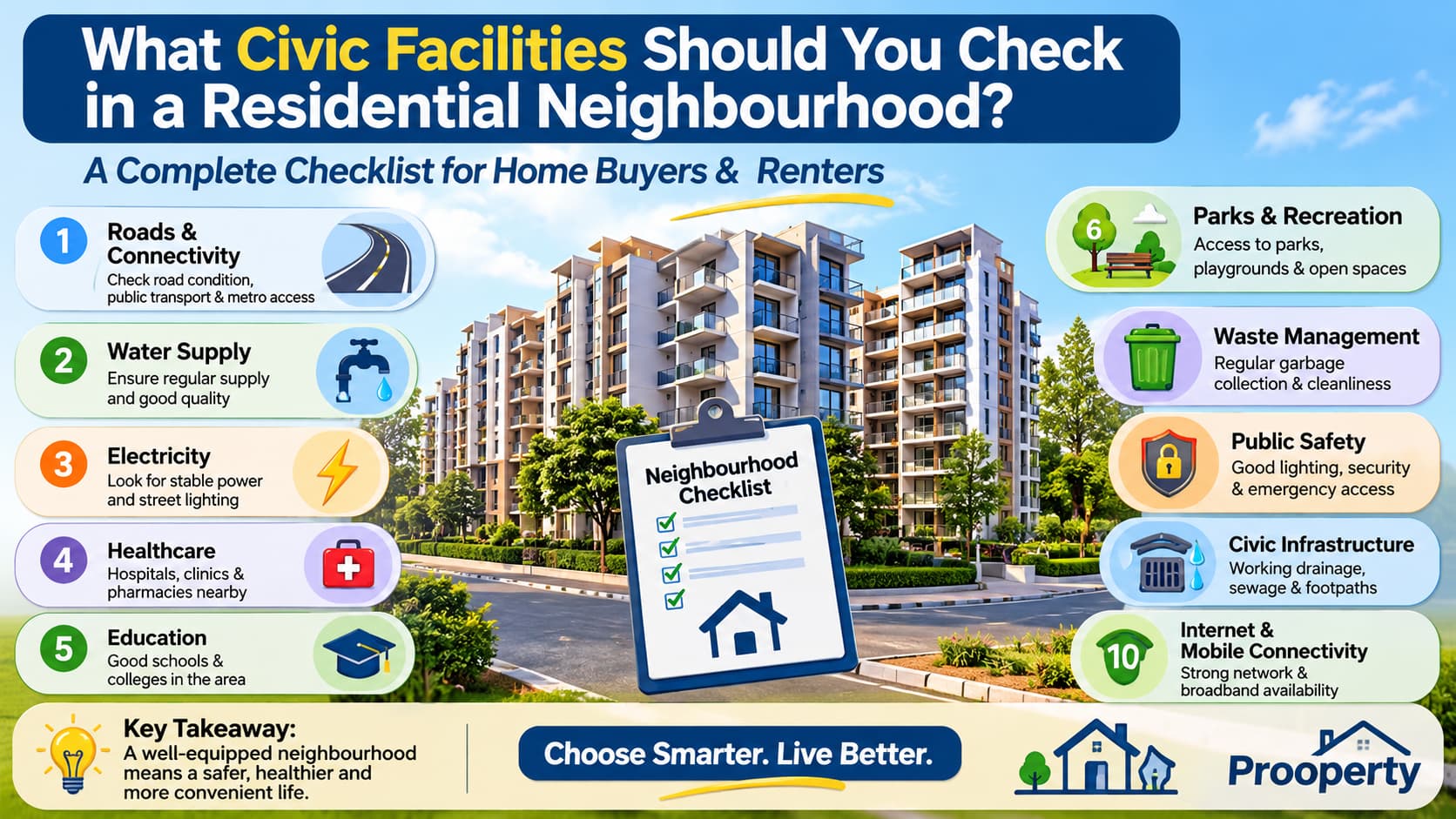
What Civic Facilities Should You Check in a Residential Neighbourhood?
The most attractive flat may well become a routine hassle if the immediate locality lacks even some basic civic services. No brochure or advertisement can tell you whether the locality has a reliable water supply, whether roads become flooded during the monsoon, or how far the nearest healthcare facility is from your home. This is why checking civic facilities in a residential neighbourhood is just as important as evaluating the home itself.
This checklist includes ten categories of civic services in a residential area. You will learn about the civic service to be checked and verified during your visit to a site, and what impact its absence might have on your daily activities. It applies both to home buyers and renters. If you are yet to decide on which localities you need to visit, start with this checklist on how to evaluate a neighbourhood before a property visit.
1. Roads and Connectivity
What to check:Condition of approach road and internal roads, presence of bus stops nearby, distance of nearest metro station, availability of autos and taxis. Estimate travel times to your workplace, children's schools and other frequently visited destinationsl.
How to verify on site: Take the journey to the main road during rush hour, and not on a calm Sunday morning. Observe any potholes, damaged edges, water logging traces, and parked vehicles along the road. In case you want to travel through public transport, make a journey yourself.
Impact of a gap: Poor access means extra time spent commuting each week, slow trips during emergencies, and decreased rental and resale value of homes.
2. Water Supply
What to check: Whether the supply is consistent, from where the supply comes from (whether from municipal lines, borewells, or water tankers), and whether the water is suitable for consumption. Inquire about the drainage system in case of rains.
How to verify on site: Ask at least two tenants or security about any delays in the supply and shortages. Turn on the taps to check water pressure and observe whether the supply is consistent. Check for stains on the wall or dampness on the building walls.
Impact of a gap: Unreliable water affects people’s finances, as well as the smooth running of daily activities and their health.
3. Electricity
What to check: Reliability of the power supply, frequency of outages, backup facilities available, and the functionality of street lights in the area.
How to verify on site: Ask residents about the frequency and duration of power cuts. Check whether the building has generator or inverter backup and which common facilities it supports. Visit after sunset to see whether streetlights and common-area lighting are working properly.
Impact of a gap: Frequent outages raise your backup costs, affect work-from-home routines, and make dark streets uncomfortable and less safe.
4. Healthcare
What to check: The proximity to hospitals having an emergency facility, clinics, diagnosis centers, and pharmacies where at least one must operate for extended hours.
How to verify on site: Time your drive to the nearest hospital through a map application at different times. Walk to the nearest pharmacy and clinic and ascertain that they are in operation. Inquire from the locals what hospital they use.
Impact of a gap: Even minor cases become serious when the medical facility is far. This is especially true for families with kids and older people.
5. Education
What to check: The availability, accessibility and suitability of nearby schools, colleges and daycare centres, along with school transport options.
How to verify on site: Go to schools at the time when children are being picked up or dropped off to see how traffic flows at the gate. Talk to parents nearby about their experience of admission as well as the routes taken by buses.
Impact of a gap: Prolonged school routes take up family time and add to travel expenses. Restricted education choices can also influence future property prices.
6. Parks and Recreation
What to check: Parks, playgrounds, jogging or walking paths, and community areas in good condition are some of the factors considered.
How to verify on site: Visit the park during morning and evening times. Observe the state of the benches, facilities, lighting, and cleanliness in the park as well as the number of families frequenting the park. Regular use of well-maintained parks can indicate that residents have access to usable outdoor spaces.
Impact of a gap: Without such secure public places, children lack opportunities to play, while adults lack the opportunity to exercise, and thus quality of life is affected negatively.
7. Waste Management
What to check: The frequency of collection of garbage, segregation of waste, and cleanliness of streets and drains.
How to verify on site: Search for overflowing garbage bins, dumping grounds, and stray animals around garbage disposal areas. Also ask locals the times for collection. Look out for the odor around drainages and garbage collection centers.
Impact of a gap: Poor sanitation can attract pests, create unpleasant odours and increase the risk of hygiene-related problems in the neighbourhood.
8. Public Safety
What to check: Street lighting, security arrangements on site, use of CCTV cameras, and accessibility to your premises by ambulances and fire engines.
How to verify on site: Take one visit at night to see how far you will have to walk in the darkness before reaching the building. Observe the size of the lane and entry gate, as small or blocked lanes make it difficult for ambulances and fire engines to pass through.
Impact of a gap: Poor lighting and restricted emergency access can create safety concerns, particularly for women, children and older residents.
9. Civic Infrastructure: Sewage, Stormwater Drainage and Footpaths
What to check: Whether the sewage lines and drainage system are available and functional, and whether there are adequate footpaths available for walking.
How to verify on site: Check open and damaged drainages, open manholes, and presence of water in depressed areas. Inquire what takes place when there is heavy rainfall, and walk the paths to see if they are functional or congested with parked cars.
Impact of a gap: Poor drainage can cause waterlogging during the monsoon, damage ground-floor homes and leave stagnant water in public areas.
10. Internet and Mobile Connectivity
What to check: Signal strength of mobile networks using various service providers and broadband or fibre network availability.
How to verify on site: Do not limit your testing to the lobby; check mobile signal strength inside the apartment as well. Run a speed test and confirm which broadband and fibre services are available in the building.
Impact of a gap: Poor connectivity will affect telecommuting, virtual education, video calls, and even online payment transactions, which have become part of our lives today.
Frequently Asked Questions
1. What are the most important civic facilities to check before buying a home?
Water supply, electricity, road access, drainage, healthcare and public safety come first. These affect your daily comfort and costs more than almost any other factor, so verify them before you consider extras such as parks or recreation.
2. How can I check civic amenities in residential areas without living there?
Visit at different times of day, including peak hours and after dark. Talk to residents, guards and nearby shopkeepers, and test the signal, water pressure and street lighting yourself rather than relying on the listing alone.
3. Is it better to visit a neighbourhood during the monsoon?
If possible, yes. Rain reveals waterlogging, drainage problems and road damage that stay hidden in dry weather. If you cannot visit during rain, ask residents what the area is like in heavy rainfall.
4. Who should I ask about water, power and waste services?
Current residents are the most reliable source, followed by the resident welfare association or society office. For official details, contact the local municipal body or utility provider for the area.
5. Do tenants need to check civic facilities as carefully as buyers?
Yes. A tenant lives with the same daily conditions, even if the commitment is shorter. Checking water, power, safety and connectivity helps you avoid an uncomfortable lease and an early move.
6. Can good civic facilities increase a home's value?
Reliable services, good access and a well-kept environment generally make a home more attractive to future buyers and tenants. Weak infrastructure can have the opposite effect over time.
Final Thoughts
A home is only as comfortable as the neighbourhood around it. Before you commit, spend time on the ground, visit at different hours, speak to residents, and score each of the ten areas above. If you are comparing several options, our guide on how to judge whether a real estate platform is trustworthy will help you pick reliable sources for your shortlist.
When you are ready to explore homes in areas that match your checklist, you can browse verified residential listings or compare homes by locality on Prooperty.