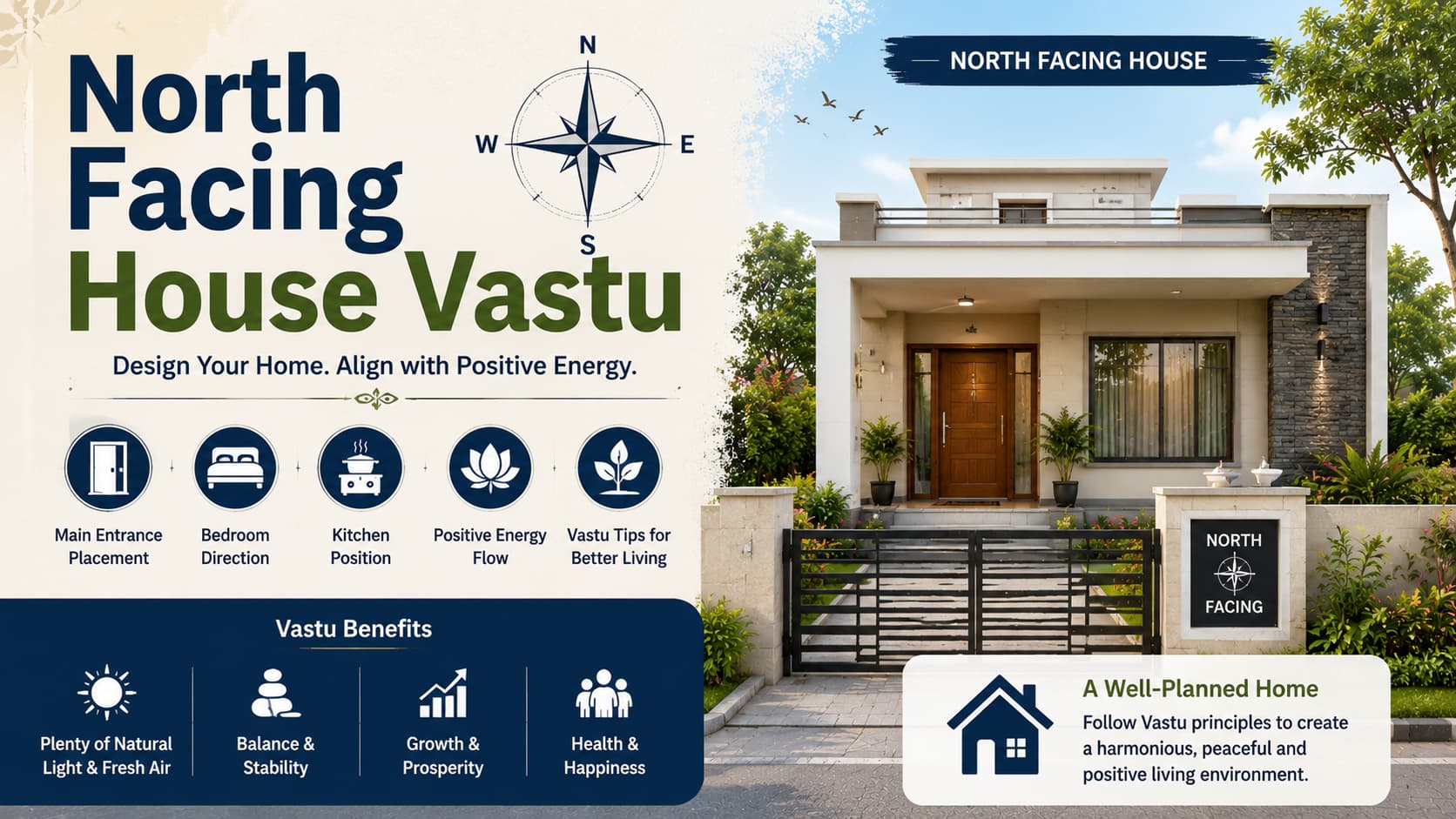
North-facing houses hold a special significance in Vastu Shastra, being associated with Lord Kubera, the deity of wealth and abundance. Homeowners often prefer this orientation for its potential to attract financial prosperity and positive energy, provided the layout follows established Vastu norms. The main entrance is one of the most critical elements to get right. It should ideally be positioned within the northeast section of the north-facing wall, as this zone is considered the most favorable for inviting good fortune. Placement near the northwest corner is generally discouraged, as it may disrupt the natural energy balance of the home. Room planning also plays a vital role. The kitchen works best when placed in the southeast corner, aligning with the fire element for better health and harmony; the northwest can serve as a backup option if southeast isn't feasible. The living or drawing room finds its ideal spot in the northeast, keeping this area open and welcoming. For restful sleep and stability, the master bedroom should be located in the southwest portion of the house. Staircases require careful positioning too — they're best placed toward the south or west, while directly facing the main entrance should be avoided, as this can obstruct the smooth flow of positive energy into the home. When these elements — entrance direction, kitchen and bedroom placement, and staircase location — are thoughtfully aligned, a north-facing house can become a strong foundation for prosperity, good health, and overall well-being for its residents. However, ask anyone about how the best orientation for their dream home is and the answer would almost always be 'north facing.' In fact, it fetches a premium price in real estate listings just because of this orientation. However, what people generally do not know is that having the right orientation does not necessarily ensure success and happiness. Having the north facing direction is considered lucky according to Vastu Shastra, but only if all other aspects related to entrance, room placement, and the elements are done properly. In this article, we will break away from the misconception that orientation ensures your destiny. Here, we will learn about what Vastu suggests for north facing properties and the dos and don'ts for each room, along with the possible remedies. In Vastu Shastra, this direction is governed by Kubera, the God of wealth. It symbolizes water, flow of energy, and money, which is precisely why houses facing in this direction are preferred. It's not a superstition, and indeed there is some truth behind the myth as this direction does hold some positive symbolism. But here comes the most popular misunderstanding - many people think that by buying a house facing in this direction, one is bound to be successful. But in fact, in order to be truly beneficial, the house needs to conform to all rules of Vastu, including the positioning of the main door, the kitchen, and the northeast zone. So the true answer would be: yes, it is favorable, but only under certain conditions. Before finalizing any property, it helps to evaluate the plot itself using these Vastu principles for this orientation: A plot with a wide, well-maintained road directly facing this side is considered highly favorable, as it allows positive energy and opportunities to flow freely into the home. Square or rectangular plots work best. Avoid plots with a cut or missing corner in the northeast, as this weakens the very zone that's meant to amplify the benefits of this direction. Ideally, the plot should be lower toward the north and east and slightly higher toward the south and west. This slope allows water and energy to naturally flow toward the auspicious zones rather than away from them. Avoid plots where the front-facing side directly opens onto a dead end, a graveyard, or a stagnant water body, as these can offset the natural advantages of the orientation. Getting the plot fundamentals right ensures that everything you build on top of it works with the energy of the land, not against it. Once the plot is finalized, correct interior planning is what unlocks the real benefits of this orientation. Here's how to plan each room. The entrance should ideally be placed in the 4th, 5th, or 6th pada of the relevant wall — broadly the northeast-to-central zone. This is considered the most powerful placement for inviting wealth and opportunities into the home. The southeast zone remains ideal for the kitchen, regardless of which way the house faces, since it aligns with the fire element. Avoid placing the kitchen in the northeast, as fire and water energies clash in that zone. The southwest corner is best suited for the master bedroom, offering grounding and stability that balances the more fluid, wealth-oriented energy of the rest of the home. The northeast or north zone works beautifully for the living room in a home with this orientation, since it's naturally aligned with open, welcoming energy — perfect for greeting guests and visitors. The northeast corner, or Ishaan zone, is the most sacred spot for a prayer room. In a home with this layout, this corner naturally receives strong positive energy, making it an ideal place for daily worship. Staircases should be positioned in the south, southwest, or west, spiraling clockwise as they rise. This keeps the "heavier" structural elements away from the auspicious zones. Place bathrooms in the west or northwest, and strictly avoid placing toilets in the northeast, as this can seriously disrupt the wealth-oriented energy this layout is known for. Maximize windows and openings on the relevant side and toward the east to allow gentle morning sunlight and fresh air in — both are considered essential for activating the positive energy associated with this orientation. Even homes with a naturally favorable layout can lose their advantage due to these common errors: Do not have any kind of heavy constructions, storerooms, or even a garage in the northeast area of the house. This will be the most delicate part of the house and having anything heavy there will stop that energy flow that the house was designed for. Do not construct a water tank or a well in the southwest direction. Water belongs to the north and northeast directions of the house; putting it elsewhere disrupts the natural element balance. Do not have a narrow, dark, and crowded entrance to your house. Since this is the only entrance through which all the positive energy will enter your house, it will hamper its effects. Do not create an unbalanced construction towards the south and west sides. Do not position the septic tank or toilet in the northeast area of your property. This is one fatal flaw that can cancel out all the advantages gained by a perfectly planned design. Do not make the northeast portion of your plot higher than the rest of your site. This area should always be at the lowest level for correct flow of energy. Do not think that just the direction of entrance is all that matters. One of the most frequent Vastu errors made by home owners is neglecting pada placement. If your current home doesn't perfectly follow the ideal layout, these remedies can help restore balance without major renovation. Placing a Vastu pyramid, Swastik symbol, or Vastu Dosh Nivaran Yantra near the main door helps correct entrance-related defects and strengthens the wealth-oriented energy of the home. Since this zone is the powerhouse of a favorably oriented home, decluttering it, keeping it well-lit, and avoiding heavy furniture here can significantly amplify the benefits. A small fountain or water feature placed in the north or northeast (indoors or in the garden) is a popular remedy believed to activate wealth-related energy, since this direction is ruled by the water element. Placing a Tulsi plant just outside the main door is considered an easy and effective way to purify incoming energy and enhance the natural advantages of the layout. Light, soothing colors like white, light blue, or green work well on the relevant wall, as they align with the water element and support the calming, prosperous energy associated with this orientation. A mirror placed on the northern wall of the living room is a traditional remedy believed to "double" incoming positive energy and wealth. If your main door unfortunately falls in the southwest pada despite the home's overall favorable layout, consulting a Vastu expert for a corrective yantra or minor structural fix is strongly recommended. A metal wind chime near the main door is commonly used to keep energy circulating and prevent stagnation right at the entry point. Replace bulky furniture or heavy wall art in the northeast with lighter, minimal décor to keep this zone as open and energy-friendly as possible. For significant defects — like a toilet or staircase incorrectly placed in the northeast — it's best to consult an experienced Vastu practitioner before undertaking structural changes. Myth: North facing houses are automatically lucky no matter how they're built. Myth: These properties are always more expensive and harder to find. Myth: You never need remedies for a home with this orientation since it's already "good." Myth: Only the main door direction matters; interior layout is secondary. Q1. Is north facing house good according to Vastu? Q2. Which pada is best for the main door in a home with this orientation? Q3. What is the best remedy for correcting a defect in this type of layout? Q4. Where should the kitchen be placed in a home with this orientation? Q5. Can a plot with this orientation have an irregular shape? Q6. Does this orientation guarantee financial success? Q7. Why do properties with this orientation often cost more? North Facing House Vastu represents one of the most naturally auspicious orientations for maximizing wealth, career growth, and financial abundance. Homes facing north are inherently blessed with the directional energy associated with Lord Kubera, the deity of wealth—making them powerful vessels for prosperity when optimized properly. Understanding North Facing House Vastu principles allows you to activate this innate potential through strategic Door Direction placement and comprehensive Vastu for Home implementation. Your Main Door Vastu in a north-facing configuration becomes especially powerful when positioned in optimal padas and aligned with Vastu principles. The orientation of your North Facing House Vastu directly influences how you should arrange interior spaces. Implementing Vastu Tips for Bedroom Vastu, Kitchen Vastu, Bathroom Vastu, and Pooja Room Vastu becomes highly effective when aligned with north-facing advantages. Your Staircase Vastu and Balcony Vastu placements should enhance rather than obstruct this directional wealth energy. Maximize your North Facing House Vastu potential by strategically placing Money Plant Vastu elements and selecting harmonious Bedroom Colors Vastu schemes. Whether you're in an Apartment Vastu or designing a Plot Vastu layout, north-facing properties naturally support success. Apply Office Vastu principles to home offices for amplified career benefits. Your North Facing House Vastu home, when properly activated, becomes a magnetic hub for abundance and professional achievement. The idea that owning a north facing house is an automatic ticket to prosperity is one of the most common oversimplifications in Vastu Shastra. While this orientation does carry genuine auspicious symbolism tied to wealth and abundance, it's the correct entrance placement, room zoning, and upkeep of key corners like the northeast that truly determine whether a home lives up to its reputation. Whether you're evaluating a plot before purchase or looking to correct an existing home, remember that Vastu is a complete system — not a single directional label. With the right layout and a few thoughtful remedies, your home can genuinely become the prosperous space this popular orientation promises.North Facing House Vastu Overview
North Facing House Vastu: Dos, Don'ts & Remedies for a Prosperous Home
Is a North-Facing Home Good? Here's What Vastu Really Says
Plot Vastu Guidelines Before You Buy
1. Road Position
2. Plot Shape
3. Elevation and Slope
4. Surrounding Structures
Complete Room-by-Room Vastu Guide (Dos)
Main Entrance
Kitchen
Master Bedroom
Living Room / Drawing Room
Pooja Room (Prayer Room)
Staircase
Bathroom and Toilet
Windows and Ventilation
Don'ts: Common Vastu Mistakes to Avoid
North Facing House Vastu Remedies: Practical Fixes That Actually Work
1. Vastu Pyramid or Yantra at the Entrance
2. Keep the Northeast Corner Open and Clean
3. Water Element Enhancements
4. Tulsi Plant Near the Entrance
5. Color Correction
6. Mirror Placement
7. Correcting a Southwest Entrance
8. Wind Chimes at the Entrance
9. Avoid Heavy Décor in the Northeast
10. Consult Before Major Renovation
Myth vs. Fact: Setting the Record Straight
Fact: The orientation only sets the potential; actual prosperity depends on correct entrance placement and room zoning.
Fact: While there's often a price premium due to popular demand, well-planned homes facing other directions can be equally, if not more, auspicious when built correctly.
Fact: Even naturally favorable layouts can develop Vastu defects over time — from clutter in the northeast to poorly placed toilets — that require correction.
Fact: Vastu treats the entire home as a system. A well-placed entrance combined with poor interior zoning can still result in an imbalanced home.Frequently Asked Questions (FAQs)
Yes, this orientation is considered auspicious and associated with wealth and prosperity. However, the actual benefits depend on correct entrance placement, room zoning, and keeping the northeast zone open and clutter-free.
The 4th, 5th, or 6th pada — broadly the northeast-to-central zone — is considered the most auspicious placement for the main entrance.
Keeping the northeast corner light and open, placing a Tulsi plant near the entrance, and using a small water feature are among the most effective and easy-to-apply remedies.
The southeast zone remains ideal for the kitchen in any home, since it aligns with the fire element — this doesn't change based on which direction the house faces.
It's best to avoid irregular shapes, especially missing corners in the northeast, as this weakens the very zone responsible for the layout's positive reputation.
No single direction guarantees success on its own. Vastu recommends viewing orientation as one factor among many, including entrance placement, interior zoning, and personal effort.
Popular belief around this direction's auspiciousness has created strong demand, which often drives up prices — even though a well-planned home facing another direction can offer equally strong Vastu benefits.Unlocking the Prosperity Potential of North Facing House Vastu
Conclusion: Orientation Is Only Half the Story