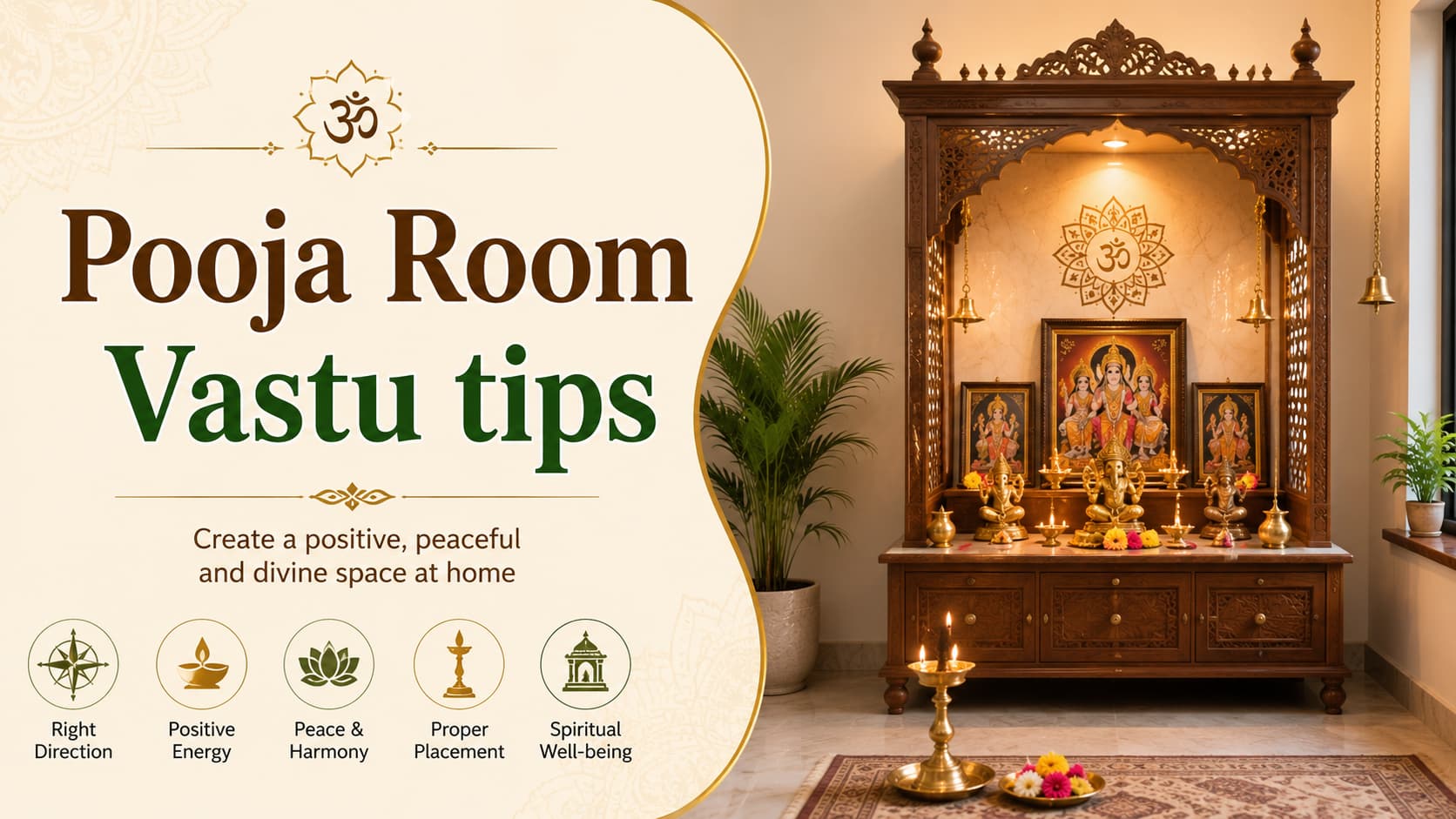
Pooja Room Vastu tips: Complete Guide
The prayer space is the spiritual center of an Indian home. It is the place where family members connect with God, offer their thanks, seek blessings, and find inner strength during tough times. This sacred area is considered the most spiritual part of the whole house according to Vastu Shastra, as it is believed to connect human energy with cosmic energy. A properly designed prayer space can create a sense of peace and positive energy, while an unsuitable location may affect the spiritual balance of the family.
Why Pooja Room Vastu Matters So Deeply
It is important to note that the prayer space is not only a spiritual space but a space for creation of energy. Prayers, candles, incense, chants, and offerings performed daily generate a lot of positive vibrations, which travel throughout the whole house. If properly positioned, this energy will amplify harmonious and prosperous life. If improperly positioned, this sacred practice will not work anymore.
A Vastu-aligned prayer space supports:
Complete peace of mind and emotions
Immunity against all harmful external influences
Enhancement of love and reverence within the family
Enhanced concentration and clarity of mind
Continuous showering of blessings and opportunities
Spiritual development of each individual in the family
Even if the house is designed based on the guidelines provided by the South Facing House Vastu Guide or the North Facing House Vastu Guide, the placement of the prayer place becomes an integral part of it.
Best Direction for the Pooja Room According to Vastu
Direction is the single most important factor in the Vastu prayer place. Even the smallest pooja setup performs powerfully when placed in the right direction.
North-East (Best Direction)
The North-East, known as the Ishaan corner, is ruled by Lord Shiva and is considered the most sacred direction of the entire home. A prayer place here connects directly with cosmic energy and brings deep spiritual clarity, peace, and blessings.
East (Excellent)
The East is the direction of the rising sun and is naturally associated with divinity, new beginnings, and positive energy. It is a strong option, especially for morning prayers.
North (Very Good)
The North is ruled by Lord Kubera and supports both spiritual growth and financial stability. Homes with limited North-East space can safely use the North side.
Directions to Avoid
South: The direction of Yama — creates disturbance and heaviness in spiritual practices
South-West: Too grounded — blocks the flow of divine energy
South-East: Fire-dominated — clashes with the pure calm energy of the pooja area
Under a staircase or above the toilet: Strongly forbidden in Vastu
Inside the bedroom: Mixes rest energy with divine energy
Idol Placement in Pooja Room Vastu
Idol placement is as important as the direction of the prayer space itself. Even in a correctly placed room, wrong idol positioning weakens the sacred energy.
Best Direction of Idols
The idols must face West since the devotees pray facing East
Or the idols can face South with the devotees praying facing North
Do not put idols facing North or East; the devotees must face those directions
Height and Position
Idols have to be kept at chest height, neither too high nor too low.
Keep idols a little away from the wall to maintain air flow.
Idols should never be kept touching the floor.
Elevate the idols using either a wooden or marble platform.
Size of Idols
The size of idol should not exceed 9 inches for home worship
Larger idols are kept in temples, not in homes for pooja
Many idols must be placed properly in a systematic manner
Rules for Multiple Idols
Two idols should never be kept of the same God
More than one Shivling should never be kept at home
Never keep idols which have any broken or chipped parts
Idols which have been gifted should never be displayed if their source is unknown
Idols to Avoid
Rudra form idols
War gods/deities idols
Idols having peeling paint or cracks
Photographs of dead relatives within the main prayer area (separate from other deities)
Pooja Room Design and Layout
Design details silently shape the energy of the prayer space every day.
Shape and Size
A small room set aside specially would be great.
The room should be square or rectangular shaped.
Irregular, triangular or round shape rooms should be avoided.
Even setting up a wooden mandir will work well.
Door and Threshold
There needs to be a wooden door with double shutters in the prayer place.
Raising the threshold is a very good suggestion.
The door should open easily and quietly.
Do not leave the door open.
Ceiling and Flooring
Ceiling should not be too low
Marble, wood, or stone flooring is ideal
Avoid dark tiles or heavy patterns
Storage Area
A little drawer or shelf that can be kept underneath the pedestal on which the idol is kept will do
Books, clothes or household articles should never be kept in the prayer space
Money, jewelry, or any other documentation should never be kept in the pooja area
Pooja Room Colours
Colours amplify the calm, sacred energy of the pooja area.
White — Purity, peace, universally safe
Cream / Ivory — Warmth, spiritual comfort
Light Yellow — Divine energy, focus, positivity
Soft Orange — Devotion and warmth
Light Blue — Calm and cooling energy
Sandalwood / Wooden Shades — Grounding and traditional
Colours to strictly avoid: black, deep red, dark grey, and dark blue. These absorb heavy energy and disturb sacred vibrations.
Use white marble, light-coloured wallpaper, or subtle textures to keep the space clean, bright, and peaceful.
Pooja Room Lighting
Lighting plays a subtle but powerful role in prayer place Vastu.
Yellow lighting is preferable to cool white
Small lighting on the ceiling or walls for soft light
An oil lamp (diya) needs to be kept every day because it clears the energy of the entire house
It is believed that ghee lamps have more power than oil lamps
Bright but do not make the room too bright
LED lights should not be used above idols
Sunlight from the East is highly beneficial, so if a window is possible, it should face East or North.
Décor and Sacred Items
Décor amplifies the divine energy of the prayer place when chosen carefully.
Recommended Items
Bell – to generate positive vibrations
Conch (Shankh) - for cleansing
Diya stand or brass lamp
Kalash made of copper/silver
Incense holder
Tulsi plant placed close to the prayer place (outside the room)
Fresh flowers each day
Sacred texts such as the Bhagavad Gita or Ramayana
Décor to Avoid
Pictures of dead ancestors with gods' idols
Flower chains dried up or faded offering things
Unrelated stuff lying around
Mirrors placed in the prayer place
Fierce or scary art
Damaged holy books
Clean the prayer space daily. Even one day of neglect noticeably reduces the sacred vibrations.
Pooja Room Vastu for Different Property Types
Every property type comes with different challenges and opportunities.
For Apartments
Apartments rarely have a dedicated the place, so focus on:
Locate the wooden mandir in the North-East corner of the living room.
Make sure that it is not located adjacent to the bathroom.
Keep the mandir clean and elevated.
Put a small curtain or a door on the mandir.
Modern apartments in planned sectors like Sector 12 Gurugram sometimes include a designated pooja space, but you should still verify the direction with a compass.
For Villas and Independent Houses
Villa owners can design a full-fledged prayer space in the North-East corner. Focus on:
Solid wooden door and threshold
Proper ceiling height
Marble flooring and light-coloured walls
Ventilation from the East or North
For Builder Floors
Builder floors often have compact layouts. Combine the place Vastu with practical décor solutions from the Home Decor Ideas Guide to create a beautiful, functional pooja space even in limited square footage.
Pooja Room Vastu for Different Localities & Sectors
There is a subtle influence of your locality on the power of the sacred energy of your house. No matter if you reside in a developed sector such as Sector 12 of Gurugram or a developing town such as Raja Nahar Singh of Faridabad, the approach should be a bit different in each case.
Homes on Busy Main Roads
External chaos affects the place calm. Use heavy curtains, wooden doors, and daily incense to protect its energy.
Homes in Quiet Sectors
Quiet neighbourhoods allow the prayer space vibrations to spread powerfully. Even a small setup produces strong effects.
Homes in Older Localities
Older homes often have limited or irregular spaces for a plac. Focus on remedies, colour, and lighting to strengthen the sacred zone despite structural limits.
Common Pooja Room Vastu Mistakes
Even well-planned homes often carry small mistakes that quietly weaken the sacred energy.
Placement of prayer space in the South or South-West direction
prayer place being located in a bedroom
prayer space beneath a staircase
prayer place adjacent or above the bathroom
Idols facing the door directly
Chipped and damaged idols being kept for several years
Pictures of ancestors placed along with the idol of the deity
Money, jewelry, and documents being kept in the Pooja place
Presence of dust and mess around the Mandir
Use of dark colors in theprayer space
Correcting even a few of these mistakes creates a strong shift in the spiritual energy of the home.
Powerful Remedies for Pooja Room Vastu Flaws
If your prayer place has direction or design flaws, remedies work very well with consistent practice.
1. Daily Lamp Lighting
Lighting a diya every morning and evening is the single most powerful remedy. It purifies the room and the entire home.
2. Camphor and Incense
Burn camphor daily and use natural incense like sandalwood, mogra, or loban to keep the energy fresh.
3. Copper or Brass Kalash
Place a small copper or brass kalash filled with water in the prayer space. Change the water every few days.
4. Tulsi Plant Nearby
Keep a healthy Tulsi plant near the pooja area (not inside). It amplifies divine vibrations across the home.
5. Cotton Curtain for Mandir
If your mandir is inside a common room, use a soft cotton curtain to close it during rest hours.
6. Regular Cleaning
Clean the pooja area daily. Even a quick wipe with a soft cloth is enough to preserve its sacredness.
7. Chanting and Mantras
Play soft mantras or bhajans for a few minutes daily. Sound vibrations spread across the entire home.
8. Fresh Flowers
Fresh flowers or a small floral offering keeps the deity happy and the space alive with positive energy.
Pooja Room Vastu Tips for New Home Buyers
Before finalising a home, use this quick checklist:
Check whether it is possible to have a prayer place/corner in the North-East
Do not choose any property where the only place available for the pooja is beneath the staircase
Check whether the pooja place shares a wall with the bathrooms
Make sure that there is no bed in the bedroom behind the pooja wall
Search for ventilation and light around the pooja area
Make sure of the orientation of the door and placement of idols
The pooja place should be away from the kitchen stove
Homes in planned sectors like Sector 12 Gurugram often score well on these points, but always verify personally.
Frequently Asked Questions
1. Which is the best direction for a pooja room?
The North-East is the most auspicious, followed by the East and North.
2. Can I keep a pooja room inside my bedroom?
It should be avoided. If unavoidable, cover the mandir with a curtain during rest hours.
3. Which direction should idols face?
Idols should face West or South so devotees pray facing East or North.
4. Can a pooja room share a wall with a bathroom?
No — this is one of the strongest Vastu prohibitions.
5. Is it okay to keep a pooja mandir in the living room?
Yes, especially for apartments. Place it in the North-East corner.
6. Can I store money or jewellery in the pooja room?
No — the pooja area is meant purely for divine energy.
7. Are broken idols harmful?
Yes. Replace broken or chipped idols immediately and immerse the old ones respectfully.
8. Can photos of deceased ancestors be placed with deity idols?
No — ancestor photos should be kept in a separate area of the home.
9. What colours are best for a pooja room?
White, cream, light yellow, soft orange, and wooden shades.
10. Can Pooja Room Vastu be corrected without renovation?
Yes. Direction of idols, colours, lighting, and daily rituals produce strong results without structural changes.
Conclusion
The prayer space is the heart of any Indian household. In this room, energy turns into prayers, silence into strength, and rituals into blessings. The principles of Vastu for this space create a solid spiritual base for the physical, emotional, and financial well-being of all members of the household. A Vastu-aligned prayer area works like an invisible shield that may help protect the household from negative energy and support the positive efforts of its inhabitants.
Used in combination with other resource guides such as South Facing House Vastu Guide, North Facing House Vastu Guide, and Kitchen Vastu Guide, this spiritual-space guide becomes the foundation for your house. Begin by making a few respectful modifications in your home and continue with them regularly; over time, you may notice positive changes in your surroundings as peaceful energy radiates through the prayer area. Because once the spiritual corner in your house becomes properly aligned, peace and blessings can spread throughout every nook and corner of your home.