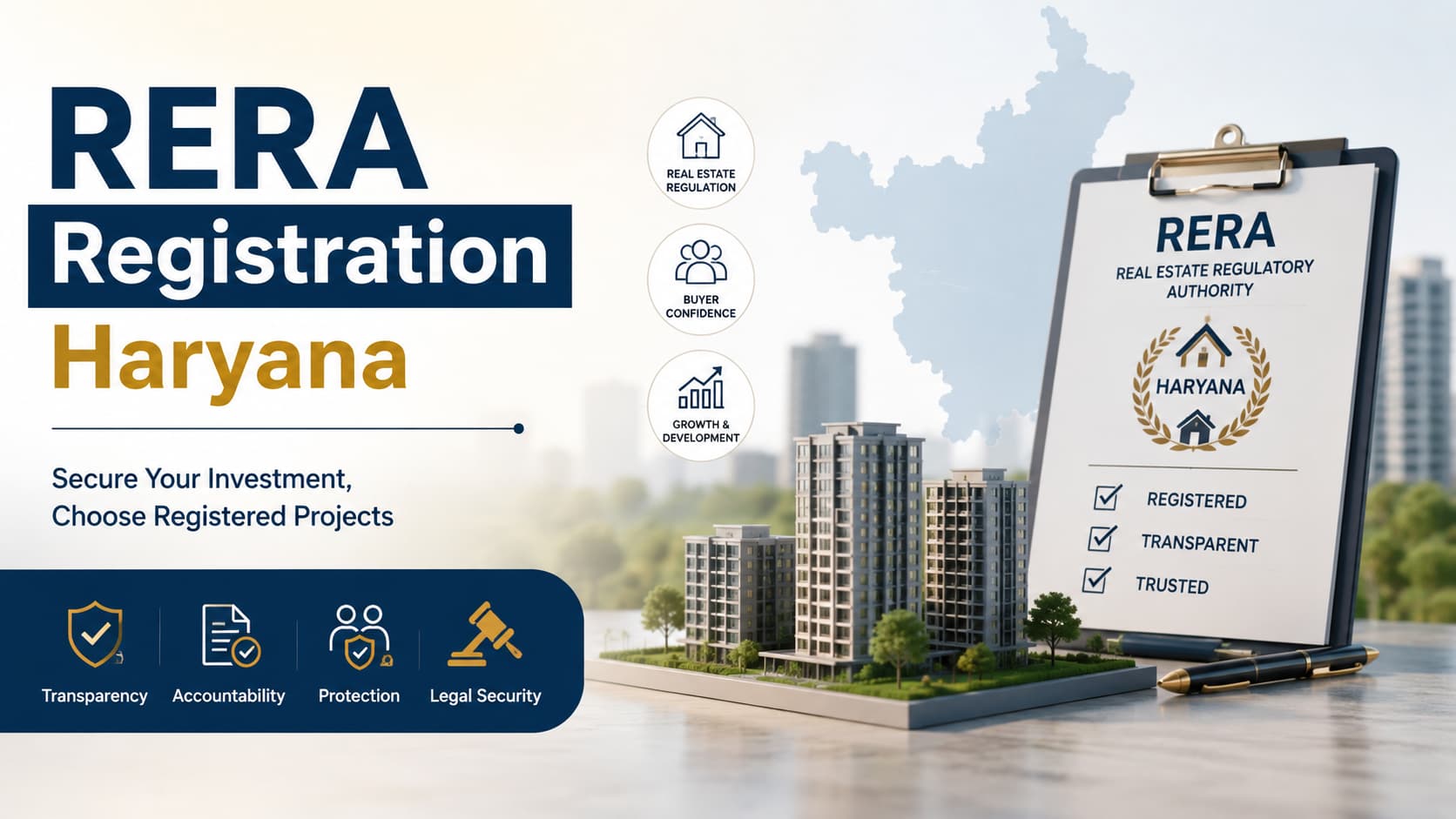
RERA Registration Complete Guide for Builders, Agents & Buyers
Prior to listing any flat, prior to collecting booking amount from anyone, prior to even printing any brochure for any of their projects, there is one step that has to be completed: RERA registration. It is the statutory requirement that all developers have to go through according to the Real Estate (Regulation and Development) Act and also what all sensible buyers ensure before handing over a single rupee. Doing it correctly will make the project legit and accountable while failing at it means it is altogether an illegal project.
It needs to be understood however that RERA registration is often misunderstood. Developers think that the paperwork will not be such a big deal. Agents do not realise that they have to get it done too. And buyers hardly understand how to check the registration number of any project to find out whether it is really a good project or not. This post addresses all these aspects.
What Is RERA Registration?
The process of registering a real estate development or the agent itself to the Real Estate Regulatory Authority of the state under the Real Estate Regulatory Authority Act 2016 is known as registration. The act has made it a punishable offense to market or advertise, book, and sell any project that falls under its ambit without the requisite registration.
This is because it ensures that all the details pertaining to the sanctioned plan, approved layout, number of units, the record of the developer of the projects, and the date of possession, etc., become accessible for buyers.
In Haryana, projects are registered with the relevant bench of the authority. A project along the Dwarka Expressway, the Sohna Road belt, or a settled pocket like Sector 12 Gurugram registers with the Gurugram bench.
Which Projects Require RERA Registration?
Not every construction needs to register, but the thresholds are broad enough to capture almost every meaningful project.
The land area exceeds 500 square metres, or
The project has more than 8 apartments or units (inclusive of all phases)
Registration was mandated for new projects as well as projects which had not been issued certificates of completion before the effective date of the Act. Projects requiring registration will have to be registered per phase if they are phased developments.
Projects that do not usually need to be registered would be those projects that fall below the threshold sizes, those that consist of less than 8 units of development on land that measures less than 500 square meters, and those which have already obtained completion or occupation certificates prior to the coming into effect of the Act.
Quick Facts About Registration
Who should be registered: Developer (project) and real estate agent (individual/entity)
Threshold: Land measuring over 500 square meters or more than 8 units
Method: Online using the state RERA website
Duration of project registration: Valid until the completion date stated
Duration of agent registration: Renewed periodically but for a specified period
Display requirement: Registration number required in all advertisements
Escrow requirement: 70% of purchase price must be in a designated project escrow account
Fine for failure to register: Up to 10% of total project cost
Registration for Developers: Step by Step
Step 1 — Assemble project documents. The developer gathers land title records, encumbrance certificate, sanctioned building plans, layout approvals, the commencement certificate, and details of the project's promoters and past projects.
Step 2 — Prepare financial and timeline disclosures. This includes the estimated project cost, the phased development schedule, the committed completion date, and the escrow account arrangement where 70% of buyer funds will be held.
Step 3 — File the application online. The developer submits the application on the authority's portal with all documents uploaded and the prescribed registration fee paid. The fee is generally calculated per square metre of the project area.
Step 4 — Authority review. The authority scrutinises the application. If everything is in order, registration is granted and a unique registration number is issued, usually within a defined statutory period. If the application is incomplete or non-compliant, it can be rejected.
Step 5 — Display and comply. Once registered, the developer must display the registration number on every advertisement, brochure, and the project website, and must file quarterly progress updates on the portal.
This applies with equal rigour whether the project sits on a premium corridor or a developing location — the authority does not lower its bar for a prestigious address.
RERA Registration for Real Estate Agents
Important point often overlooked by brokers: The registration is not only applicable to builders. Every agent whether individual or company who mediates transactions related to the sale/purchase of units from the RERA registered projects shall also have to get himself registered.
The process of registering oneself as an agent involves submission of identity/address proof, business registration (in case of companies) and the prescribed fee. After being registered, one gets a registration number which needs to be mentioned in transactions and documentation.
An unregistered agent operating in a notified area is doing so illegally. So before you engage any broker for a purchase along the Southern Peripheral Road or in any newer sector, ask for their registration number and verify it.
Documents Required for The Registration
Incomplete documentation is the single most common reason registration applications are delayed or rejected. Assemble everything before filing.
Fees and Timelines for The Registration
Fees will be charged on a per-square-meter cost depending on the project area, although there may be different costs applicable depending on whether it is a housing or commercial project. Fees depend on the scale of the project, and hence the registration costs for a large township are considerably higher compared to a mid-sized building.
In terms of deadlines, the authority will be compelled to undertake an application within a certain statutory timeframe. An application that is comprehensive and well documented gets processed fast, while those lacking documentation are sent back for rectification, and hence it is important to make sure that one fronts the paperwork.
The agent registration is relatively light, with low fees and documentation requirements. However, the agent needs to ensure renewal of his registration since it is a periodic exercise.
How Buyers Should Verify RERA Registration
This is the important part from the point of view of an average buyer, so take it very seriously.
The information about each registered project gets listed on the website of the authority. You can find the information using the name of the project, developer’s name, or the location and the district of the property. You will get information about the registration number, sanctioned plan, total units, promoters’ details, commitment date of possession, and quarterly progress report filed by the developer.
A project, which is not registered in the portal or whose developer cannot provide you with the registration number, should be immediately dropped from your list. If the project is unregistered but located in the notified area, then it is an illegal marketing campaign regardless of how appealing the brochure is or where the project is located. Conduct this check on each and every project you want to buy.
Consequences of Skipping The Registration
The Act is not a passive registry — it punishes non-registration seriously.
Marketing of an unregistered project could lead to the levying of a fine of up to 10% of the estimated cost of the project.
Refusal to comply with directions to register could lead to imprisonment of the promoter.
Failure to advertise using the registration number constitutes a violation.
Booking for an unregistered project subjects the developer to an order of refund and fine.
These deterrents have visibly changed developer behaviour. Marginal builders who relied on opaque, unregistered launches have largely been squeezed out of serious markets like Gurugram.
Common Mistakes in RERA Registration
1. Filing with incomplete documents. The leading cause of rejection. Assemble everything first.
2. Under-declaring project cost. The estimated cost feeds both the fee and the escrow. Getting it wrong invites scrutiny.
3. Missing the quarterly updates. Registration is not a one-time event; ongoing progress reporting is mandatory.
4. Agents assuming they're exempt. Brokers in registered projects must register too.
5. Not registering each phase. Phased projects require separate registration per phase.
6. Buyers trusting a number without checking it. A number on a brochure is not verification. Confirm it on the portal yourself.
Who Needs to Act on The Registration
Must register:
Developers initiating projects beyond the size criterion
Agents promoting sale transactions in projects registered
Promoters of projects that are phased (each phase)
Must verify before buying:
Anyone buying a flat which is under construction
Buyers of projects launched recently on any corridor
Investors banking on the possession date commitment
Frequently Asked Questions
1. What is RERA registration and why is it mandatory?
The registration of RERA is an important step to register a real estate project/agent under the Real Estate Regulatory Authority through the RERA Act of 2016. The registration is compulsory because according to this Act, there should not be any marketing, booking, and sale of any qualifying project without it.
2. Which projects require for registration?
If the size of any land-based project exceeds 500 sqm or has more than 8 units in all its phases, it will have to get registered under RERA. It is applicable for both new and existing projects that do not have completion certificates at the time of the implementation of the Act.
3. Do real estate agents need for registration?
Yes. Any agent – whether individual or company – involved in helping to buy or sell apartments in the registered projects needs to be registered with RERA himself and needs to provide his registration number while conducting any transaction. It is illegal on the part of an unregistered agent to conduct business in the notified areas.
4. How long does RERA registration take?
The body in question must be able to complete an application within a specified period of time, meaning that any well-documented application will move swiftly. In most cases, delays arise due to a lack of documentation, meaning that it is returned for rectification. This means that the best approach is to front-load everything.
5. What documents are needed for RERA registration?
The developer requires documents such as title deed, certificate of encumbrances, approved drawings, commencement permission and layout permission, promoter information, cost estimates of the project, schedule of development, and escrow account. The lack of sufficient documentation is the most frequent reason for failure.
6. How much does RERA registration cost?
Fees required to register projects are normally based on the size of the area of the project measured in square meters, although the cost may differ in case of residential and commercial projects. Fees and documentation for registering agents are cheaper, but periodic renewal is required.
7. How do I check a project's RERA registration as a buyer?
Use the RERA website to search for the project using either its name or developer’s name, or even the district. The results will display the project’s registration number, sanctioned drawings, total units, promised possession date, and quarterly progress. Failure of the project to come up or provide a valid registration number should be considered a warning sign.
8. What happens if a developer skips the registration?
Marketing of projects that are not registered can result in penalties up to 10 percent of the total cost of the project. Default after issuance of notice to register can lead to imprisonment. Failure to show the registration number while advertising the project is another form of violation.
9. Is RERA registration valid forever?
Not really. The registration of a project is valid until the completion date, but when there is a delay, then the developer should seek an extension. However, registration of an agent is only valid for a specific period of time, and it should be renewed before it expires.
10. Does each phase of a project need separate RERA registration?
Yes. Phase developments must be registered for each phase separately, which requires separate registration number and completion schedule. Consumers should verify that the particular phase they intend to buy into is indeed registered rather than the previous phase of the same development.
The Foundation of Trust: Understanding RERA Registration in Haryana
RERA Registration serves as the cornerstone of buyer protection within RERA Haryana regulatory framework. Before any real estate project can legally operate in Haryana, it must complete mandatory the registration with the appropriate authority. This registration process ensures that developers adhere to RERA Haryana guidelines, maintain transparency about project specifications, and comply with all regulatory requirements. Understanding the Registration procedures transforms you from a vulnerable buyer into an informed investor capable of evaluating project legitimacy before committing your capital.
A registered project provides you with multiple layers of protection throughout your property investment journey. Conduct a comprehensive RERA Project Search to verify the Registration status before making any purchase decisions. Verify that your real estate agent holds proper RERA Agent Registration credentials, ensuring they operate within regulatory compliance. Registered projects must comply with all Building Bye Laws and quality standards established by municipal authorities.
If developers violate Registration terms or breach project specifications, you can file a RERA Complaint seeking redressal. Registration also establishes clear accountability for RERA Possession Delay & Compensation matters. This foundational regulatory requirement ensures that every registered project operates transparently and accountably within the RERA Haryana system, protecting your interests throughout the entire property lifecycle.
Final Thoughts
RERA registration forms the bedrock upon which every genuine real estate deal now depends. It is a legal prerequisite for developers that ensures proper title, full disclosure, and sound financial practices. It is a professional obligation for agents that differentiates those who operate responsibly from those who act illegally. Finally, for buyers, it is one piece of evidence above all others that the project in question is indeed an approved one.