Introduction
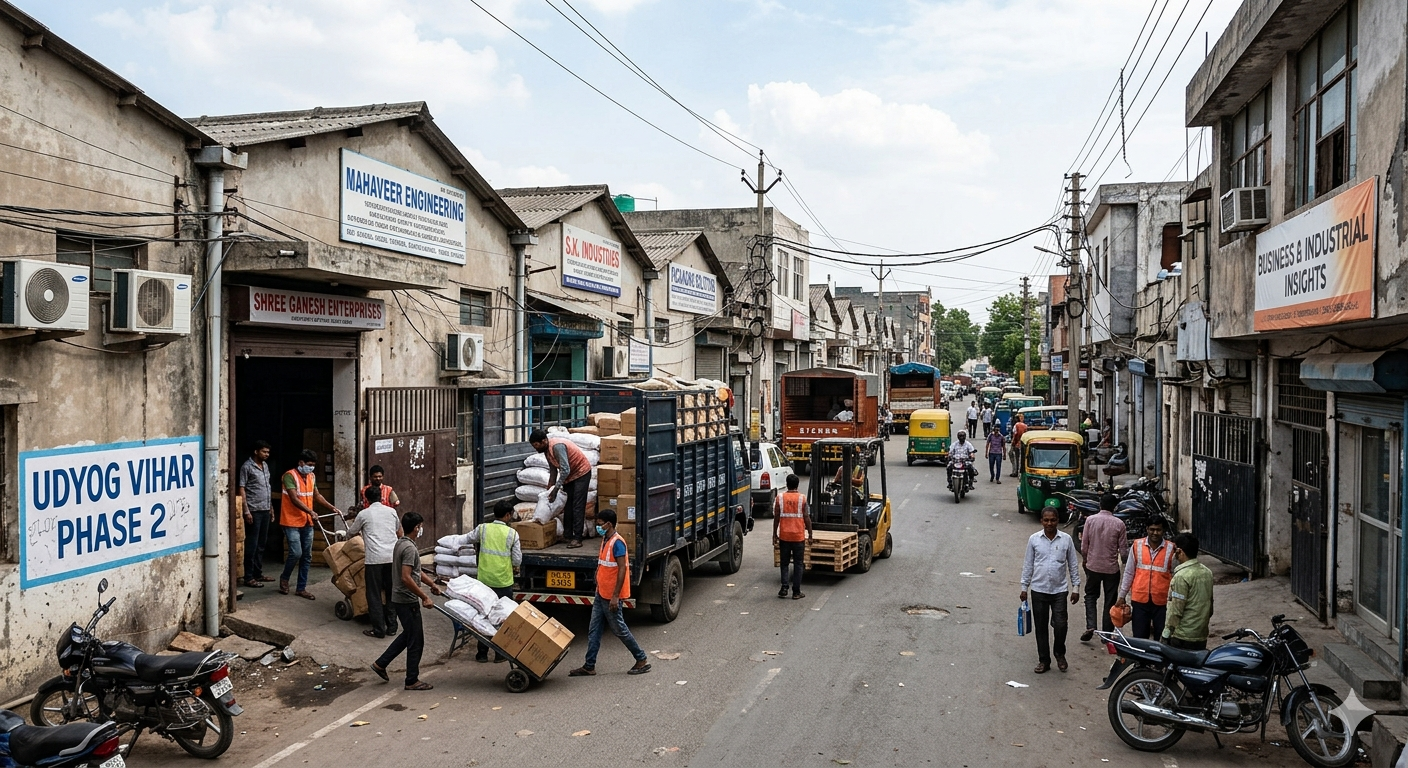
Phase 2 of Udyog Vihar Gurgaon represents one of the earliest industrial zones that form the base of the entire industrial development network of Gurgaon. This zone has been developed to facilitate only small and medium-scale industries and not any corporate offices or high-end commercial ventures. Instead of emphasizing the presence of aesthetically pleasing infrastructure facilities, the zone represents a utilitarian region with more emphasis on practical business transactions than anything else.
This zone represents one of the most economical zones from the perspective of industrial development. The presence of various small-scale industries such as manufacturing units, fabrication plants, repair centers, and various other service providers can be observed on a regular basis in the zone. The entire focus of this region is related to the facilitation of production and utility-related services rather than catering to commercial activities.
From the strategic point of view, it acts as an auxiliary industrial zone within the Udyog Vihar zone, which helps in ensuring continuity among all the industrial phases of Gurgaon.
The work force composition in the region is mainly made up of skilled technical personnel, semi-skilled workmen, and operating personnel responsible for carrying out actual implementation activities. This results in a high-productive environment wherein business operations take place regularly and in accordance with demand.
With regards to property and business concerns, the area is relatively stable and functional in nature. The businesses here value cost-efficiency and functionality more than anything else. Although lacking in commercial facilities, the area still plays a significant role in serving as an industry base for Gurgaon.
Industrial Evolution Profile
The labor force composition in the region is predominantly comprised of skilled technical workers, semi-skilled workers, and operating workers who are supposed to conduct the actual implementation processes. This leads to the emergence of a productive atmosphere where business transactions are undertaken on regular basis in response to demands.
In terms of property and business aspects, the region can be said to be functional in nature. The businesses in the region prioritize cost-effectiveness and functionality above all else. Despite not being commercially vibrant, the region still carries a lot of weight in acting as the industrial hub of Gurgaon.
The infrastructure in the area has also evolved gradually over time rather than through any massive redeveloment. Thus, the area maintains an old-fashioned industrial atmosphere but manages to carry out the necessary modern functions such as logistics management.
Thus, all in all, this period is a perfect example of how the industry evolves gradually—progressing from a manufacturing-based economy to a service-based one.
Business Activity Pattern
Firstly, the industrial ecosystem of the zone is based predominantly upon practical, utility-based functioning instead of corporate and high-end commercial activities. Thus, there is no doubt that the primary purpose of the zone is to provide for constant industrial activity, when daily functioning of businesses in the area will be oriented towards production, servicing, and repair purposes.
Secondly, there is no doubt that one of the most prominent characteristics of the area is a domination of light manufacturing facilities. There are lots of various small units specialized in fabrication, metal works, assembling electrical components and even some related to packaging and distribution processes.
Thirdly, another aspect is represented by a wide range of service-related businesses. There can be mentioned repairing shops for industrial machines and tools, printing shops, technical maintenance, etc. The major importance of such firms is in that they help maintain industrial functioning in neighboring zones due to providing for necessary services.
Fourthly, logistics and warehousing activities are also conducted in the zone to some extent. However, there is a tendency towards conducting the abovementioned activities on a relatively smaller scale comparing to newly established industrial zones. Many local businessmen use the area as a temporary storage place
Workforce & Operational Structure
The operational ecosystem for this industry is supported by an extremely efficient and pragmatic working team. Almost all functions are conducted by technicians, machine operators, helpers, and contractual employees, who deal with the day-to-day functioning of production and service operations. The system of work is pragmatic in nature, with greater emphasis placed on production efficiency rather than any formal organization structure.
The work schedule generally follows the shift system based on the nature of the business. Production plants, repair shops, and logistic centers often conduct extended working hours in order to ensure uninterrupted operations. Thus, the demand from the local industrial and commercial sectors is consistently met without fail.
Another significant aspect of the manpower system is the flexible hiring system. Rather than engaging full-time permanent workers, many enterprises opt for contractual labor, enabling them to adapt their staffing and operating capacity according to the demands of the business.
Most of the manpower pool comes from the locality, mainly from Gurgaon and its surrounding areas, facilitating easy access to manpower and avoiding any disruptions in operations. The entire system continues to be highly pragmatic, wherein the day-to-day activities in the industry sector, including manufacturing, repairs, packaging, and transport operations, are
Infrastructure & Utility Setup
As far as infrastructure is concerned, the area can be considered appropriate for manufacturing as the infrastructure is mostly geared towards functional uses and has not undergone any major changes in its purpose over the years. The infrastructure facilitates manufacturing, maintenance, service and other related industrial activities.
The road system within the industrial zone is designed to facilitate the movement of small and medium sized commercial vehicles through the area. Although, the roads may not be modern and up to date, yet they perform their task well enough to facilitate industrial activities that include transporting raw material and products from one place to another.
Electricity and water connection is available at the industrial units for small scale manufacturing workshops that use electricity to operate their machinery. The electricity supply and availability of water in sufficient quantities helps in maintaining the smooth operations at the industrial zones.
Apart from the road network and the utility services, industrial zones possess storage facilities which are mainly used for storage and production purposes and are relatively more concerned about practical usage than aesthetics. The drainage system is also available within the industrial units.
Logistics & Commercial Utility Role
The role played by this area industrially speaking in terms of logistics and commercial operations is mainly limited to small scale industrial movement. It helps with the flow of goods, coordination of goods storage and commercial operations that serve industrial processes within Gurgaon.
First, short distance logistics handling is one of the areas where this zone can be seen to offer considerable utility. It serves as a place where businesses come temporarily to load, unload, and dispatch their products. They load their products, store in smaller packages and then ship out for further distribution.
Moreover, it is also important to highlight the fact that smaller warehouses and storages make the area a useful zone for logistics operations. Here the emphasis is more on short term storage of goods, provision of contractor services, and packaging related facilities for businesses.
In addition, commercial utilities offered by this zone are mostly limited to vendors who work from smaller offices to serve local industrial processes. Material supply companies, maintenance vendors, and packaging service providers are among these vendors working from smaller facilities.
Finally, this zone also acts as an interconnecting channel for different industrial phases and commercial zones of Gurgaon. It helps with the
Market Nature & Real Estate Behavior
The property market within the zone is utility-based and caters to small and medium businesses. The demand is primarily generated by manufacturing firms, workshops, service providers, and logistics companies who need a workspace for day-to-day operations as opposed to an upmarket commercial office complex.
Properties in this zone consist of industrial sheds, small factory units, and workshops. The property use is by small and medium enterprises that prioritize cost-effectiveness and long-term use over modernity and commerciality.
Occupancy will remain strong since there will always be a need for these essential industrial properties. The firms will be attracted to the zone because of its affordable price and industrial setup which will lead to consistent occupancy and use.
As compared to new commercial areas, the value of properties within the industrial zone depends on factors like functionality and practicality rather than aesthetics. Location, accessibility, and usability become more significant than appearance.
Business decisions made in this market tend to be conservative and sustainable. This type of market works best for those who are willing to generate rental income over time from their industrial tenants as opposed to quick growth and risky gains.
Investment Perspective
For the investment portfolio of this zone, stability and consistent return through rent are more important than fast capital appreciation. It would suit investors preferring predictable income generated via practical use of properties over speculative capital gains.
One major strength of this sector lies in the continuous demand from small and medium firms. They are looking for permanent places of operation, like workshops, small manufacturing facilities, and offices, and this helps maintain stable vacancy rates. This factor stands in favor of the zone in comparison with expensive commercial centers, which have higher occupancy risk due to periodic corporate turnover.
In addition, entry barriers into this market are quite low in comparison with premium industrial or commercial zones in Gurgaon. In other words, those wishing to invest in the industrial property sector but not ready to put too much money into this kind of business will be able to do it with ease. The attractiveness of the segment for end users is also due to its lower costliness in comparison with other parts of the city.
Advantages vs Limitations
In this way, the industrial area provides an equal combination of functional advantages and drawbacks. On one hand, the site can be characterized by high functionality and permanent business needs; on the other hand, all the disadvantages are connected with the outdated infrastructure that has not undergone any changes recently.
Advantages
High demands from SMEs guarantee consistent business activities
Relatively cheap property alternatives than industrial/commercial estates
A proven business environment with the presence of workshops, services, and vendors
Constant operational environment that supports manufacturing and repair-related businesses
Ideal for consistent utilization with stable rent prospects
Limitations
It is somewhat old when compared to the new industrial belt areas
No much development in terms of layout or facilities
Unfit for business corporations or expensive commercial projects
There is possibility of traffic pollution during rush hours
Little potential for luxury developments or swift changes
Pros & Limitations Overview
Connectivity & Infrastructure Overview (10 KM Radius)
Connectivity and infrastructure around the zone will assist in facilitating daily operations within the region. While the zone is dedicated to industrial and service production, the road networks, residential neighborhoods, and commercial centers will ensure seamless transportation of both people and products. Availability of major roadways, local markets, and basic amenities will assist in ensuring smooth operations and reduce reliance on distant areas.
The availability of residential neighborhoods will facilitate the availability of laborers, while hospitals and education centers will assist in maintaining stable employment conditions. Furthermore, the proximity of commercial centers and corporate centers will assist in enhancing the industrial operations of the zone through connections to Gurgaon zones.
FAQ
1. What is the purpose of this industrial estate?
This industrial estate is meant for the establishment of smaller scale industries, repair workshops, service units, and vendor-based industries which cater to day-to-day requirements.
2. Can this area be used for residential purposes?
No, this is an exclusively industrial area where no residential use is planned. Other areas near this can provide accommodation facilities to the employees working here.
3. What kind of businesses run in this area?
Some typical businesses running in this area are fabrication units, machine repair workshops, packaging services, small-scale industries, and contractor-based industries.
4. Is this area ideal for investments?
Investments are worthwhile when made in such a manner as to earn stable rent from tenants, who will be using the property for business purposes.
5. How is the connectivity of this area?
Connectivity in the area is excellent because of its connectivity through NH-48 and metro rail.
6. What kind of labor force exists in this area?
Labor force comprises mainly of skilled manpower, semi-skilled manpower, machine operators and contractual manpower for industry use.
7. Is there consistent rental demand in this area?
Yes, rental demand is steady because of its consistent use by SMEs.
8. In what way is this phase different from others?
This phase has a lot of focus on affordability and is more traditional in nature with the presence of SMEs being predominant.
9. Do modern facilities exist in this area?
Facilities are present but relatively old and lack modernity as compared to modern industrial areas.
10. Why is this area important for the industrial value chain?
It serves as an auxiliary industrial area, which assists in sustaining industrial production and services in Gurgaon.
Conclusion
Nevertheless, the industrial estate serves as an effective and dependable component of the greater industrial complex of Gurgaon. The key feature of this industrial area lies in its capacity to serve the needs of small and mid-sized businesses that depend on regular performance, economy, and availability of workplaces. This particular place does not strive for any sort of commercial success and attractiveness; instead, it focuses on practical industrial usage.
The existence of various manufacturing companies, services workshops, and vendor-operated companies makes the business processes continuous and driven by demands of customers. From the point of view of its placement in the greater Udyog Vihar complex, this zone plays an important role because it enables proper coordination of activities at various stages of industrial process, thus enabling constant industrial circulation.
In terms of real estate, this place provides investors with a good opportunity to establish their business here since the area is suitable for those people who seek reliability and economic efficiency.