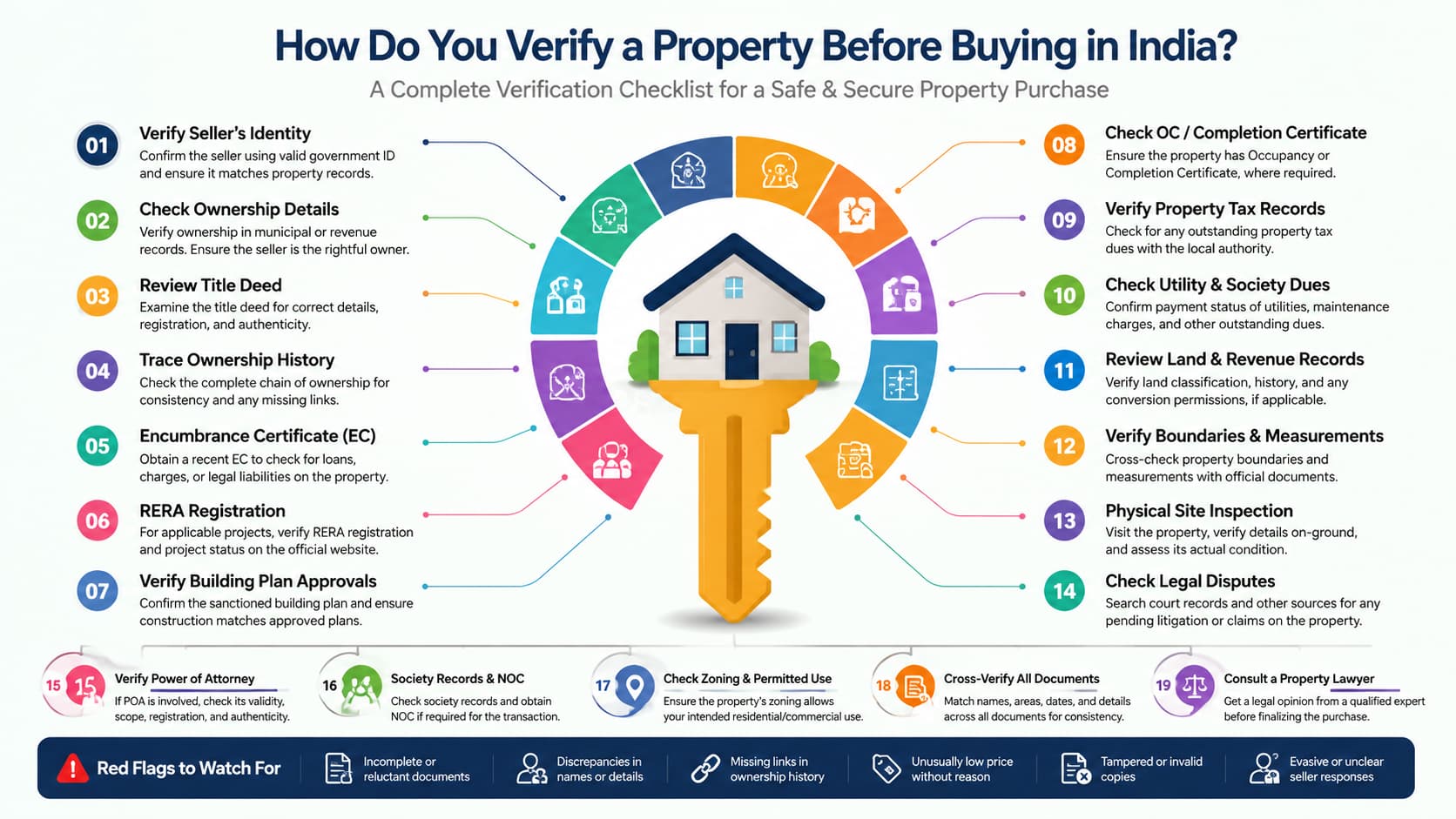
Purchasing real estate is the most paper-intensive process for a buyer after buying a house, as forgetting to fill out a single form at the right time can ruin a good deal and result in a prolonged dispute. This guide outlines the documents and the procedures that a buyer needs to know about before signing not as a guarantee of total safety, but as ways to mitigate risks in case of thorough preparation.
First, a couple of words of warning: verification mitigates risks, but it doesn't eliminate them. There's no such thing as a checklist that will fully protect you from risks associated with buying real estate. The laws on real estate transactions may vary dramatically depending on jurisdiction; therefore, no matter how detailed and informative a guide may be, it won't replace an analysis of your transaction by an experienced lawyer.
Verifying the Seller's Identity and Ownership
Begin with ensuring whom exactly it is that you are transacting with. Government-issued documents of identification, though dependent on the kind of transaction being carried out and also vary from place to place, can help confirm the identity of the seller, but identification alone will not serve as proof of ownership.
The proof of ownership will have to come from other documents, mainly the title deed.
Title Deed and Ownership Chain
The title deed is a significant document used to ascertain the title to ownership. In addition to the current title deed, it is advisable to look into the title history of the real estate as far back as possible instead of focusing on a number of transactions; the objective is to get the entire title chain that is relevant to this particular piece of land or building, which may greatly differ based on the history of the asset in question.
Gaps in the title chain or any other anomaly such as lack of a transaction, sudden change of ownership or a discrepancy in the names, should be discussed with a lawyer prior to making the purchase, even though it seems insignificant to start with and can cause problems in the future during the sale.
It is good to know how far back one has to go for a chain of title to be considered relevant to the kind of real estate asset in question: resale apartment, independent house or agricultural property used for other purposes. Prooperty.com
Encumbrance Certificate (EC)
Encumbrance Certificate is a document containing details of all transactions and encumbrances registered against a particular real estate during a certain period of time. Encumbrance certificates are helpful documents, but it is necessary to keep in mind what exactly they contain, because an Encumbrance Certificate is the proof of registration and not proof that there are no other legal problems associated with the property in question. Even when an Encumbrance Certificate is clear, it doesn't mean that nobody has a claim to the property from a financial institution.
There is no standard validity period applicable to all Encumbrance Certificates; depending on the nature of the transaction, there are various periods of validity and the right search period of each should be established by the local registration authority. You can ask your lawyer about the period which is appropriate to your situation.
RERA Registration
In cases where the project is covered by the ambit of RERA (Real Estate Regulatory Authority), then checking the status of registration of the project becomes a good starting point. It should be noted that there might be some confusion regarding this since RERA registration pertains to the registration and status of the project in terms of its regulatory authority and some promoter obligations - it doesn't guarantee that all other approvals, sanctions, and plans have been taken care of.
Building Plan and Construction Approvals
When possible, it would be advisable to check whether there is any approved building plan and verify whether the construction complies with the approved plans. The rules for each real estate will vary based on the asset's type, age, and other conditions – the older building, plot of land, and new construction unit may have differing rules, so it is good to inquire specifically which rules are applicable to your property.
Occupancy Certificate (OC) and Completion Certificate
The Occupancy Certificate, when applicable, is usually an indication that the building, once completed, has satisfied the necessary standards that qualify it for occupation. A Completion Certificate, in the same way, would indicate that the construction process has been completed according to the approved plans. Whether these are necessary or not will depend on the type of property and the relevant regulations.
Property Tax Records
Investigating whether the property taxes have been paid also confirms the status of the due amount. However, one should not be too cautious about the wording of the due amount since, depending on the legislation of the area and the specifics of the deal, a purchaser can become responsible for any outstanding dues in some cases – not necessarily in all of them, but it is quite possible.
Utility and Society Dues
In cases where there are any utilities, society or association maintenance fees, and in some cases, private services such as a septic tank or a private water source – then it might be useful to confirm what unpaid fees there may be and whose responsibility it is to pay those before completing the transaction.
Land and Revenue Records
Local land or tax records may be useful in verifying the classification and history of a property. When there is a change of classification, such as from agriculture to residential, it would be helpful to verify this particular aspect because the rules of conversion are not the same everywhere.
Boundary and Measurement Verification
This will prevent future problems related to boundaries between the recorded property and other neighboring properties. It is a logical step to take when comparing the measurements with the title documents, especially when it comes to larger land parcels or those with vague boundaries.
Physical Site Inspection
An inspection of the real estate by eye can be a good component of due diligence – looking at its state, wear and tear, and making sure that the actual asset corresponds to its description. But there should be an understanding that this type of inspection does have its boundaries, and in case of any serious issues related to structure of the building or asset, a structural or civil engineer should inspect it.
Court and Legal Dispute Records
Reviewing court records or searching other relevant sources of information for litigation can be a useful approach in uncovering any existing disputes related to the real estate or the previous owners of the asset. This should only be seen as one step in the whole process of verifying disputes and should not be seen as an exhaustive exercise in itself.
Power of Attorney (POA) Verification
In the case where a deal is done on behalf of the owner with a person having the Power of Attorney, checking the legality of the power of attorney becomes crucial. There are certain provisions in the Registration Act related to the document; however, the requirements can differ depending on specific circumstances and the particular state, which makes such a check necessary.
Society Records and NOC
If the property is a member of any housing society or such an organization, then it is natural to consider checking the society's records as well. No Objection Certificate (NOC), if the society itself requires it, can be considered a necessary thing for your transaction – though not every society and every transaction does need it.
Zoning and Permitted Use
Determining that the zoning classification of a property matches the intended use, whether it is residential, commercial, or something else, will prevent problems in the future, especially when purchasing commercially or on the zoning boundary line.
Cross-Verifying Documents Together
Documents are important, but cross-referencing among them is equally important. The names, addresses, areas, and dates have to match from one document to another like the title deed, tax documents, building plans, etc. Any discrepancy between the documents, including just a slight variation in the spelling of a name, must be brought up and sorted out before moving forward.
Why a Lawyer Still Matters
None of the above verification processes should be considered a substitute for having an experienced lawyer go through your particular transaction. While a list helps to identify the documents and provides a rough understanding of their content, analyzing the deficiencies, estimating the risks, and identifying exactly what needs to be done in your particular case is exactly what an experienced lawyer is expected to do. The process helps in identifying whether a title is clear and marketable; while lowering the risks, it does not remove them completely.
Document Verification Checklist
Identification of seller via proper government identification document
Title deed and chain of title examination for completeness and consistency
Review of recent EC or encumbrance search, relevant for transaction
RERA registration verification, in case the project is covered under RERA
Verification of sanctioned building plan, wherever applicable
Occupancy or completion certificate check, wherever necessary
Tax records of property checked for unpaid taxes
Utility and society dues, if any, identified
Land or revenue records check along with classification changes, if any
Boundaries and measurements verified from documentation
Site visit completed and professional analysis done for any structural defects
Court records and legal checks performed where available
Validity and registration of POA checked, wherever applicable
NOC of society taken, if necessary
Zoning and use permission verified
Consistency in all documentation examined
Legal opinion taken before completing transaction
Red Flags to Watch For
A few signs are worth taking seriously rather than dismissing as minor:
Selling party reluctant or tardy in offering necessary documents without a good explanation
Discrepancies in names, dates or figures from one document to another
A history of ownership with missing links for some unknown reason
Pressure to get the deal done quickly without proper documentation and investigation
Price way below others like it without a good explanation
Documents which have been tampered with or are photocopies without seals or signatures where these should be
The selling party or his/her representative acting evasively in response to any inquiry about the documents listed above
Final Thoughts
Confirming the documents in respect to the legalities of a real estate transaction has much less to do with discovering a single document that would "prove" everything, and much more to do with gradually accumulating sufficient information, piece by piece, which would enable you to feel truly confident before investing substantial amounts of money into the real estate purchase. If approached correctly, with a good lawyer consulting you along the way, it will give you reasonable assurance based on the completion of due diligence, rather than guaranteeing your success absolutely.
All of this can easily seem overwhelming if handled on your own, which would not be at all surprising, as the amount of documents you need to collect and analyze really is rather high, and the exact set of requirements does change depending on the country and type of real estate. This is exactly why the combination of an organized checklist such as this and consultation with a lawyer tend to yield the best results.