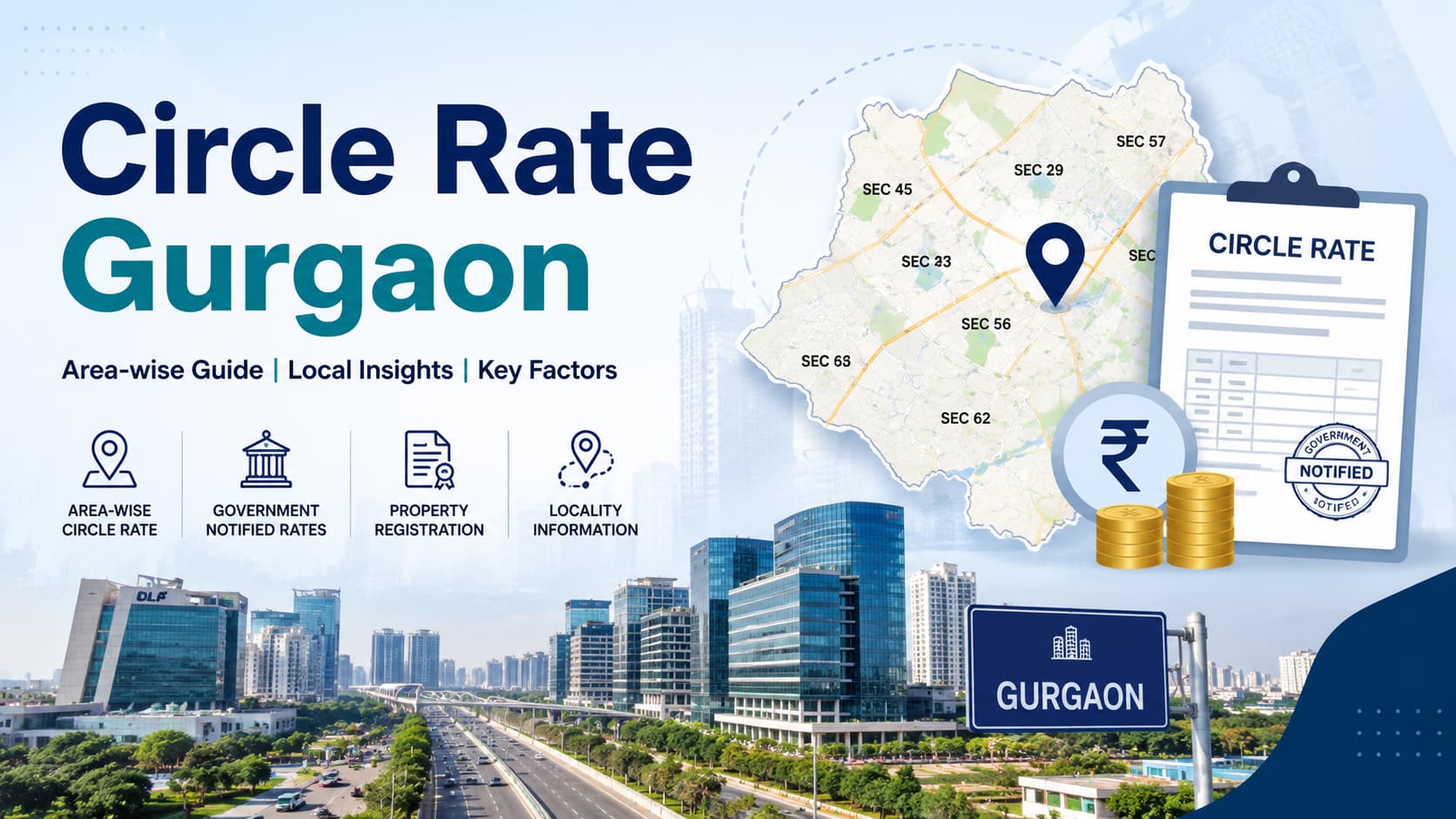
Gurgaon which is now officially called Gurugram, has become one of the dynamic real estate markets in the Indian country. If you are a buyer, seller or investor in real estate, it is vital to learn more about the Circle Rate Gurgaon to make the right real estate decisions. The term "guideline value" or "ready reckoner rate," refers to the minimum price at which the property should be registered within the municipality. It is not market value, but the lowest price determined by municipal authorities. With the help of the applicable minimum registration value, it is possible to avoid undervaluation of properties for stamp duty purposes and pay fair taxes. If you are going to estimate your property in Gurgaon, you should take into account this applicable minimum registration value. You should understand the importance of the applicable minimum registration value if you want to estimate the cost of property acquisition. This article will provide useful information for you. The guideline value or ready reckoner rate is the lowest price for which a property can be registered with the government. It is not the market value but is, in fact, the floor value that is determined by the municipal authorities. The applicable minimum registration value prevents undervaluation of properties for the purpose of stamp duty and allows the government to collect fair tax revenues. Any person who wants to buy a property in Gurgaon needs to take into account the applicable minimum registration value as it plays an important role in property purchase and registration. Gurgaon's real estate landscape is unique. The city has witnessed exponential growth over the past two decades, transforming from a small town to a major commercial hub. This rapid development has created significant variations in property values across different localities. The Circle Rate Gurgaon varies considerably based on several factors. Premium areas like DLF City, Golf Course Road, and Cyber City command higher area rates, while developing neighborhoods have relatively lower rates. The Gurgaon district administration regularly updates these rates, typically twice a year, to reflect market dynamics. The calculation of the applicable minimum registration value is not arbitrary. Government authorities follow a systematic approach based on multiple parameters: The presence of amenities, transport facilities, and business locations greatly affects the applicable minimum registration value. Real estate property located close to Metro stations, highways, and business locations tends to have higher values. Locations that are well-connected usually have high minimum registration values due to the benefits they provide to residents and businesses. The applicable minimum registration value is dependent on whether the land has been fully developed, partially developed, or developing. The land that is already developed and well-furnished will fetch a higher minimum registration value than developing regions. This takes into account the reality of the world, where lands that are already developed have more value. Authorities analyze historical transaction data to determine the Market Value of Property in an area. This helps in setting realistic minimum registration values that reflect actual market conditions. The more transactions recorded in an area, the more accurate the applicable minimum registration value becomes. Availability of schools, hospitals, shopping areas, parks, and various other facilities also affects the applicable minimum registration value. Those areas which have proper infrastructure and facilities tend to enjoy higher valuation. This is logical because those properties which are situated in well-facilitated neighborhoods enjoy high demand and thus fetch good prices. Different areas in Gurgaon have varying minimum registration values. Here's an overview of some major localities: In DLF City, which is one of the oldest residential colonies, minimum registration values are considerably higher. Similarly, Golf Course Road is famous for premium properties and hence enjoys premium valuations. The commercial area, known as Cyber City, too has different minimum registration values for commercial properties. Areas like Sector 56, Sector 67, and Whitefield offer moderate minimum registration values. These localities are witnessing rapid development and are increasingly popular with middle-class homebuyers. They provide a good balance between affordability and accessibility. The new zones include sectors such as 102, 103, and even zones around New Town, which are still developing. These zones provide low minimum registration values, but they provide good investment opportunities for individuals who see potential in them. Many people are confused about the difference between minimum registration value and Market Rate, but these terms are different in nature: Minimum registration value is fixed by the government and it represents the minimum valuation for registration purposes. It is conservative and does not always represent the current market value. On the contrary, Market Rate is the real value of the property that is traded currently in the market. This is based on the dynamics of supply and demand. In most situations, the market rates are higher than minimum registration values, particularly in the popular and developing places. In certain situations, in declining markets, market rates can be equal or even less than minimum registration values, but rarely in developing markets such as Gurgaon. This concept will help you to save from paying extra money for the purchase of properties. Property valuation in Gurgaon involves several steps and considerations. Professional valuers assess properties based on standardized methods that incorporate the circle rate as a baseline. The valuation process typically includes: A thorough on-site inspection is crucial. Valuers assess the plot size, building condition, structural integrity, and overall maintenance. They also evaluate the immediate surroundings and neighborhood characteristics. By analyzing similar properties sold recently in the vicinity, valuers determine the current market rate. This comparative approach ensures that valuations are grounded in actual market transactions. For commercial and rental properties, valuers calculate potential rental income and apply capitalization rates to determine property value. This approach is particularly relevant for investment properties. This method calculates the cost of constructing a similar building from scratch, minus depreciation. It's useful for newer properties or when comparative data is limited. Checking the current minimum registration value for your property is straightforward: The Haryana government provides an official online portal where you can search minimum registration values by property type, location, and area. Simply enter your locality details to find the applicable rates. You can visit the local municipal corporation office where physical records are maintained. Officers there can provide accurate and official information about minimum registration values in your area. Professional real estate consultants and property dealers have access to the latest minimum registration value information. They can provide detailed rates for specific properties and areas. Ready Reckoner Rates are an important component of the property valuation procedure. The government keeps updating these rates to keep pace with changing economic factors and market trends. Ready Reckoner is a simple method of assessing the value of any property for the purpose of registration. There is no need for separate evaluation of each and every property; rather this method evaluates the property depending upon its location and nature. For buyers and sellers of Gurgaon, Ready Reckoner Rates serve as a guideline for minimum valuation criteria. In the case of registration of property, the applicable minimum registration value plays an important role. The registration department would be using the applicable minimum registration value for determining the stamp duty and registration charges. In case you make the application at a rate lower than the applicable minimum registration value, there could be problems in your registration process. Being aware of the applicable minimum registration value ensures that you have a hassle-free process for the registration of your property without any legal issues. Today’s advanced technological tools have made it easier to estimate the value of the property. Using a Property Value Calculator, you can quickly calculate an estimate depending on the location, area, and market situation. Although these calculations cannot be exact, they are still good to get an initial estimate of your property’s value. Usually, these calculators use algorithms that take into consideration circle rates and market trends, as well as comparable property values. Government Guidance Value represents the valuation basis for all property dealings. This value helps in registering, taxation, and any other legal proceedings related to property transactions. Government Guidance Values help in maintaining fair and accurate pricing in all property dealings. Guidance Values are revised frequently by the government in accordance with changing market dynamics. It becomes imperative for property buyers and sellers to know about guidance values to facilitate registration requirements in Gurgaon. The valuation systems of the DDA Housing Scheme and the Gurgaon property market have some commonalities that are important to understand for an all-encompassing understanding of the market. The DDA housing schemes properties are, in some cases, connected to the Gurgaon property market for investors interested in NCR. It is important to understand the difference between DDA valuation and the minimum registration value valuation of Gurgaon. The minimum registration value has an effect on the amount of tax that will be levied while registering a property. The stamp duty and registration charges are calculated taking into account the minimum registration value as the base. Knowing the above considerations can help you in preparing your budget for acquiring the property. Stamp duty rates in Gurgaon depend on the state government and are usually charged as a percentage of the property value. If the market rate is higher than the minimum registration value, then the difference would be your tax saving if you opt to register the property based on the minimum registration value. Minimum registration values aren't static. Several factors cause them to fluctuate: An increase in minimum registration values can be expected when there is growth in terms of the creation of business entities, offices, and commercial centers in the region. There is continuous growth in rates due to Gurgaon becoming a significant business center. New transportation links, metro extensions, and road improvements make areas more accessible and valuable. These infrastructure developments often trigger minimum registration value revisions. High demand for properties in limited supply areas leads to rate increases. Conversely, oversupply can lead to stagnation or minor decreases, though this is rare in Gurgaon. Changes in property tax policies, development regulations, and zoning laws can influence minimum registration values. Government initiatives to promote specific areas often result in rate adjustments. Minimum registration values give an indication of property appreciation in real estate investments. Rising minimum registration values in certain locations signify that the location has great investment opportunities. The constant rise in minimum registration values in Gurgaon shows that Gurgaon is a growing market. A wise investor follows the minimum registration value trends and recognizes the developing areas with great future appreciation potential. Gurgaon has seen consistent rise in the minimum registration values during the recent years. While the premium sectors have maintained their high values, the development sectors have shown good potential. The initial slowdown in the real estate sector due to the outbreak of the coronavirus has been offset by a quick recovery. The recent changes in the minimum registration values highlight how Gurgaon continues to develop itself into a metropolitan city. Future forecasts suggest that gradual rises will continue to be seen. If you believe the minimum registration value for your property is incorrect, you have the right to appeal. The process involves: Gather evidence of comparable properties with lower minimum registration values. Recent sale documents, property assessments, and market reports strengthen your case. Submit a formal appeal to the concerned municipal authority with supporting documents. Clearly explain why you believe the assessment is incorrect. Authorities will re-examine your claim. If valid evidence is provided, they may revise the minimum registration value. The process typically takes a few weeks to a few months. Minimum registration value-related problems can be well understood and handled by real estate experts, property advisers, and chartered valuers. They provide professional advice to clients regarding the valuation and price negotiation of properties. In case of large property deals, consulting with professionals will definitely prove helpful for handling the complications of minimum registration values. The Gurgaon administration regularly publishes minimum registration value updates. These are typically announced through: The Haryana government portal publishes updated minimum registration values for all districts and localities. Physical notifications are also posted at municipal offices and can be accessed during office hours. SMS alerts and email notifications keep interested parties informed about new rates. It's advisable to stay updated on minimum registration value changes, especially if you're planning property transactions. Several misconceptions surround minimum registration values. Understanding the truth helps avoid costly mistakes: Misconception 1: Minimum Registration Value Equals Market Value Reality: Minimum registration values are typically lower than market rates. They're minimum valuations for registration purposes, not actual market prices. Reality: Minimum registration values can vary significantly even within the same locality based on specific location factors and property characteristics. Reality: While rare, minimum registration values can decrease if market conditions warrant. Most of the time, they remain stable or increase. Misconception 4: You Must Pay Minimum Registration Value Price for Any Property Reality: Minimum registration value is a floor price for registration. Market transactions can occur at higher prices based on negotiations and market conditions. When buying property in Gurgaon, keep these minimum registration value considerations in mind: Ensure that you always check for the current minimum registration values before offering Compare the prevailing market rates with the minimum registration values to get the right valuation of your property Consider stamp duty charges and registration fees with respect to the minimum registration values Have a professional valuation made for your property before purchasing Stay informed about the minimum registration value notifications and changes Make offers depending on the prevailing market conditions and not the minimum registration values The minimum registration value is the minimum value set by the government for registration purposes, while Fair Market Value is the actual price determined by supply and demand. Fair Market Value is typically higher than the minimum registration value in growing markets like Gurgaon. The Fair Market Value reflects what buyers are actually willing to pay in real transactions. Minimum registration values are typically updated twice a year, usually in April and October. However, special revisions can be made if significant market changes warrant adjustments. It's important to check for the latest updates when planning property transactions.. No, you cannot register a property below the minimum registration value. The registration authority will either reject the application or reassess the value at the minimum registration value. This protects government revenues and maintains market transparency. The minimum registration value is crucial because it determines the stamp duty and registration fees you'll pay. It also indicates the minimum valuation the property can have. Understanding it helps you budget for the total acquisition cost accurately. Banks typically consider both the minimum registration value and market value when sanctioning property loans. A lower minimum registration value might initially seem beneficial, but lenders often use higher valuations to determine loan amounts, making understanding both values important. No, the minimum registration value varies significantly across different sectors and localities in Gurgaon. Premium areas command higher rates, while developing areas have lower rates. Location is a major determining factor. This is common in thriving markets like Gurgaon. You'll register the property at the minimum registration value for tax purposes but can negotiate the actual transaction price based on market conditions and negotiations with the buyer or seller. The Haryana Government, specifically the Municipal Corporation of Gurgaon and district revenue authorities, determine and update minimum registration values. These are based on market analysis, previous transactions, and area development status. While uncommon in growing markets like Gurgaon, minimum registration values can decrease if there's a significant market downturn or changing economic conditions. However, historically, Gurgaon has seen consistent rate increases. You can find current minimum registration values through the official Haryana government portal, municipal corporation offices, or by consulting with real estate professionals. Online search using the property's location and sector provides quick access to current rates. The knowledge about minimum registration values in Gurgaon is vital for every person dealing with the real estate market in the city. If you are going to purchase your first house, or make an investment in property, or sell off your existing asset, then it becomes extremely important for you to know what minimum registration values mean, how they are calculated, and how they affect your transaction. As the real estate market in Gurgaon is quite active, it presents many chances for you and you should be aware of the minimum registration values in order to be able to make the right decision. Stay updated regarding the latest rates, seek expert advice if necessary, and always consider both minimum registration values and market prices while planning your property transaction.Circle Rate Gurgaon: Complete Guide to Understanding Property Valuation
What is Circle Rate and Why Does It Matter?
Understanding Circle Rate Gurgaon Specifically
How is the Circle Rate Determined?
Location and Connectivity
Development Status
Previous Transaction Data
Infrastructure and Amenities
Circle Rate by Gurgaon Locality
Premium Localities
Mid-Range Localities
Developing Areas
Minimum Registration Value vs. Market Rate: Key Differences
The Property Valuation Guide for Gurgaon
Site Inspection
Comparative Market Analysis
Income Approach (for Commercial Properties)
Cost Approach
How to Check area rates for Your Property
Online Resources
Municipal Office
Real Estate Consultants
Understanding Ready Reckoner Rates in Gurgaon
Importance of Area Rate in Property Registration
Using a Property Value Calculator
The Role of Government Guidance Value in Transactions
DDA Housing Scheme and Area Rates
Tax Implications and Minimum Registration Value
Factors Causing Minimum Registration Value Fluctuations
Economic Growth
Infrastructure Development
Supply and Demand Dynamics
Government Policies
Investment Perspective: Minimum Registration Value and Returns
Recent Trends in Gurgaon's Area Rates
How to Appeal Minimum Registration Value Decisions
Documentation
Formal Application
Evaluation
Professional Guidance on Minimum Registration Values
Minimum Registration Value Updates and Notifications
Official Government Websites
Local Municipal Offices
Digital Notifications
Common Misconceptions About Minimum Registration Value
Misconception 2: All Properties in an Area Have the Same Minimum Registration Value
Misconception 3: Minimum Registration Values Never Decrease
Practical Tips for Gurgaon Property Buyers
Frequently Asked Questions (FAQs)
What is the difference between Circle Rate and Fair Market Value?
How often are Circle Rates updated in Gurgaon?
Can I register a property below the Circle Rate?
Why is Circle Rate important for buyers?
How does Circle Rate affect property loans?
Is Circle Rate the same across all Gurgaon sectors?
What happens if market value is significantly higher than Circle Rate?
Who determines Circle Rates in Gurgaon?
Can Circle Rates decrease over time?
How do I find the current Circle Rate for a specific property?
Conclusion