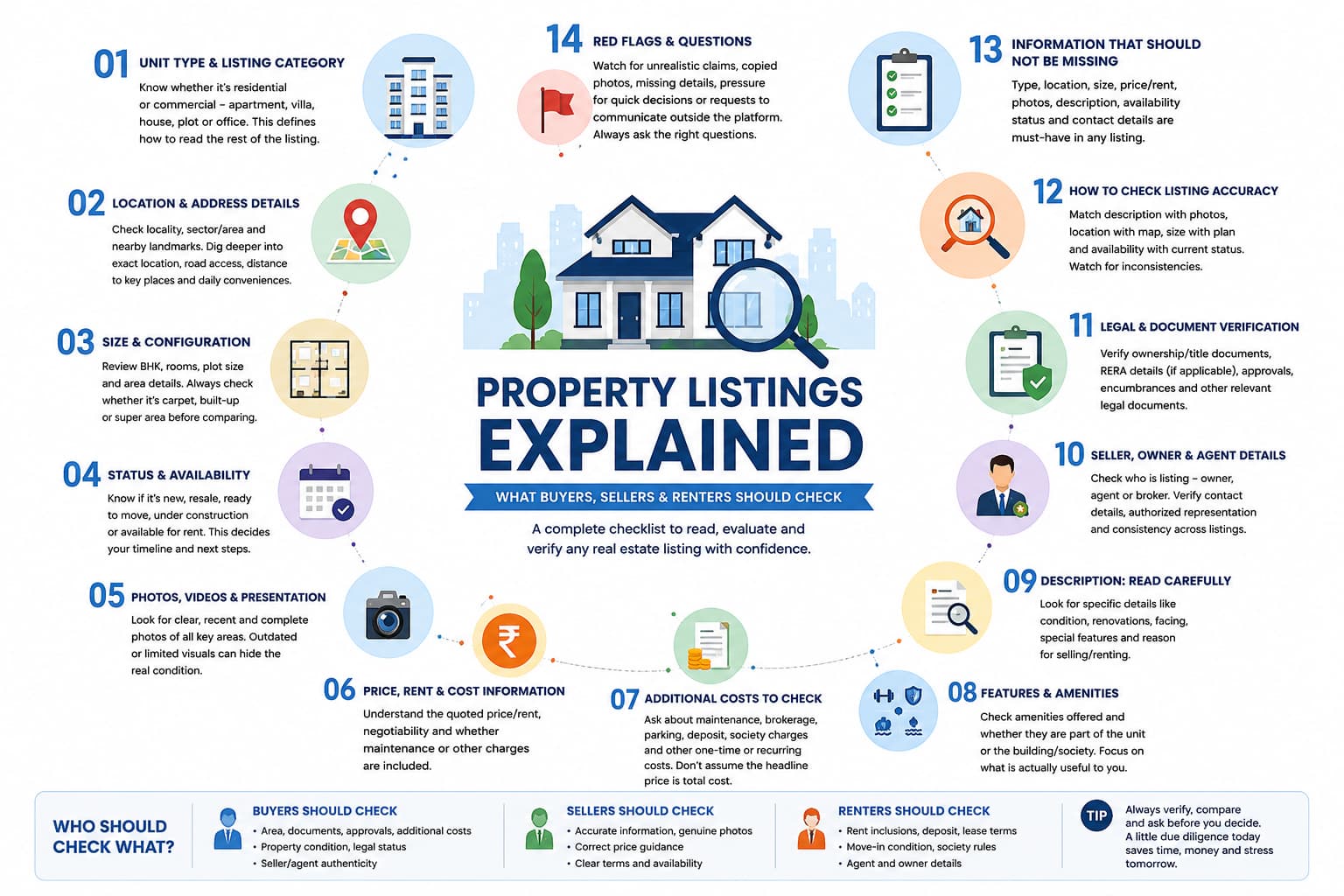
The property listing is the first step in almost any real estate transaction – the first step the buyer will browse through, the first step the seller will create, and the first step that the potential renter makes to make his decision. When it comes to Prooperty, a listing has only one purpose – to provide the interested person with all the relevant and necessary details for them to realize whether it's worthy of their time to proceed. In this guide, we will analyze what kind of information the listing includes and what every party needs to look for within a listing.
The significance of possessing this particular skill reading a real estate listing cannot be overstated. Even though the individual might be familiar with the layout of the document, it does not necessarily mean that he knows what information he should look for. This would become clear at some point, either during the viewing or during negotiations.
What Information Does a Property Listing Show?
A typical listing includes the type of property, its location, its size, the price/rent, some photos, a textual description, some features, and availability. All of these elements combined are intended to give an answer to the obvious question that pops into mind before any other action is taken – Is this even something I am looking for? Looking at all these elements together provides a much clearer picture compared to simply looking at the photos or price.
Unit Type & Listing Category
Each one is categorized — either as being residential or commercial, and then as an apartment, villa, standalone house, plot, or office respectively. It will define your interpretation of everything else in the listing. For example, if it is a plot listing, then there will be no information regarding the number of rooms whereas if it is an office listing, then more emphasis will be placed on the layout. It is important to know the category first to avoid wasting time comparing two entirely different listings.
Location & Address Details
Information about location will typically consist of information about the locality name, sector or area name, and also a nearby landmark, if there is one. However, consider this section more like an introduction rather than an ultimate information source. Just the name of the locality won't help you understand on which street this particular property lies, at what distance from the mentioned landmark it is located, or what commuting convenience is available.
Size & Configuration
This is where the BHK count, number of rooms, plot size, and area calculations come into picture, always in numeric form. The crucial point to note at this juncture is nothing else but whether there is a label on the area calculation. If not, then it is an indication that you need to know what area it is talking about before you compare it with anything else. The complete description of carpet, built-up and super area can be found here.see our Buyer's Guide to Finding the Right Property.
Status & Availability
This one piece of information will determine how your whole timeline is to be laid out – whether you are looking at a new home or a resale home, whether it is move-in ready, still under construction, or already up for rent. It is this piece of information that can make or break a deal for you, because if it is not clear, it is always better to get clarification right away.
Photos, Videos & Presentation
The listing will usually have a series of photographs as well as maybe even a brief video, with the idea being that these depict the property in its current condition. The most important things to watch out for when looking at these pictures are completeness and recency – are there images of all the key rooms in the property, and do they look fairly recent or old photos from a past listing?
Price, Rent & Cost Information
This is because the figure quoted will seldom be the total amount involved. It will be necessary for the buyer or tenant to ascertain whether the figure stated can be negotiated, whether the maintenance or society charges are included in it, or not. A listing that gives only the price without such details implies that there will be need for further inquiries.
Additional Costs to Check
The listed sum may not be equal to the total price of renting or buying the property. Therefore, the buyer or the renter must go further than the headline price and make sure about which additional expenses are included in the price or which must be paid separately.
Depending on the category of the listing, such extra expenses may include maintenance or society fees, brokerage fee, parking fee, deposit, or some other recurring and non-recurring sums. In case the listing is a rental, then it is necessary to find out whether the rental price already includes common charges or not.
Making such requests prior to scheduling an inspection and negotiations will help to avoid mistakes in future. If the listing contains the price which is indicated without explanation of what is included in the price, then the listed sum should be considered as the initial sum only.
Features & Amenities
Lists of amenities can vary from very practical to those which only seem to impress and are not really important. While you are reading listings, the point that you should pay attention to is one more differentiation: whether an amenity is provided by the flat or the entire building/society, because sometimes listings fail to indicate it. For tips on choosing the most important amenities,see our Buyer's Guide.
Property Description: What to Read Carefully
This is typically where the most specific statements are made – the state of the property, recent remodeling work, special characteristics of the property, or reason for selling. Concrete language such as "repainted within the past year" or "has west-facing balcony" is much more credible than phrases such as "in good condition" or "ideal location," which really don't mean much at all when considered separately. If the description seems like boilerplate language, then that should be a red flag.
Seller, Owner & Agent Details
It should be possible for the prospective buyer to know with reasonable clarity the identity of the party listing the unit and their role. There could be instances where the person advertising is the owner, an authorized agent, a broker, or some other representative, and such a distinction could become relevant during the process of negotiation.
See whether the contact information is in agreement and whether the party is able to give a lucid explanation regarding the basic facts contained in the listing. In case there is an involvement of an agent, it becomes important to know whether they are representing the interests of the owner.
In case the same unit is listed in more than one listing but with varying prices, locations, or other such information, this is something which needs to be taken care of.
Legal & Document Verification
While a listing could give useful details, the details available on the web should not be considered as evidence of ownership or any sort of legal documentation. It would be wise for buyers and renters to confirm key statements from documents and the concerned authorities if required, before going ahead with further steps.
For buyers, this would involve examining ownership or title documents, approved plans/permissions (where applicable), and other documents that are associated with the deal. In case of any project or development coming under RERA requirements, the registration details must be verified in addition to any other information provided in the listing.
In addition, the information in the listing must match that available in the document wherever possible. Any differences in the size of the property, unit number, ownership details, name of the project, or any other key detail should be sorted out before going ahead with further steps.
How to Check Listing Accuracy
The information in a listing should logically flow from one piece of information to another, and thus the entire listing should make logical sense as a whole. This does not mean examining each point on its own; rather, it means examining such things as description, photos, location, size, floor plan, cost, and availability in relation to each other.
For instance, the number of bedrooms given in the description should match the number in the photos, while the size should at least specify whether the number refers to square footage or acres or some other form of measurement. The location in the listing should agree with the address or maps, as well as the availability.
The kind of information which may appear vague, contradictory, outdated, or otherwise inconsistent compared to other parts of the listing needs special attention. The presence of one detail which is missing is no cause for concern in itself, but many such details would warrant careful attention.
This is done for the sole purpose of discovering any questions which need answers before proceeding to use the listing or go further in the buying process.
What Buyers Should Check in a Listing
Whether the area sizes have been described properly (i.e., carpet area, built-up area, or super area)
Whether the listing provides any concrete information or is rather vague in its description
Whether the listing and images look new or not
Whether the price is flexible and how it stacks up against other similar listings
Whether the listing has any contact information provided or not
What Sellers Should Check Before Creating a Listing
Whether all significant rooms have been clearly photographed recently
Whether the listing price is current based on comparable properties in the area, and not just outdated estimates
Whether the listing uses exact numbers rather than vague descriptors
Whether the listing provides an accurate list of what is actually included
Whether the listing status is current based on its timeline
What Renters Should Check in a Rental Listing
Whether “status provision” is described in concrete detail rather than simply used as one word
Whether the rent you quote includes maintenance, water, and other common charges
Whether the question of lease length or renewal is discussed at all
Whether the proposed move-in date is compatible with your plans
Whether pet and guest policy are discussed, because lack of discussion does not imply agreement
Information That Should Not Be Missing From a Listing
An accurate and credible listing will always have a property type specified, a true location stated, sizes indicated, a true price or rental rate, photos taken recently, an accurate description in writing, availability status stated, and at least one valid method of contacting the owner. In addition to having these components included, pay attention to how this information is conveyed. For example, a description which seems applicable to pretty much any house or property you can imagine, an unoccupied status box, or mismatched descriptions and photos indicate that the listing is likely hastily created. None of these omissions in themselves indicate an issue, but when there are two or more present, a direct discussion may be necessary.
Questions to Ask About a Listing
Why is the property currently up for grabs — is there any particular cause for selling or letting go of it?
Is there any change in either of these areas of ownership/occupation, and if yes, then for what cause?
Is there any written document that backs up this transaction or just a verbal agreement?
What exactly is the meaning of the status mentioned in the quote for the hand-over date?
How much room is there for negotiation in the timelines mentioned above?
Real Estate Listing Red Flags to Watch For
A few warning signs live specifically in how a listing itself is written and presented, separate from anything you'd notice in a conversation with the poster:
Photographs which are too generic, too well-edited, or simply not aligned with the described configuration
Description which is undoubtedly copied and pasted without any particular information about that property
Contact information trying to lead directly to some external number, thus skipping all the verification offered by the website
Fields such as status, price, or area which are left blank for no apparent reason
For red flags that show up during a conversation or negotiation rather than in the listing itself, see our Buyer's Guide.
How to Compare Different Listings
After you have looked through a couple of ads according to the above guidelines, the logical next step would be comparing them side by side according to the same criteria, as opposed to considering them separately. For more information about the comparison approach, including its template, see our Buyer's Guide to Finding the Right Property.
Conclusion
Reading through the listing pays off much more than people think. Be you a buyer, seller or renter, it all comes down to the same thing – look at what is being said, wonder about things that are not clear, and compare instead of evaluating one listing in isolation. This doesn't mean that it will substitute for any sort of judgment or a personal visit, but it does mean that you go ahead prepared to verify something that you know.
FAQs About Property Listings
Q: What's the most commonly overlooked detail in a listing?
A: Whether the listing states a clear reason for the sale or vacancy. It's easy to skip, but the answer often shapes how much room there is to negotiate.
Q: How do I know if a listing's photos are trustworthy?
A: Trust the video walkthrough more than the photos when one is available — it's far harder to selectively hide a room or angle in a video than in a curated photo set.
Q: Should I trust a listing that doesn't mention a price?
A: Not without following up. A missing price usually means it's negotiable or set on request, but it's worth confirming directly rather than assuming either way.
Q: What should I do if a listing feels too generic?
A: Ask specific questions directly — about conditions, inclusions, or the reason it's available. A genuine poster will usually respond with real detail; a vague listing paired with a vague response is worth treating cautiously.
Q: Is it worth comparing listings even if one already looks like a strong fit?
A: Yes. Comparing it against even one or two alternatives on the same criteria confirms whether it's genuinely the best match or simply the first one that caught your attention.