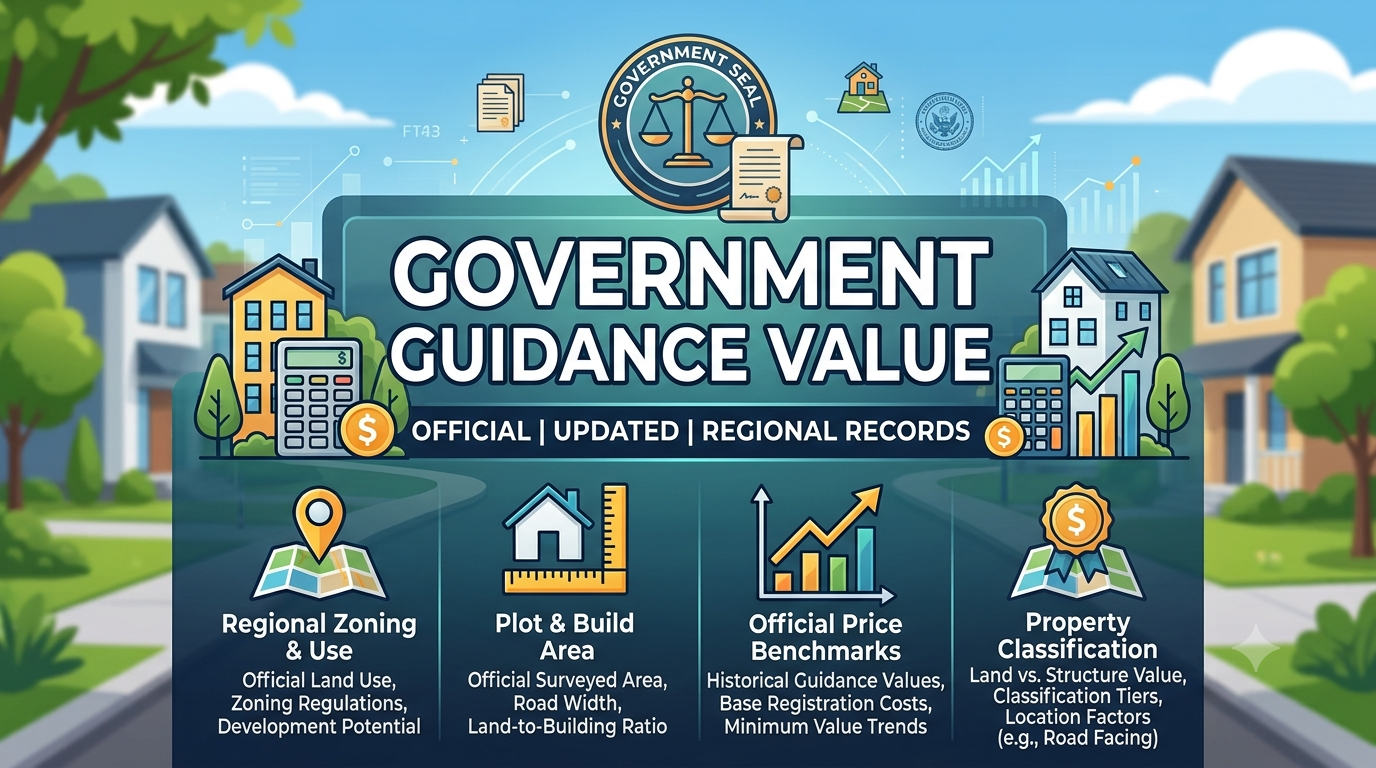
Government guidance value stands among the most critical concepts related to real estate business, especially in the Indian property market. The guidance value system is an official evaluation system which helps to set up minimum values for registration, taxes and other legal considerations. Knowing the official valuations is extremely important for buyers, sellers, investors and others interested in property business. The guidance value system is the minimum price that is required for registration of properties with the government in particular geographical locations. Such a valuation system is determined by government authorities. It works as a base value for registration and calculation of stamp duty and property taxes. Official valuations work on a different principle than market values. While market values are the real price for buying or selling a property, official valuations are the government's determined minimums. These valuations are periodically updated depending on economic situation and property market dynamics. In some regions, this valuation system is called Ready Reckoner Rates or Circle Rates. This comprehensive guide will help you navigate the complexities of official property valuations and how they impact your real estate decisions. Understanding how this valuation system works is essential for making informed choices in property transactions. Government Value is the minimum official value below which properties cannot be registered before the government in certain geographic locations. The value is set by government authorities and acts as the base value for purposes of property registration, assessment of stamp duties, and taxation of properties. This value helps ensure that property is registered at fair values without under-registering and avoiding any loss to government revenues. This official minimum value differs significantly from market values in the sense that while market values are the values at which properties are actually transacted, the government-determined value refers to the official minimum values determined by the government. The values change according to changes in economic conditions. Also called Ready Reckoner Rates or Circle Rates in different parts of the country, this valuation forms the basis of the property registration mechanism in India. It is important to have an understanding of the system of valuation for effective real estate transactions. The official valuation system was developed to ensure consistency and objectivity in property valuation. Previously, without this system in place, there was a lot of subjectivity in property valuations that often led to disagreements and inefficiencies. With the creation of standardized valuation methods, systematic approaches for property valuations have been put in place, to the benefit of both buyers and sellers, as well as government tax collection. In time, the system has changed greatly. At the beginning, property valuations were not done very often and usually were outdated. Currently, with the use of new technology and better methods, official property values are constantly updated – several times per year, if necessary. Official property valuation serves several critical purposes in the real estate ecosystem: Properties cannot be registered below the applicable official minimum value. This requirement ensures all property registrations meet minimum valuation standards. When you purchase property, the registration department uses the applicable official value as the floor price for registration. Stamp duty and registration fees are calculated based on either the applicable official minimum value or the actual transaction price, whichever is higher. This calculation method ensures fair taxation while maintaining consistency through the standardized value system. Local authorities use the applicable official minimum value as the basis for property tax assessments in some jurisdictions. Properties with higher assessed values typically attract higher property taxes, creating fiscal equity across property owners. Banks and financial institutions may reference official minimum values when approving property loans. While lenders conduct independent appraisals, these official valuation benchmarks provide reference points they may consider in lending decisions. By establishing minimum registration values, the official valuation system helps prevent undervaluation schemes. This protects government tax revenues and ensures property transactions occur at transparent, fair prices. Publicly available official property valuations bring transparency to property markets. Both buyers and sellers know the minimum valuations their properties must meet, reducing information asymmetry and enabling better-informed negotiations. As far as cities like Gurgaon are concerned, the applicable government-assessed rate is the practical application of the official valuation system. This rate can be understood as the lowest value on the basis of which one can register property in Gurgaon with the government. This will depend on the locality and the nature of the property and follows the standardized valuation procedure. With regard to Gurgaon property transactions, the applicable government-assessed rate refers to the same underlying valuation process. In other words, the terms may be used differently in different contexts for the same process. Several systematic steps guide official property valuation determination: Government authorities conduct comprehensive market research analyzing recent property transactions in different areas. This analysis examines actual sale prices, transaction frequencies, and market trends. The research forms the foundational data for establishing valuations. Properties are classified based on location characteristics. Prime areas with excellent accessibility, developed infrastructure, and high demand receive higher official minimum values. Developing areas with less-established infrastructure receive lower values. This classification reflects market realities where location significantly impacts property values. Different property types—residential, commercial, industrial, and agricultural—receive different valuations. Official valuation systems recognize that these property types have different value drivers and market dynamics. Using classified area data and property type information, government officials calculate standardized valuation rates. Statistical methods ensure rates reflect actual market conditions while maintaining consistency across properties in the same categories. Finalized official property values are published through government gazettes, official websites, and local authority notifications. This publication ensures all stakeholders—property owners, buyers, sellers, and registration authorities—have access to current official valuations. Official property valuations are updated periodically, typically semi-annually or annually. These updates reflect market changes, economic developments, and shifting property values. Regular updates help keep official valuations reasonably aligned with market realities. There is an important difference between the official minimum value and market values. The official minimum value is a formal valuation of property set by authorities for the purpose of registration. Market Value is the actual price for which a property changes hands in a market transaction. Generally speaking, market values tend to be much higher than official minimum values in healthy markets. The difference is determined by market demand, current economic conditions, and buyer-seller negotiations. Sometimes a property in a popular area may cost 20-50% more than its official minimum value. The difference is not always the same and depends on a particular market situation. In case of a stagnant or declining market, the difference may be smaller because market values may approximate official minimum values more closely. Knowing these two values is very important since the official minimum value determines registration costs and taxes, while market value determines the price of a property. The element of official minimum valuation is a crucial aspect of property valuation. The comprehensive Property Valuation Guide considers the relationship between this official benchmark and other valuation methods such as comparative value analysis, cost analysis, and capitalization of income. Valuers recognize that the official minimum value is one aspect of valuation and offers significant benchmark references; however, it only reflects one form of valuation. The combination of government-set benchmarks and market analysis makes for a much more accurate property valuation. Ready Reckoner Rates and official minimum property values are essentially the same—different terminology for identical concepts. Ready Reckoner Rates represent standardized values established by governments, while the official minimum valuation describes the same baseline figures. Both systems serve similar purposes: establishing minimum registration values and supporting taxation consistency. Understanding that these terms describe the same concept helps when navigating different regions' property systems. Whether called Ready Reckoner Rates or official minimum property values, these official valuations determine minimum registration prices and influence registration costs. The official minimum property value plays a crucial role in the determination of stamp duty and registration charges. In the process of registering any property, stamp duty and registration charges would be worked out as a percentage of the greater of the two – the applicable official minimum value or the transaction price. For instance, if the applicable minimum value is 50 lakhs and you bought property at a price of 60 lakhs, then the stamp duty and registration charges would be calculated as per 60 lakhs. This system of working out charges helps to avoid any sort of misrepresentation during the process of taxation. Knowing the applicable minimum value in your case will help you make the right budget for the transaction costs. Official property valuations vary significantly by region and location: Major metropolitan centers like Delhi, Mumbai, Bangalore, and Gurgaon typically have higher official minimum property values than smaller cities. Within metropolitan areas, prime locations command substantially higher values than developing neighborhoods. Premium areas might have values 5-10 times higher than developing areas. Tier 2 cities have moderate official minimum property values, lower than major metros but higher than smaller towns. Tier 3 and smaller cities typically have lower values, reflecting lower property demand and development levels. Properties in designated Special Economic Zones sometimes have distinct official valuation structures reflecting their unique commercial purposes and higher valuations. Areas experiencing rapid development and infrastructure improvements often see increases in official minimum property values as authorities recognize increasing property values. Monitoring valuation trends in developing areas helps understand changes in property values. Several resources provide access to current official property values: State and district government websites publish current official property values for their jurisdictions. These official sources provide authoritative, up-to-date valuation information. Each state maintains its own system, so you'll need to access your specific state's website. District registration offices maintain official property valuation records. Visiting these offices or checking their websites provides access to official valuations and staff assistance interpreting values for specific properties. Local municipal corporations also maintain official property valuation information. These offices can provide detailed rate information for properties within their jurisdictions. Major real estate portals maintain databases of official property valuations. While not as authoritative as government sources, these platforms provide convenient access to valuation information. Real estate agents, property consultants, and valuers have ready access to current official property values. These professionals can quickly provide values for specific properties and explain how these values affect transactions. Real estate investors monitor official property valuation trends as indicators of market conditions and development: Increasing official property values indicate that authorities believe areas are appreciating. Investors may interpret these increases as signals about area development and future value trends. Areas with consistently rising values may attract attention from investors. Stable official property values suggest that area valuations have reached equilibrium. These areas may provide predictable market conditions, potentially suitable for long-term holding rather than rapid appreciation strategies. Declining official property values are less common but may indicate that authorities believe property values in an area are weakening. Investors may view this cautiously and examine the reasons behind declining official valuations. The Property Value Calculator often utilizes official minimum property values as a starting point. Online calculators utilize these government-set values, taking into consideration market dynamics and the specifics of each particular piece of real estate to come up with estimated market values. Knowing that the calculators may use official valuation benchmarks helps in interpreting the findings. If the values generated by the calculators are far higher than the official minimum values, this may indicate strong market demand. If the estimates approach or fall below the government-set values, then the market may be relatively slow. If you believe the official property valuation for your property is incorrect, you have the right to appeal: Gather evidence supporting your position, including recent comparable property sales at lower values, professional appraisals suggesting lower valuations, or market reports demonstrating changed conditions. Comprehensive documentation strengthens your appeal. Submit formal appeals to the relevant government authority with supporting documentation. Clearly explain why you believe the official valuation is excessive and provide evidence supporting your position. Authorities review appeals and supporting documentation. If merit exists in your arguments, they may revise the official property valuation. The process typically takes several weeks to months, requiring patience and persistence. There are unique features of property valuation for DDA properties. Government-built properties are appraised using government-prescribed DDA rates. It is significant for buyers to understand DDA valuation. The value of DDA properties may increase over time, and in many cases, the market value exceeds the official prescribed value. Investors who want to invest in DDA properties need to understand its valuation and market value trends. Technology is modernizing official property valuation systems: Digital platforms now provide instant access to current official property values. Property owners no longer need to visit offices for valuation information, improving accessibility and convenience. Digital systems automatically calculate registration costs based on property values and applicable official valuations. This automation reduces errors and speeds registration processes. Some jurisdictions implement more frequent official property value updates. Technology enables faster dissemination of updated valuations to all stakeholders. Governments use big data analytics to identify market trends and determine when official property value adjustments are needed. These analytical approaches improve valuation accuracy and market responsiveness. Official property valuations significantly impact taxation: Stamp duty is calculated based on either the applicable official property value or the actual transaction price, whichever is higher. Understanding the applicable value helps predict tax obligations. Some jurisdictions use official property valuations to determine property tax bases. Higher assessed values can result in higher tax obligations for property owners. For investment property sales, the applicable official property value at the time of purchase may affect capital gains tax calculations, depending on the relevant tax rules. Maintaining records of valuations helps substantiate the cost basis for tax purposes. Official property valuation systems continue evolving: Authorities could carry out more frequent valuations to ensure that assessments remain consistent with fast-moving market conditions. Quarterly or monthly valuation processes could take place instead of the usual yearly or bi-annual updates. Future valuation systems could consider more detailed geographical and property classifications. Micro-location factors may play a bigger role in assessments compared with present-day classifications. Emerging technologies such as blockchain could change the way official property valuation systems are maintained and updated, making the process more transparent and trustworthy. Improved methods of analysis could help Government Guidance Values react more efficiently to changes in the market, decreasing discrepancies between official and market valuation. No, they're distinctly different. The official minimum property value represents the prescribed valuation for registration purposes, while market value reflects the actual prices at which properties are bought and sold. Market values typically exceed official minimum values in growing markets, representing the gap between prescribed valuations and real-world transaction prices. The registration authority may reject your application or reassess the property at the applicable official minimum value. Properties generally cannot be registered below these prescribed values. Registration must occur at either the applicable official minimum value or the actual transaction price, whichever is higher. Most jurisdictions update official property values twice yearly, typically in April and October. Some update annually or implement special revisions when significant market changes warrant adjustments. Staying informed about update schedules ensures you have current valuation information. Yes, though decreases are rare. They typically occur only when authorities determine that property values in an area have significantly declined due to economic downturns or changed market conditions. Most markets see stable or increasing official property values over time. Government authorities—typically state governments or district administration offices—determine and publish official property values. Different states maintain their own systems tailored to local market conditions. Professional valuers and market analysts provide data informing these decisions. Banks use official property valuations alongside independent appraisals when approving property loans. Lower official valuations might result in smaller loan amounts if lenders use these values to determine collateral values. However, independent appraisals often take precedence when lenders assess the property's market value and lending eligibility. No, the official minimum property value establishes the minimum registration value. Properties generally cannot be legally registered below this amount. However, you can negotiate purchase prices during transactions—the prescribed value only establishes minimum registration values, not maximum negotiation limits. No, they're the same concept using different terminology. The official property valuation system is the broader framework, while locally applicable rates are implementations used in specific districts or cities like Gurgaon. Both serve similar purposes: establishing minimum property valuations for registration and taxation. Rising official property values indicate that authorities believe areas are appreciating, suggesting positive market conditions. Investors may interpret increasing values as signals of area development and future property value trends. Monitoring valuation trends can help identify neighborhoods experiencing development and changing market conditions. You can file a formal appeal providing documentation supporting a lower valuation. Include comparable property sales at lower prices, professional appraisals suggesting lower values, or evidence of changed market conditions. The appeals process typically takes weeks or months, requiring patience and strong supporting evidence. The concept of official property valuation is one of the key elements of the Indian land registration and valuation system. These official values serve as minimum rates for registration, calculating stamp duty and registration fees, and supporting consistent taxation within real estate transactions. Knowledge of these official valuations is a necessary element of property transactions and investments. Although official property valuations are quite informative and represent minimum prescribed values, they cannot be considered market value. The best way to combine official valuation with market value is by using these values together with an analysis of the market situation to understand prescribed valuations and real estate prices. As technology and market situations are changing, the official property valuation system is becoming more complex and evolving. Increasing updates and improvements in valuation techniques may improve the accuracy of assessments in the future. Staying informed about current official property values and their influence on transactions can help protect your interests in real estate.Government Guidance Value: Official Property Valuations
What is Government Guidance Value?
Historical Development of Government Guidance Value
Purpose and Importance of Government Value
Legal Registration Requirements
Stamp Duty Calculation
Property Taxation
Loan Approval Assistance
Prevention of Undervaluation
Market Transparency
Understanding Circle Rate Gurgaon as Government Guidance Value
How Govt. Guidance Value is Determined
Market Research and Analysis
Area Classification
Property Type Categorization
Statistical Analysis and Rate Calculation
Official Publication
Regular Updates
Difference Between Government Guidance Value and Market Value of Property
Relationship with Property Valuation Guide Systems
Govt. Guidance Value in Ready Reckoner Rates Systems
Impact on Stamp Duty and Registration Costs
Regional Variations in Govt. Guidance Value
Metropolitan Areas
Tier 2 and Tier 3 Cities
Special Economic Zones
Emerging Development Areas
How to Find Current Government Guidance Values
Official Government Websites
Local Registration Offices
Municipal Corporation Offices
Real Estate Portals
Professional Consultation
Impact on Property Investment and Appreciation
Rising Values as Positive Signals
Stable Values Indicating Maturity
Declining Values as Warning Signs
Using Property Value Calculator Tools with Guidance Values
Appealing Guidance Values
Appeal Documentation
Formal Application Process
Appeal Evaluation
The Role of Govt. Guidance Value in DDA Housing Scheme Properties
Technology and Government Guidance Value Systems
Online Access and Portals
Automated Calculations
Real-Time Updates
Data Analytics
Tax Implications of Government Guidance Values
Stamp Duty Calculation
Property Tax Assessment
Capital Gains Tax
Future Trends in Government Guidance Value Systems
Increased Update Frequency
Enhanced Precision and Customization
Technology Integration
Market-Responsive Adjustments
Frequently Asked Questions (FAQs)
FAQ 1: Is Government Guidance Value the same as market value?
FAQ 2: What happens if I try to register property below Government Guidance Value?
FAQ 3: How often are the Guidance Values updated?
FAQ 4: Can Government Guidance Values decrease?
FAQ 5: Who determines Government Guidance Values?
FAQ 6: How do the Guidance Values affect mortgage loan amounts?
FAQ 7: Can I negotiate property prices below Government Guidance Value?
FAQ 8: Are Government Guidance Values different from Circle Rates?
FAQ 9: How do the Guidance Values impact investment returns?
FAQ 10: What should I do if Government Guidance Value seems too high for my property?
Conclusion