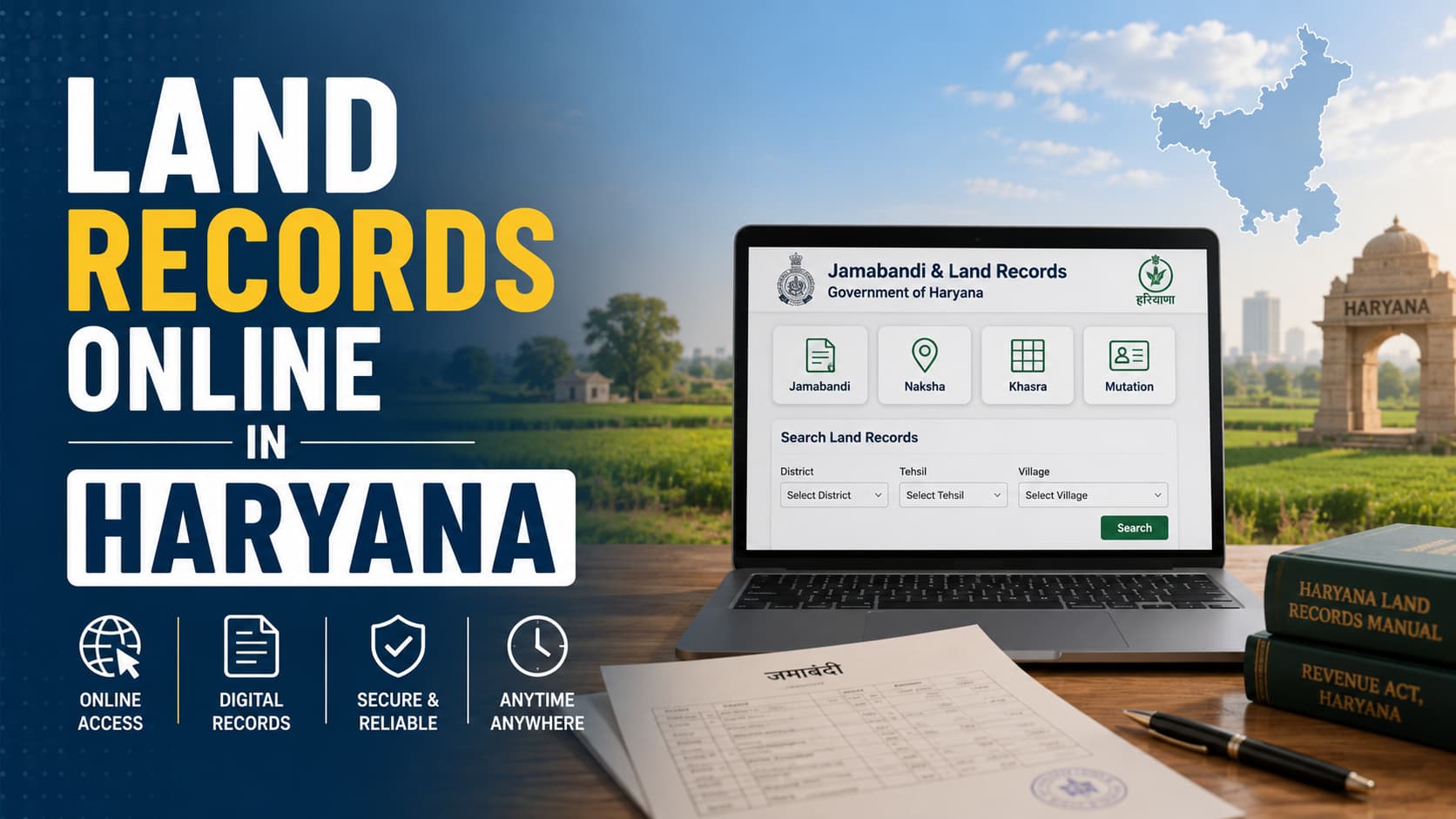
Land Records Online: Introduction
In the digital era, obtaining property details has become seamless and accessible. Land Records Online has transformed how Indians track their property ownership and verify documentation. Whether you are an investor, buyer, seller, or real estate professional, understanding how to access and interpret property documents is essential for safe transactions.
The digitization of property records refers to converting paper documents—previously stored only in government offices—into digital formats accessible through state portals. These systems now contain ownership documents, agriculture-related records, mutation documents, and sale deeds. Every state maintains its own property documentation portal, making it necessary to know which portal applies to your location.
Digital property records offer multiple benefits: verifying actual ownership, confirming clear titles, checking property boundaries, reviewing transaction history, and identifying any legal disputes. This documentation serves as official evidence acknowledged by courts and government agencies.
For real estate investors, access to verified property information enables informed decision-making and market analysis. Additionally, RERA (Real Estate Regulation and Development) mandates that all property transactions be backed by verified documentation, ensuring transparency and protecting buyer interests throughout the transaction process.
Understanding Digital Property Records
The digitization of property documents refers to converting paper-based records into accessible digital formats through government portals. Different types of property documents are now available online, including ownership certificates, agriculture-related documentation, mutation records, and sale deeds. Each state in India maintains its own property documentation system, so you must identify the correct state portal for your property.
The Importance of Digital Records in Real Estate
Property Verification
Before purchasing any property, verify complete documentation through official portals to confirm:
Actual ownership of the property
Clear title and absence of encumbrances
Correct property boundaries and dimensions
History of previous transactions
Any legal disputes or liabilities
Legal Protection
Digital property documentation provides both buyers and sellers with legal protection. This documentation serves as official evidence of ownership that is acknowledged in courts and by government authorities, ensuring your rights are protected.
Investment Decision Making
Real estate investors rely heavily on verified property data to evaluate worth and understand market trends. Property Tax Records and historical documentation help identify investment appreciation potential and validate authenticity of the property.
Compliance with RERA
RERA makes it obligatory for property developers and agents to guarantee transparent dealings. All transactions must be documented, ensuring that with respect to RERA projects, transparency regarding property information is maintained throughout the transaction.
How to Access Digital Property Records
State Government Portals
Each state in India has its own portal for accessing property information:
Step 1: Identify Your State Portal Visit your respective state government's land revenue department website. For properties in Haryana, Delhi, Maharashtra, or other states, search for the official government portal.
Step 2: Gather Required Information To access documents, you'll typically need:
Property survey number or account number
Village name and district
Taluka/Tehsil information
Landowner's name
Step 3: Search and Download Once logged into the state portal, use the search function to locate your property and download required documents directly.
Third-Party Platforms
Several authorized third-party platforms offer services to access property information, providing additional services such as document verification, title search reports, property history analysis, and legal compliance checking.
Seeking Professional Help
For complex property transactions, consulting with property experts can simplify understanding your property documentation and ensure compliance with all legal requirements.
Understanding Property Record Components
Bhu Naksha
Bhu Naksha (also called bhumi map or land map) is a digital representation of your property's boundaries and location. This map shows the exact geographical position, size, and shape of your land as recorded in the revenue department's records. It's essential for verifying that the property you're purchasing matches the actual land boundaries. Bhu Naksha maps are now available online through state portals and can be downloaded for property verification. This document is particularly important when dealing with agricultural land or properties in rural areas, as it provides clear demarcation of your property's extent.
Khasra Number
Every agricultural or revenue plot is assigned a Khasra Number, which serves as a unique identifier for that specific land parcel. The Khasra number helps in identifying the exact plot when accessing land records and is essential for property searches. When you access any state portal, you can search using the Khasra number to retrieve all related documents. This number remains constant even after property transfers and is crucial for maintaining continuity in land records. Understanding your property's Khasra number is the first step toward accessing complete land documentation online.
Jamabandi Records
Jamabandi Haryana and similar state-level jamabandi records contain detailed information about land ownership, tenancy, and cultivation rights. These records are maintained by revenue departments and include details about who owns the land, whether it's mortgaged, and its current status. Jamabandi records serve as proof of ownership and are mandatory for property transactions. In Haryana and other states, these records are digitized and accessible through official portals, making ownership verification straightforward and transparent.
Khata Certificate & Khata Number
The Khata Certificate & Khata Number is a document that establishes your official identity as a property owner in the revenue records. The Khata number is a unique identification assigned to each property owner, containing details about all properties owned by that individual. This certificate is essential for property transactions, utility connections, and municipal purposes. Obtaining a Khata certificate involves registering with your state's revenue department and providing proof of ownership. Once obtained, it serves as an official record linking you as the rightful owner in government databases.
Bhulekh Records
Bhulekh (State-wise Guide) refers to the online land records systems maintained by various states in India. Bhulekh portals provide digital access to property ownership details, land maps, and historical records. Different states call these systems by different names—in Haryana it's Bhulekh, in Uttar Pradesh it's Bhulekh as well, while in Maharashtra it might be called Mahabhulekh. These online systems have made property verification accessible from home without visiting government offices. Access is typically free, and you can download official documents directly from these portals.
RERA and Property Documentation
RERA Importance in Property Transactions
RERA has transformed the real estate industry by ensuring that all transactions are backed by verified documents. The regulation mandates that developers must maintain and produce authentic paperwork for every project, protecting buyer interests.
RERA Registration and Documentation Requirements
Before investing in any property, verify that:
The project is RERA registered
Property documents show proper title in the developer's name
There are no pending litigation or disputes
All previous owners have clear titles
Property Rights and RERA Compliance
RERA ensures that your property rights are protected through verified documentation, especially important in structured societies and gated communities where transactions follow regulatory guidelines.
Key Property Documents and What They Mean
Ownership Certificate
The ownership certificate is the primary document establishing your rightful ownership. It contains:
Property dimensions and area
Owner's name and details
Date of ownership
Any encumbrances or liabilities
Mutation of Property after Sale
Mutation of Property after Sale is the process of updating land records to reflect a change in ownership. When you purchase a property, the revenue department must be notified and the records updated to show you as the new owner. This process involves submitting the sale deed and relevant documents to the revenue office and paying the required mutation fee. Mutation typically takes 3-6 months to be reflected in online records. It's crucial to ensure mutation is completed because it legally establishes your ownership in government records. Without proper mutation, you cannot claim the property as yours in official documentation.
Sale Deed
The sale deed is the legal document that transfers property ownership. This document must be registered at the sub-registrar's office to be considered valid and serves as proof of the transaction.
Encumbrance Certificate
The encumbrance certificate confirms that the property is free from any legal liabilities. This certificate is essential to verify before purchasing any property and protects your interests by ensuring no loans or mortgages are attached to the property.
Land Record Verification Process
Before purchasing any property, conduct a comprehensive Land Record Verification (Complete Checklist) to ensure all documents are authentic and clear. This process involves checking ownership documents with the revenue department, verifying that the seller's name matches all records, confirming no pending loans or mortgages exist, and reviewing the complete transaction history of the property. Cross-reference documents like the Bhu Naksha, Khasra number, and Jamabandi records to ensure consistency. Additionally, verify that there are no ongoing legal disputes or claims against the property. This comprehensive verification protects you from fraudulent transactions and ensures a smooth property purchase.
State-Specific Property Documentation Systems
Haryana Property Records
For properties in Sector 12 Gurugram, DDA Housing Scheme and other areas, Haryana maintains comprehensive documentation through its State Revenue Department portal with digitized records accessible online.
Delhi Property Information
Delhi's DDA Housing Scheme properties and other residences have digitized records. Access property information through Delhi government's official portal for complete verification.
Maharashtra Documentation Portal
Maharashtra has one of the most advanced digital property systems in India, allowing citizens to access and verify documents easily from their computers.
Uttar Pradesh Property Portal
UP maintains extensive property documentation accessible through their state portal, making transactions transparent and straightforward for property buyers and sellers.
Benefits of Digital Property Systems
Transparency and Accountability
Digital property documentation ensures complete transparency in transactions, reducing the scope for fraud. Every transaction is recorded and can be verified by authorized parties.
Time and Cost Efficiency
Accessing property documents online eliminates repeated visits to government offices, saving time and reducing administrative costs associated with verification.
Reduced Fraud and Disputes
The digitization of property records has significantly reduced fraud-related issues. Digital documents are difficult to forge and can be easily cross-verified with government databases.
Quick Decision Making
Having access to verified property information enables quick decision-making. You can research multiple properties simultaneously and compare documentation to identify the best investment opportunity.
Environmental and Administrative Benefits
Digital systems contribute to better resource management and allocation at the administrative level, supporting sustainable development.
Common Issues When Accessing Property Documents
Outdated Information
Property portals may not immediately reflect recent transactions due to processing delays. Always verify if recent mutations have been recorded in your documents.
Technical Issues
Portal downtime or technical glitches can prevent access. Download copies during off-peak hours to avoid these issues.
Missing or Incomplete Records
For older properties, documentation might have gaps. Consulting legal experts can help resolve discrepancies.
Incorrect Data Entry
Typos or data entry errors can complicate transactions. Ensure all details in your records match official paperwork.
Tips for Effective Property Research
Before Property Purchase
Access property documentation at least 2-3 months before finalizing a purchase
Verify ownership history through multiple years
Check encumbrance certificates carefully
Ensure the RERA compliance status
Maintaining Your Documentation
Keep digital copies of all documents downloaded from official portals
Update mutation records promptly after any property transfer
Maintain a backup of important certificates
Register any changes with your state's revenue department
Working with Real Estate Professionals
Real estate consultants and legal experts can help you interpret property documents accurately and guide you through RERA compliance requirements for your transaction.
Property Documentation and Financing
Banks and financial institutions require comprehensive document verification before sanctioning loans. The loan approval process depends on:
Clear title shown in official documents
Absence of disputes in the property's history
Proper RERA registration and verification
Encumbrance certificate confirmation
Future of Digital Property Systems
The government continues to improve documentation portals with:
Blockchain technology for enhanced security
Mobile apps for easier access
Integration with banking and financial systems
AI-based fraud detection
Improved inter-state data sharing capabilities
Frequently Asked Questions (FAQs)
1. What exactly are Land Records Online and why are they important?
Digital documentation of property refers to the digital version of ownership documentation recorded in state government revenue department records. Digital documentation is vital in proving ownership, providing clarity in dealings, preventing frauds, verifying property, and ensuring adherence to RERA guidelines. Such documentation contains critical details on property boundaries and legal liabilities.
2. How do I access Land Records Online for my property?
Visit the website of the land revenue department in your respective state government. You will require the survey number or account number of your property along with the village name, district, and taluka to access your documents.
3. Is accessing Land Records Online free?
Yes, getting access to property documents from government websites is absolutely free. However, certain third-party websites might impose costs for further assistance, such as document verification or legal advice.
4. How does RERA relate to Land Records Online?
RERA mandates that all property transactions must be backed by verified documentation. Developers must produce authentic records for every project, and buyers should verify that documents show proper title in the developer's name with no pending disputes.
5. What should I check in Land Records Online before buying a property?
Before purchasing, verify:
Current and rightful ownership
Complete property description and dimensions
Absence of encumbrances or legal liabilities
Clear mutation history
RERA registration status
Encumbrance certificate status
6. Can Land Records Online be fraudulently altered?
While online property records are safer than physical records, fraud risks exist. However, when accessing records using government websites, this risk is greatly minimized. Online records are more difficult to forge.
7. What is an Encumbrance Certificate and why is it important?
The Encumbrance Certificate indicates the absence of any encumbrances or liabilities against a property. It confirms that there are no loans or mortgages against the property, making it crucial for property transactions.
8. How often are Land Records Online updated after a property transaction?
After a sale deed is registered, it takes about 3 to 6 months for records to be updated, varying by state. Contact the relevant revenue department if records aren't updated within this period.
9. Can I download and print documents from Land Records Online?
Yes, most government portals allow downloading and printing documents. Electronic copies downloaded from official websites carry legal validity. Download multiple copies and keep them in safe custody.
10. What should I do if I find errors in my Land Records Online?
If you discover errors:
Record the errors systematically
Visit the revenue office with evidence
Submit a correction request formally
Submit necessary documents to prove corrections
Persist with follow-ups until corrections are made
The process may take several months but is essential for accurate documentation.
Conclusion
Digital property systems have transformed ownership verification in India, making real estate transactions more transparent and secure. Whether buying, selling, or investing in property, understanding how to access and interpret property documents is essential. Combined with RERA compliance and proper legal guidance, verified documentation serves as the foundation for safe and profitable real estate investments. Take advantage of digital transformation and access verified property information to make informed decisions about your transactions today.